Showing posts with label CAPA. Show all posts

Report on the 2025 Canadian Nation Beekeeping Convention

Thursday, 13 February 2025

The Atlantic Tech Transfer Team for Apiculture team had the opportunity to attend the Canadian Association of Professional Apiculturists (CAPA) annual general meeting 2025 last week (Ottawa, ON). In addition, the team attended the National Beekeeping Convention hosted by CAPA and the Canadian Honey Council (CHC). These meetings are an important events in the Canadian beekeeping calendar and our region was well represented by beekeepers, government and other stakeholders.  Read this week’s blog for a summary of the events.

Review: Canadian Association of Professional Apiculturists Annual General Meeting and the Canadian National Beekeeping Convention 2025

The Canadian Association of Profession Apiculturists (CAPA) is the group of professionals who conduct research, educate and otherwise support the beekeeping industry across the country.  This group of apiculturists converge every year at the CAPA annual general meeting.  The 2025 meeting, held in our nation’s capital, started with a president’s report from Professor  Ernesto Guzman.   One immediate point of concern raised was the average colony loss for the winter 2023-2024 (34.6%) was higher than the average of historic annual losses (27.7%). This opening remark was followed by a general overview of all CAPA activities, including highlights from the various committees and a welcome to start the proceedings.


CAPA member, Stephen Page (Agriculture and Agri-Food Canada), gave an overview of national statistical trends in honey, beekeeping, and pollination. Canada continues to receive package bees from Australia, Chile, Italy and New Zealand. As for queen imports, Canada receives queens form Italy, New Zealand, Chilie, Australia, Denmark, and Hawaii. The amount of Canadian honey being consumed by Canadians continues to increase. Most exported honey goes to the United States and Japan. Finally, the number of beekeepers across the country (hobbyist and commercial) continues to increase.

Rod Scarlett (CHC, Executive Director) presented a report on behalf of the Canadian Honey Council. Scarlett described some of the roles and responsibilities of CHC, such as mitigating honey fraud in Canada and providing education and training to beekeepers across Canada.  The board of the CHC also joined the CAPA meeting for an opportunity to discuss issues of mutual concern.

Other important reports included the Canadian Bee Tech Transfer Programs (CAN-BTTP) committee discussing works to support and create collaboration between each of the Tech Transfer programs in Canada. The Tech Transfer programs have been busy conducting regional research and providing extension support to Canadian beekeepers. The first day was concluded with each of the provincial apiculturists/apiarists provided an update for each of their respective provinces. 

After the conclusion of the annual business meetings by the CHC and CAPA, the two groups were joined by other beekeepers for the National Beekeeping Convention.  This series of presentation over two days ranged in topics from honey bee nutrition to the threat of Tropilaelaps mites for Canadian beekeeping.  The keynote speaker, Dr Priya Chakrabarti Basu (Washington State University) gave a fascinating talk on bee nutrition and habitat.  Dr Chakrabarti Basu discussed some of the challenges of bee nutrition in the face of climate change.  Closer to home, Professor Pierre Giovenazzo of Laval University, presented research on commercial pollinator density and wild blueberry yields.  His findings suggest that increasing stocking rates and combining managed pollinators will have a beneficial effect on wild blueberry yields.  This works is to be published very soon and a full review will be in a future blog post.

An update on the Canadian Bee Gut Project was provided by Brendon Daisley (University of Guelph).  Many beekeepers from across the country, including the ATTTA team, have provided samples to the project and it was good to hear some results.  This work suggests some very intriguing links between honey bee gut health, including bacteria, and overall honey bee health.  As this work progresses, it will be interesting to see final conclusions and indications of how this knowledge will benefit honey bees and the industry.  

Dr Nuria Morfin providing an update on the Canadian Bee Tech Transfer Teams at the 2025 Canadian National Beekeeping Convention.

As the meeting progress it was an impressive range of presentations which highlighted the important work that is being undertaken across Canada to support the honey bee industry.  The panel on the threat of Tropilaelaps mites created some interesting discussions on that emerging threat.  Many topics and presentations included aspects of climate change as this becomes a particular challenge to the beekeeping industry.  There was, of course, a great deal of time spent talking about Varroa mite management.  The first day was closed with a presentation from Nuria Morfin and Matthew Polinsky as an update on the activities of the seven Canadian tech transfer teams for apiculture.

Thank you to everyone who participated and organized this great event, and to all those who support the beekeeping industry of Canada.  These events are important for all beekeepers in Canada to ensure current knowledge and information is disseminated across the country.  All the presentations represent work that is crucial for our industry in facing current and future challenges.


Connecting with ATTTA Specialists

If you’d like to connect with ATTTA specialists or learn more about our program, you can:

visit our website here.

Email attta@perennia.ca

A Year in Review for Atlantic Beekeepers

Thursday, 9 February 2023

At this year’s Canadian Association of Professional Apiculturists (CAPA) annual general meeting, the provincial apiarists from across the country presented a report to relay pertinent beekeeping information from the year past. In this week’s blog, we will overview the key messages from the Atlantic provinces.

A Year in Review for Atlantic Beekeepers

The provincial reports begin with a basic overview of industry statistics. Figures reported for the Atlantic provinces are summarized in the table below. Registering as a beekeeper is mandatory in New Brunswick and Nova Scotia, but not in Prince Edward Island and Newfoundland. As such, the numbers for these two provinces are based on estimates through the experience of the provincial apiarist. These official reports may be conservative figures, as members of the PEI and NL beekeepers associations speculate there is more than 100 and 200 beekeepers in these provinces, respectively. Regulated beekeeper registration will be valuable to gaining insight into the complete regional the honey bee industry. In reporting on the number of honey bee colonies, the distinction of “honey producing colonies” does not include colonies which are exclusively used for pollination services. New Brunswick has many colonies that are managed as such, which is why both figures have been provided. Honey yields were generally average in the 2022 season across the Atlantic provinces. Winter mortality was also relatively normal, which is remarkable given the average overwintering morality coming out of winter in 2022 was high at 45.5% (Ferland, Wilson, and Nasr 2022).

Unusually high overwintering losses this year were primarily attributed to inadequate Varroa mite control. Prince Edward Island, unfortunately, did suffer from high winter losses and the majority of beekeepers have stated this to be the cause. Provincial apiarist, Cameron Menzies, has gathered that inadequate varroa mite control in the province is due to improper treatment. Beekeepers treating with partial dosages, for example. This is an issue for controlling Varroa mite populations in a honey bee colony but also detrimental for maintaining product efficacy. There is currently concern about the efficacy of Apivar, our primary miticide used in Canadian beekeeping, and treating colonies inconsistently with product label instructions can accelerate mite resistance development. 

Varroa mites are by no means a plague for Prince Edward Island, alone. New Brunswick provincial apiarist, Chris Maund, and Chief Apiary Inspector, Karen Thurlow, have warned that varroa mites are also the most significant honey bee health challenge for New Brunswick beekeepers because of the viruses that they vector, namely chronic bee paralysis and deformed wing virus. As such, they urge beekeepers to increase varroa mite monitoring to monthly and even more frequently in the summertime. All Atlantic beekeepers would be wise to heed this advice.

The good news varroa mite story remains in Newfoundland and Labrador! Newfoundland beekeeping has increased, and beekeepers have successfully managed to maintain their unique varroa-free status. Provincial apiarist, Karen Kennedy, has also reported the province to remain free of American Foulbrood Disease (AFB) and European Foulbrood Disease (EFB). We can all help Newfoundland preserve this disease-free status by respecting the honey bee importation laws. It is illegal to import any honey bees or honey bee products into Newfoundland without proper authorization, which is extremely limited. Bees and bee products cannot be imported to Newfoundland and Labrador for regular beekeeping purposes!

New highway sign to alert travelers of honey be importation laws.

Following regulations regarding honey bee pests and disease is tremendously important for the regional beekeeping industry. Biosecurity in beekeeping cannot be exclusively practiced by a select few producers, but must be practiced by all due to the freedom that is innate to keeping bees. Honey bees can and will travel between apiaries and enter the hives of other beekeepers. Atlantic beekeepers have been doing well to practice regional biosecurity! In 2022, AFB was found in Nova Scotia and PEI, but proper precautions were taken such that the provincial apiarist was notified and able to respond to contain the threat. Likewise, small hive beetle (SHB) was detected in New Brunswick but was managed and the spread contained. 

The final pest that was emphasized in these reports was by the Nova Scotia provincial apiarist, Jason Sproule. Nova Scotia beekeepers reported excessive shrew damage in 2022, and he expects that their impact was even greater. Shrews persist across the Atlantic provinces, and proper measures need to be followed to protect colonies from these predators. For example, overwintering colonies need to be fastened with a shrew guard while honey bees have the potential to be in cluster. 

Looking back at the year past is a great way to improve management for the upcoming beekeeping season. Regular monitoring, ongoing education of pests and disease, and reacting according to best practice will help the Atlantic Provinces maintain healthy and productive honey bee colonies!


Connecting with ATTTA Specialists


If you’d like to connect with ATTTA specialists or learn more about our program, you can:


A Look at Canadian Honey Bee Overwintering Losses

Thursday, 4 August 2022

Every spring, beekeepers are asked by the Canadian Association of Professional Apiculturists (CAPA) to report on their overwintering losses. The results of the 2022 survey are in! Last week, CAPA released their “Statement on Honey Bee Wintering Losses in Canada (2022),” read on for a brief summary of the results. 

A Look at Canadian Honey Bee Overwintering Losses

The CAPA “Statement on Honey Bee Wintering Losses in Canada” is an annual report published to consolidate information that CAPA and our Provincial Apiarists have collected regarding the overwintering success of beekeepers across the nation. Reporting overwintering losses to CAPA continues to be a valuable tool for seeing trends in beekeeping operations nationwide. This year, results are based on the responses of 626 Canadian beekeepers with a total of 480,983 hives.

Figure 1. A modified table of survey parameters and preliminary honey bee colony mortality (2021-2022) to highlight the results of the Atlantic Provinces. 

The 2021-2022 winter was a difficult winter for Canadian honey bees. The national overwintering loss was 45.5%. This is nearly double the percent loss reported the winter prior, at 23.2%. Between provinces, there was a large range, from 15.3% to 57.2%. Overall, Atlantic Canada fared better than most of the nation, with Nova Scotia, New Brunswick, and Newfoundland being the only three provinces to report losses below 30%. Prince Edward Island suffered higher losses, at 51.9%. 

The CAPA statement not only reports figures, it also asks beekeepers to indicate the possible causes for their losses. This year, beekeepers were more consistently responding with the same causes. Ineffective varroa control, poor queens, and weak colonies in the fall were the top reported reasons for colony loss, nationwide. Furthermore, the provinces which had the highest losses all ranked “ineffective varroa control” to be their number one reason for colony death. For Atlantic Canada, specifically, the leading reasons for loss were less consistent, with ineffective varroa control, weak hives in the fall, and starvation being the top concerns. As such, beekeepers preparing for the upcoming winter this season should consider addressing these as priorities in their summer and fall management practices. For example, it will be important to test for mites and subsequently treat; hives should be supplied with adequate food resources to make it through the winter; and now is a good time to consider how to best manage weak colonies. 

Figure 2. A modified table of the top four ranked causes of honey bee colony mortality to highlight the results of the Atlantic Provinces. 

The 2022 statement places particular emphasis on varroa mite control. According to the survey respondents, Apivar® is the number one chemical treatment used against varroa mites across Canada. It is popularly used in both spring and fall treatments. As such, it is inevitable that varroa mites will develop resistance to amitraz, the leading ingredient in Apivar®. Unfortunately, there has been evidence of this beginning in some provinces. This means that monitoring for mites both before and after treatment is more important than ever. Please see the ATTTA factsheet on Summer Disease and Pest Monitoring in Honey Bees for detailed information on how to monitor varroa mites in your colonies. Monitoring in the summer can be critical to knocking back varroa mites populations before fall, when it may become too late for effective control of large infestations. Beekeepers expressed this as a challenge which they faced in the 2021 fall. 

In addition to monitoring, CAPA has highlighted the importance of testing the continued efficacy of our leading varroa mite treatments. Here, ATTTA can help! This summer ATTTA is busy sampling hives across the Maritimes to measure the efficacy of both Apivar® and Api Life Var® in eliminating the mites within. This work will be completed in September and results shared with the industry shortly thereafter. 

The CAPA wintering losses survey provides us with valuable insight into the challenges and successes of the Canadian beekeeping industry. For more information on the results of the 2022 survey please read the full statement, found here. Thank you to all who participated!

Written by Annie Bennett, ATTTA Apiculturist, abennett@perennia.ca


Connecting with ATTTA Specialists


If you’d like to connect with ATTTA specialists or learn more about our program, you can:


When Mites Fight Back

Thursday, 24 February 2022

In Atlantic Canada, and worldwide, varroa mites present an immense challenge to honey bee health. These parasitic mites feed directly on honey bees and cause further devastation as vectors of deadly viruses, such as Deformed Wing Virus. There is a growing concern in the Canadian beekeeping industry that varroa mites are developing resistance to our leading treatment option, Apivar®. Today, we will discuss this concern and how to respond.

When Mites Fight Back

Earlier this month, an article out of the Manitoba Co-Operator featured an interview with the provincial apiculturist Rhéal Lafrenière who stated, “The consensus is that general efficacy, countable efficacy of that product – Apivar – is quite variable. It is probably no longer in that 90 percentile range” (Stockford 2022). When Apivar was first approved for use in Canada, it was a highly effective miticide and, as such, became heavily used by beekeepers. However, the danger in relying on a single chemical miticide is development of resistance (Pernal and Clay 2013). This may be what we are experiencing now.

Varroa mite on the abdomen of a honey bee. (Photo credit: Alex Wild)

Lafrenière noted in this interview that it is not clear whether the recent reduction in Apivar efficacy is due to mite resistance or perhaps environmental conditions. This uncertainty can, in part, be resolved through research and credible efficacy trials.  In support of this effort, Canadian Association of Professional Apiculturists (CAPA) has committed to developing a unified approach in tackling the challenges of varroosis and miticide efficacy. Efficacy trials are a priority for beekeeping research and extension groups across the country.  Periodic testing of chemical miticides has become a main concern for everyone involved in the beekeeping industry.

At the local level, beekeepers have begun to request regionally specific research to identify resistance in Atlantic Canada. In 2017 and 2018, ATTTA preformed efficacy testing in the Maritime region and at this time, the average mite mortality of Apivar for the hives tested was 99.8% (Olmstead et al. 2019)! Having been done nearly five years ago and in light of current concerns, this work requires updating. To achieve this, a small group including ATTTA is working to resource and implement an efficacy research trial in the 2022 beekeeping season.

Together with periodic testing for miticidal resistance, an integrated pest management (IPM) approach is essential to sustainable long-term control of varroa mites (Jack and Ellis 2021). IPM uses a combination of methods for managing hive health, including cultural, physical, biological, and chemical treatments. ATTTA has a comprehensive factsheet describing several Varroa Mite Management Options for Atlantic Canada in consideration of IPM practices. A critical point is that the use of synthetic treatment options, such as Apivar, must be rotated to improve longevity as an effective miticide. 

It appears that varroa mites are fighting back against Apivar. Efficacy testing will be necessary to validate this objectively. In the mean time, testing your hives for varroa mites before and after treatment is a valuable way to keep track of mite populations in your own apiary and apply treatments when necessary. Testing is a critical practice in integrated pest management, an approach which will be critical in the continued struggle against varroa mites. 

Jack, Cameron J, and James D Ellis. 2021. “Integrated Pest Management Control of Varroa Destructor (Acari: Varroidae), the Most Damaging Pest of ( Apis Mellifera L. (Hymenoptera: Apidae)) Colonies.” Edited by Hongmei Li-Byarlay. Journal of Insect Science 21 (5): 6. https://doi.org/10.1093/jisesa/ieab058.
Olmstead, Sawyer, Cameron Menzies, Robyn McCallum, and Kathleen Glasgow. 2019. “Apivar® and Bayvarol® Suppress Varroa Mites in Honey Bee Colonies in Canadian Maritime Provinces,” 4.
Pernal, S.F. and Clay, H. (eds). 2013. Honey bee disease and pests, 3rd Edition. Canadian Association Professional Apiculturists, Beaverlodge, AB, Canada 68pp
Stockford, Alexis. 2022. “Varroa Mite Protection Product for Bees Losing Its Punch.” Manitoba Co-Operator, February 7, 2022. https://www.manitobacooperator.ca/news-opinion/news/varroa-mite-protection-product-for-bees-losing-its-punch/?mc_cid=6a0caa09ee&mc_eid=36feb27f2f.


Fundamentals of Beekeeping

Another great resource for learning about varroa mite management is the Fundamentals of Beekeeping! After the success of last year, ATTTA and Dalhousie are excited to offer the Fundamentals of Beekeeping training program in 2022. Content will be fully online, with the option to join in person for Saturday sessions! (COVID-19 restrictions permitting). Click here for more information and enrollment options!


Connecting with ATTTA Specialists


If you’d like to connect with ATTTA specialists or learn more about our program, you can:


2021 CAPA AGM

Thursday, 2 December 2021

Earlier in the month the Canadian Association of Professional Apiculturists (CAPA) hosted their Annual General Meeting virtually. We were very happy to take part and grateful to for the opportunity to represent the Atlantic honey bee industry! Provincial apiarists, researchers, educators, and other honey bee specialists joined together to discuss the key happenings of the Canadian beekeeping industry over this past year. It is also an opportunity to highlight priorities as we look ahead and make plans for the upcoming 2022 beekeeping season. Keep reading for more information on some key updates, announcements, and discussions that were shared during the 2021 CAPA AGM.

News on upcoming industry meetings! Get your calendar ready and keep reading to find out what dates to save and where to keep an eye out for more information to come on these approaching events!

2021 CAPA AGM – November 4/5th, 2021

The Canadian Association of Professional Apiculturists is our national governing body of beekeeping, and this group works collaboratively to “study, educate and administrate in the field of apiculture and pollination”. Under this umbrella, CAPA members are engaged in various aspects of apiculture, including honey bee regulations, research and inspections, statistical oversight, quality inspection of hive product, conservation efforts for native bee species, and working towards ensuring the Canadian apiculture industry continues in a sustainable manner. An example of the excellent work of CAPA that will be familiar to most beekeepers is the Annual Colony Loss Report.

This year’s CAPA AGM included many updates and announcements shared over the two-day event.  These included presentations from top honey bee researchers, the Canadian Honey Council (CHC), tech transfer teams, and more! There was some especially exciting news that, with the addition of a new tech transfer team in BC, for the first time Canada now has apiculture tech transfer programs in place across the breadth of the country!

In addition to the shared updates and reports from representatives of each tech transfer program across Canada, provincial apiarists (PAs) also reported on the 2021 beekeeping season in their respective provinces. 
The PAs from the Atlantic provinces provided an overall positive report on the past beekeeping season with some concerns over varroa mite levels. Other provinces saw variable beekeeping seasons with some reports of severe draughts effecting honey bee colonies. Similar to the tech transfer teams, this is an important opportunity for provincial apiarists to not only advocate for their own provincial beekeeping industries but also to provide support to other provinces in the case of common concerns and sustainability efforts.

One such common concern among provinces, and also relating to sustainability efforts, is the matter of varroa mite management. 
There is a perceived need to work towards more sustainable pest management strategies to control the number one pest of honey bee colonies more effectively. It makes much more sense for professional apiculturists from all provinces concerned to work collaboratively towards addressing this concern. Knowledge sharing is valuable!

Speaking of knowledge transfer and staying connected, it is always great to hear from our American counterparts. CAPA members were joined this year by Apiary Inspectors of America (AIA) President, Kim Skyrm. The AIA is similar to CAPA in that, “The AIA goal is to provide accurate and helpful information for the successful management of honey bees, while seeking new information and ideas in honey bee management and plant pollination." One neat tool that AIA has supported is the creation of an online map point logging system (MiteCheck Survey) where beekeepers become citizen scientists and submit their mite levels for the purpose of visualizing the geographic distribution and severity of varroa mite infestations across North America. For more information about what the AIA is and what they have been up to, check out their website HERE.

This year, CAPA AGM attendees also heard from Judy Wu-Smart from the American Association Professional Apiculturists, who spoke on the ongoing environmental crisis at an ethanol plant located in Mead, Nebraska. At the plant, ethanol is produced using waste agricultural seeds that have various fungicide and insecticide coatings. 
Leaching from these improperly stored seeds creates a waste by-product laced with seed coating products, which is allowed to enter the broader environment. The effects of this environmental contamination are being seen by beekeepers and negatively impacting colonies in the area. The Sierra Club, Nebraska Chapter is working to put an end to this and inform others on this environmental disaster to hopefully avoid future cases. For more information on this situation, check out the Sierra Club’s website, HERE.


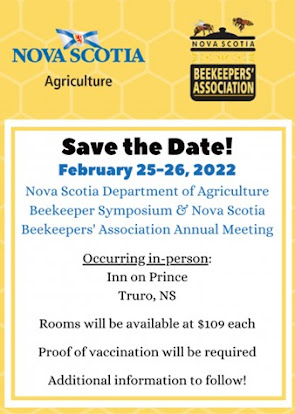
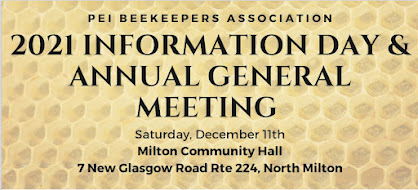
Save the Date - Upcoming AGMs

Nova Scotia:

For more information see the NSBA website, HERE.

Prince Edward Island:

For more information, see contact information below. 


PRE-REGISTRATION FOR THIS EVENT IS NECESSARY. In order to safely adhere to the maximum number of participants as outlined in Provincial meeting guidelines, all participants (in-person or online) have to pre-register for this event by Tuesday, December 7th by contacting our office at 902-268-7289 (call), joann@peifa.ca (email) or 902-314-8465 (text)


Connecting with ATTTA Specialists


If you’d like to connect with ATTTA specialists or learn more about our program, you can:


Canadian Report on Wintering Loss

Thursday, 15 July 2021

One of the greatest challenges for Canadian beekeepers is our long and harsh winters.  The number of colonies that survive through until spring will determine pollination units and honey production for the subsequent season.  Overwintering success is also a strong indication of the overall health of our colonies as weak, diseased, or infested hives are less likely to survive.  For these and many other reasons, beekeepers should keep good records of their winter success and nationally, a report is generated with important benchmark information on honey bee losses.  We have provided a brief summary and overview of the provincial and national wintering loss data for the 2020 / 2021 period.

Canadian Report on Wintering Loss

Each year the Canadian Association of Professional Apiculturists (CAPA) publishes their “Statement on Honey Bee Wintering Losses in Canada”. This report is based on data collected through homogenized questions asked to a sample of each province’s beekeepers by our provincial apiarists. This year’s preliminary results, based on the winter season of 2020 and 2021, showed that nationally there was a decreased winter loss rate. Preliminary results indicate that this past winter, beekeepers reported a winter loss of 23.2% compared to the previous year’s (2019 / 2020) rate of 30.2.%.

Our region showed a good result with all Atlantic provinces reporting below the national average, and most reporting below their 2019 / 2020 average winter losses (Table 1).  This is a reflection on the relatively mild winter and health of our bees entering into winter. Winter losses, as a reflection of hive health, determine the number of hives available for pollination and the ability of the industry to expand numbers during the following season. Last winter’s weather was fairly mild for beekeepers in most of our region and the winter loss data reflects well on our regions’ beekeepers, even with the drought conditions experienced last summer. This result does not look at summer losses and trends which, with this year’s early spring, swarm-encouraging conditions, and greater potential for varroa populations to increase substantially, may be an important factor in our colony numbers going into and surviving this winter.

Table 1. Survey Parameters and Preliminary Honey Bee Colony Mortality (2020 / 2021) for Atlantic Canadian Provinces


We have included some general comments from our region’s provincial apiarists on the success of the individual Maritime provinces.

Cameron Menzies, Prince Edward Island:

“We had another decent winter fortunately – about 16% loss on average. It was a mild winter which ended up being likely forgiving for beekeepers who didn’t feed enough in the fall/ wrap in time. The top reported causes of colony loss ended up being poor queens and weak colonies in the fall. Starvation was not reported as a top cause of mortality.

Spring of course, came a bit early up here too and the dandelions, tree inflorescences, etc. were available a week or so sooner than normal. So far, so good!”

Jason Sproule, Nova Scotia:

“Hive numbers have been holding steady for the past few years. Nova Scotia generally experienced a mild winter and a gentle spring with early bloom and lots of good flying days. Overall, winter losses were estimated to be 12.3% which is the lowest in more than a decade and within what is considered sustainable. Most hives are wintered indoors (76%) but there were comparable losses for both indoor (12%) and outdoor (13%) wintering methods.

Surveyed beekeepers were able to identify reasons for losses such as queen health, weak colonies in the fall, and starvation. It is encouraging that commercial beekeepers seem to have a handle on Varroa mite management as this has not been considered a major reason for winter loss in recent years. 79% of commercial beekeepers are using a standardized mite monitoring technique such as sticky boards or alcohol washes and many are applying mite control treatments. Apivar is by far the most relied upon mite control treatment and survey respondents are appropriately managing resistance by using this treatment only once per season and rotating with other treatments as needed.  I hope our beekeepers keep up the super work.”

Chris Maund, New Brunswick:

“New Brunswick beekeepers who reported honey bee winter loss results for the 2020 to 2021 winter loss survey had an average of 13.2% honey bee colony losses, which was low compared to other years. Beekeepers with 50 or more colonies had been surveyed. Respondents cited the two major causes of honey bee losses as being either not known or poor queens.”


The CAPA Statement on Honey Bee Wintering Losses in Canada is a useful tool for beekeepers and a good measure of our individual success.  A review of this report is highly recommended for well-informed beekeepers.  So, take a few minutes and read the final full report ONLINE.


Connecting with ATTTA Specialists


If you’d like to connect with ATTTA specialists or learn more about our program, you can: