Showing posts with label AGM. Show all posts

A Review of the New Brunswick Beekeepers Association AGM

Friday, 17 March 2023

This past weekend, ATTTA attended the New Brunswick Beekeepers Association Annual General Meeting in Moncton. The meeting was well attended with interesting speakers and engaged attendees. Read on for an overview of this lovely event.

A Review of the New Brunswick Beekeepers Association AGM

The NBBA AGM began on Friday evening, March 10th, to welcome members. Keynote speaker John Van Alten, from Dutchman’s Gold in Ontario, addressed the group to tell the admirable story of his family business. Hearing the success of their company is inspiring and optimistic for our Canadian industry! The evening wrapped up with the opportunity to explore beekeeping equipment in a trade show and socialize with the other beekeepers and meeting-goers.

Saturday was a full day of presentations and workshops. The morning began with the business meeting of the NBBA, during which Fletcher Colpitts was acknowledged for his significant contribution to the New Brunswick beekeeping industry. Fletcher has been a major player in Atlantic Canadian beekeeping and has recently retired from his longstanding role as chief apiary inspector for the province. He will be missed in this official role but with his heart in beekeeping, he assured the group he will not be hard to find.

NBBA Secretary / Treasurer Brian Pond addressing the group.

After the business meeting, we heard more from John Van Alten. This time, presenting the queen rearing operation run by his wife Alison Van Alten through her Tuckamore Beekeeping Company. Alison is a leader in the Canadian queen rearing industry and it was enlightening to see how the company manages the production of so many queen honey bees, distributed as mated queens, queen cells, and nucleus colonies. 

Following John were the provincial updates. Provincial Apiarist Chris Maund provided an update on the 2022 NB beekeeping industry as well as an overview of the new Bee Act legislation which was enacted on March 1st. This act includes new reportable pests and disease, including varroa mites demonstrating synthetic miticide resistance. Under this act, new beekeepers must register their colonies within ten days of acquisition and one hive per apiary must be labeled with responsible owner’s beekeeper identification number. There are also updates to the rules around honey bee importation. Be sure to follow all applicable protocol prior to any interprovincial colony movement! Learn more on the Government of NB Agriculture, Aquaculture, and Fisheries (DAAF) website. 

Blueberry Crop Specialist, Mike Melanson, provided an overview of the NB wild blueberry industry in 2022. It was a good year for wild blueberry growth, in terms of rainfall, resulting in heavier than average berries. Estimates from Stats Canada and the NB DAAF report that NB produced between 65-78 million pounds of berries in the past season. The Honey Bee Development Program is coming to an end after five successful years and ultimately approved $582,889 towards expansion projects. 

After Mike, Karen Thurlow, the new NB Apiary Inspector spoke about what she observed in honey bee colonies this past season. Her bad news was that varroa mite populations are growing and bringing with them harmful honey bee viruses, including Deformed Wing Virus and Chronic Bee Paralysis. She encourages beekeepers to monitor colonies regularly, especially after treatments to ensure that they were successful! The good news is that there was very little impact from small hive beetle in 2022 and no reports of American Foulbrood Disease! In controlling pests and disease, Karen advises beekeepers to be proactive and not reactive. 

ATTTA provided an update to the group, as well, and led two workshops on the ABCs of Beekeeping and What to Choose for Mite Control. We are always pleased to participate in our provincial beekeeper association meetings for the chance to engage with the community! Dr. Luc Boudreau provided insight into the honey bee research at the University of Moncton, and the meeting closed with warm words from the NBBA Secretary / Treasurer Brian Pond.

Thank you to the NBBA for another successful meeting! In next week’s blog, we will review the NB Hort Congress!


Connecting with ATTTA Specialists


If you’d like to connect with ATTTA specialists or learn more about our program, you can:


Nova Scotia Beekeepers Annual General Meeting 2023

Thursday, 2 March 2023

With the light at the end of the winter tunnel appearing, beekeepers are thinking towards the spring season.  We are anxious to get back into our hives but in the meantime, there are meetings and events happening across the Atlantic region to keep beekeepers engaged.  The most recent of these was held last weekend in Truro, Nova Scotia.  A well-attended and efficiently run AGM for the Nova Scotia Beekeepers Association was a great success and a welcome return to in-person attendance.

Nova Scotia Beekeepers Annual General Meeting 2023

The 2023 meeting of the Nova Scotia Beekeepers Association was a return to in-person events after a few years of isolation.  The opportunity to reacquaint friends and colleagues was appreciated by everyone, as was the chance to meet new beekeepers.  Friday night was a gathering of around 30 commercial beekeepers.  The discussion focused on specific challenges for the commercial sector.  The main themes of the discussion were around honey bee health and supply for pollination.

NSBA president, Tyler Hobbs, welcomes everyone to the 2023 AGM (Duncan Wetzel, NSBA Vice President in foreground).

Saturday had a full agenda of speakers and presentations.  The day kicked off with a welcome from the NSBA president, followed by a presentation from the NS Provincial Apiarist, Jason Sproule.  An excellent overview of the past year in beekeeping was provided. Jason shared statistics demonstrating the growth in numbers of new beekeepers and overall colonies in the province in 2022.  ATTTA followed Jason with a short overview of all the team’s work over the past year.

A presentation entitled CFIA for Dummies, from Margaret Cornect, provided practical information for beekeepers around the rules for selling honey and related products.  Margaret shared her experience, which is significant, and provided advice for anyone producing products for sale to the public.  The practicality of Margaret’s talk was directly beneficial for all beekeepers on a subject which many find complex.

A range of trade stands, including ATTTA, were included in the NSBA AGM!

The rest of the day saw excellent presentations on the work of the Canadian Honey Council, Perennia and the Wild Blueberry Producers Association of Nova Scotia.  John Murray led the meeting in a moment of silence for beekeepers lost to us in the past year.  He also presented a lifetime achievement award to Gary Smeltzer.  The contribution and dedication of Gary to the NS beekeeping industry was unanimously recognized by all in attendance.  Congratulations to Gary!

Mr. Gary Smeltzer, awarded the NSBA Lifetime Achievement award.

Both Tom Cosman and Rodney Reid shared their personal journeys in beekeeping.  Tom is a well-known Nova Scotia beekeeper and co-owner of Cosman and Whidden Honey.  His sincere passion for beekeeping and pride in being part of a multigenerational business came through in his presentation.  All those present were attentive and appreciative, as Tom’s beekeeping story was told.  A similar personal narrative was shared from Rodney Reid of Newfoundland.  Rodney’s presentation completed the day and provided a different prospective on beekeeping.  As a relatively young industry, beekeeping in NL faces unique challenges but the participants from that province are without doubt dedicated to the craft. Rodney is an example of the enthusiastic, progressive industry which is developing in that province.  It is always motivational to hear such success stories, especially for new beekeepers making decision on what path they will take.

Remember the next meeting in our region will be the New Brunswick Beekeepers Association AGM,  March 10 & 11.  Details can be found on their website: nbba.ca


Connecting with ATTTA Specialists


If you’d like to connect with ATTTA specialists or learn more about our program, you can:


Report on The Prince Edward Island Beekeepers Association AGM 2022

Thursday, 15 December 2022

The time of year has begun for beekeeper gatherings and meetings. Winter is a great opportunity to connect with the community, reflect on the season past, and start planning for the year to come! This past Saturday, the Prince Edward Island Beekeepers Association held their Annual General Meeting in Charlottetown. ATTTA was pleased to be a part of this lovely event and will reflect on the highlights of the meeting in this week’s blog.

Report on the Prince Edward Island Beekeepers Association AGM 2022

Members of the PEIBA came together this weekend and were joined by guest speakers from across the country. The day began with an informative update from Provincial Apiarist, Cameron Menzies, who provided a snapshot of the PEI beekeeping industry. The growing industry continues to pursue the goal of being self-sufficient for honey bee pollination of wild blueberry fields. Towards this end, the 2022 Pollination Expansion Program approved over $300 thousand year to support beekeepers. Since the program began, the industry has seen 25% hive increase on the island. To fill the existing pollination gap, additional hives are imported primarily from Ontario. Brood inspections by Cameron and his team indicated no signs of biosecurity threats in these colonies. Conditions for pollination were good this year, and the island saw high yields of wild blueberries, the second largest yield to date! This is optimistic for the province, as productive wild blueberry land continues to expand.

Beekeeper Ian Steppler joined the meeting remotely from Alberta, where he produces his popular YouTube Channel, A Canadian Beekeeper’s Blog.  Ian offered insight into techniques to improve apiary sustainability by maintaining a reliable stock of nucleus colonies to replace seasonal losses. The cycle begins by overwintering a collection of healthy nucs to replace winter losses. Next, spring assessments reveal additional unproductive colonies to be replaced and identify prolific colonies which are used to resupply the nuc bank. Ian also discussed his queen production system. Internal queen rearing facilitates rapid nuc production during the beekeeping season, which can then be used to replace weak hives in the fall and provide an abundance of strong nucleus colonies to overwinter. In cyclical fashion, the sustainability of the apiary is supported by an abundance of available nucs to replace dead or failing colonies.

Paul Kelly, from the University of Guelph Honey Bee Research Centre, participated in the meeting as well. Paul emphasized ways that a beekeeping community can move towards self-sufficiency by support from within. Speaking from his experience, Paul discussed how the Ontario industry improved their regional self-sufficiency by reducing overwintering losses, improving queen production techniques, replacing losses internally with hive splits, and overwintering nucs to restore winter hive losses. 

ATTTA provided our team and research updates, as well, as we continue to make our way across the Atlantic Region to join the beekeeping and wild blueberry associations in their annual gatherings. Starting with an encouraging address to association members, President Troy Fraser concluded the event with a constructive business meeting. Overall, it was a successful event and ATTTA looks forward to the coming year for PEI beekeepers!


Connecting with ATTTA Specialists


If you’d like to connect with ATTTA specialists or learn more about our program, you can:


Nova Scotia Wild Blueberry Conference

Thursday, 24 November 2022

Now that the busy beekeeping season is winding down, there are many opportunities for beekeepers to attend industry meetings.  Groups, like provincial beekeeping associations, have workshops and technical sessions which support ongoing professional development.  There are many opportunities for producers to further understand best practices and gain knowledge on new information around their industry.  These meetings also provide networking and social opportunities for both new and established participants in the industry.  As these meetings occur over the next few months, attendance is encouraged and always of benefit.  An excellent example of an industry meeting, the Nova Scotia Wild Blueberry Conference, has just occurred.  In this week’s blog you will find some of the highlights of the meeting.

Nova Scotia Wild Blueberry Conference

The annual conference and AGM of the Wild Blueberry Producers Association of Nova Scotia (WBPANS) was a great success in Truro last week (Nov 17 – 18).  Many blueberry producers, in addition to beekeepers, took advantage of the opportunity to meet in person which resulted in a healthy turnout for the event.  Two packed days of informative talks and opportunities for networking brought in people from all three Maritime provinces as well as the state of Maine.

The first day started with a warm welcome to all those who joined in person, as well as those accessing the meeting virtually.  The WBPANS outgoing president, Peter Swinkels, gave an excellent, concise report of the past year and an optimistic view to the future of the blueberry sector.  A more detailed report on the activities of WBPANS was given by Peter Burgess which reaffirmed our appreciation of Peter and his team for the tremendous volume of work achieved by the Association on behalf of the industry. 

The first technical report of the meeting was provided by Gilbert Lavoie as a commodity market overview of wild blueberries.  Mr. Lavoie, as founding partner of Forest Lavoie Conseil, told the group that Europe represents the largest market for the 100 million pounds of blueberries leaving the Maritime region.  The global market, 213 million pounds combined wild and cultivated blueberries, is increasing production, especially in China.  Appreciation of the quality of wild vs cultivated varieties was proven by this report as evidenced by the premium price paid for wild blueberries.  Although a generally optimistic economic report, Mr. Lavoie did cautiously suggest a potential downturn in price moving forward.

The importance of pollination services and honey bees was a theme throughout the conference.  Two sessions were dedicated to this specifically on the first day.  A pollination panel, with a group of experienced industry experts, discussed aspects of preparing for and managing pollination services.  An afternoon break-out session, chaired by Mario Swinkels, provided a chance for commercial beekeepers to discuss challenges and opportunities in that sector.

Day two of the conference focused on research highlights. Dr. David Percival and Joel Langdon from Dalhousie University talked about developments in new remote sensing technologies for identifying and subsequently eliminating field weeds, aimed to save producers time and improve accuracy in weed management. Dr. Travis Esau also discussed results of a new technology in weed management, an electronic weed Zapper which kills target vegetation. PhD candidate, Janelle MacKeil, provided an overview of her project which aims to contribute to the management of the blueberry fruit fly. In his presentation on herbicide application, Dr. Scott White emphasized his recommendation to always use Chikara together with Ignite for fescue management. 

Perennia and ATTTA were pleased to present at the conference, as well! Wild Blueberry Specialist Hugh Lyu and Agriculture Technology Specialist Thomas Harrington presented updates on the Weather Station Assistance Program, which had excellent uptake by wild blueberry producers. These weather stations are located throughout Nova Scotia and are already contributing to relevant research for wild blueberry producers. For example, Hugh discussed how the data is contributing to a better understanding of growing degree days for the wild blueberry bud F2 stage, which has important implications for management decisions. ATTTA was able to give preliminary results from our research projects over the summer! We will continue to share our results in our blog as these develop!

Overall, the event was a productive two days highlighting the significance of the blueberry industry to the Maritime region of Canada. Thank you to WBPANS for hosting and to all who attended!


Connecting with ATTTA Specialists


If you’d like to connect with ATTTA specialists or learn more about our program, you can:


2021 CAPA AGM

Thursday, 2 December 2021

Earlier in the month the Canadian Association of Professional Apiculturists (CAPA) hosted their Annual General Meeting virtually. We were very happy to take part and grateful to for the opportunity to represent the Atlantic honey bee industry! Provincial apiarists, researchers, educators, and other honey bee specialists joined together to discuss the key happenings of the Canadian beekeeping industry over this past year. It is also an opportunity to highlight priorities as we look ahead and make plans for the upcoming 2022 beekeeping season. Keep reading for more information on some key updates, announcements, and discussions that were shared during the 2021 CAPA AGM.

News on upcoming industry meetings! Get your calendar ready and keep reading to find out what dates to save and where to keep an eye out for more information to come on these approaching events!

2021 CAPA AGM – November 4/5th, 2021

The Canadian Association of Professional Apiculturists is our national governing body of beekeeping, and this group works collaboratively to “study, educate and administrate in the field of apiculture and pollination”. Under this umbrella, CAPA members are engaged in various aspects of apiculture, including honey bee regulations, research and inspections, statistical oversight, quality inspection of hive product, conservation efforts for native bee species, and working towards ensuring the Canadian apiculture industry continues in a sustainable manner. An example of the excellent work of CAPA that will be familiar to most beekeepers is the Annual Colony Loss Report.

This year’s CAPA AGM included many updates and announcements shared over the two-day event.  These included presentations from top honey bee researchers, the Canadian Honey Council (CHC), tech transfer teams, and more! There was some especially exciting news that, with the addition of a new tech transfer team in BC, for the first time Canada now has apiculture tech transfer programs in place across the breadth of the country!

In addition to the shared updates and reports from representatives of each tech transfer program across Canada, provincial apiarists (PAs) also reported on the 2021 beekeeping season in their respective provinces. 
The PAs from the Atlantic provinces provided an overall positive report on the past beekeeping season with some concerns over varroa mite levels. Other provinces saw variable beekeeping seasons with some reports of severe draughts effecting honey bee colonies. Similar to the tech transfer teams, this is an important opportunity for provincial apiarists to not only advocate for their own provincial beekeeping industries but also to provide support to other provinces in the case of common concerns and sustainability efforts.

One such common concern among provinces, and also relating to sustainability efforts, is the matter of varroa mite management. 
There is a perceived need to work towards more sustainable pest management strategies to control the number one pest of honey bee colonies more effectively. It makes much more sense for professional apiculturists from all provinces concerned to work collaboratively towards addressing this concern. Knowledge sharing is valuable!

Speaking of knowledge transfer and staying connected, it is always great to hear from our American counterparts. CAPA members were joined this year by Apiary Inspectors of America (AIA) President, Kim Skyrm. The AIA is similar to CAPA in that, “The AIA goal is to provide accurate and helpful information for the successful management of honey bees, while seeking new information and ideas in honey bee management and plant pollination." One neat tool that AIA has supported is the creation of an online map point logging system (MiteCheck Survey) where beekeepers become citizen scientists and submit their mite levels for the purpose of visualizing the geographic distribution and severity of varroa mite infestations across North America. For more information about what the AIA is and what they have been up to, check out their website HERE.

This year, CAPA AGM attendees also heard from Judy Wu-Smart from the American Association Professional Apiculturists, who spoke on the ongoing environmental crisis at an ethanol plant located in Mead, Nebraska. At the plant, ethanol is produced using waste agricultural seeds that have various fungicide and insecticide coatings. 
Leaching from these improperly stored seeds creates a waste by-product laced with seed coating products, which is allowed to enter the broader environment. The effects of this environmental contamination are being seen by beekeepers and negatively impacting colonies in the area. The Sierra Club, Nebraska Chapter is working to put an end to this and inform others on this environmental disaster to hopefully avoid future cases. For more information on this situation, check out the Sierra Club’s website, HERE.


Save the Date - Upcoming AGMs

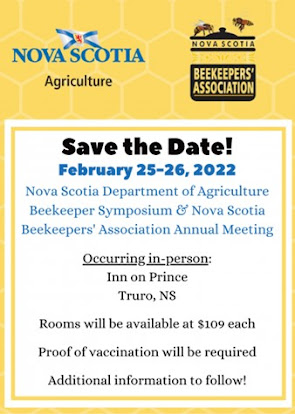
Nova Scotia:

For more information see the NSBA website, HERE.

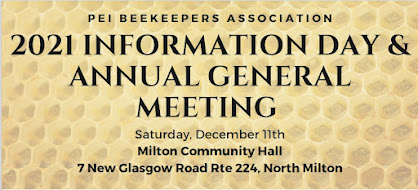
Prince Edward Island:

For more information, see contact information below. 


PRE-REGISTRATION FOR THIS EVENT IS NECESSARY. In order to safely adhere to the maximum number of participants as outlined in Provincial meeting guidelines, all participants (in-person or online) have to pre-register for this event by Tuesday, December 7th by contacting our office at 902-268-7289 (call), joann@peifa.ca (email) or 902-314-8465 (text)


Connecting with ATTTA Specialists

If you’d like to connect with ATTTA specialists or learn more about our program, you can: