Showing posts with label 2021. Show all posts

Savory Wild Blueberry Honey & Pancetta Flatbread Pizza

Thursday, 23 December 2021

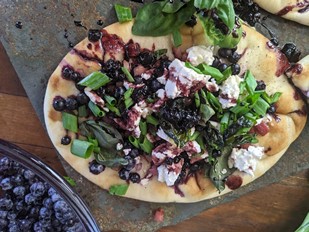
For this week’s blog, ATTTA is pleased to feature the Maritime chef Alain Bossé, otherwise known as the Kilted Chef! Chef Alain is a culinary leader with a reputation for promoting local ingredients. We would like to acknowledge and thank him for his support of Atlantic wild blueberries! In the holiday spirit, the Kilted Chef has shared with us a recipe that is made extra delicious with locally sourced blueberries and honey. While entertaining friends and family this holiday season, consider wowing them with this unique and delicious pizza made from ingredients that are close to home… perhaps from your own backyard!

Savory Wild Blueberry Honey & Pancetta Flatbread Pizza


Makes 4

  • 4 flatbread of your choice, we used naan
  • 1/2 cup diced pancetta
  • 24 (or so) basil leaves
  • 1/2 cup Vandykes wild blueberry juice
  • 1/4 cup balsamic vinegar
  • 1/4 cup honey
  • 1 cup frozen wild blueberries, divided
  • 4 oz. feta
  • 2 green onions, diced

Place the diced pancetta into a sauté pan along with half of the basil leaves, fry until the pancetta is crispy. Use a slotted spoon to remove the pancetta and the basil. Reserve the basil infused drippings from the pan.

Prepare the reduction by combining the balsamic vinegar, the wild blueberry juice, the honey and a 1/2 cup of wild blueberries, bring to a boil then reduce to a simmer and cook until the syrup coats the back of a spoon.

Brush the naan bread with the basil infused oil, top with the pancetta, the remaining half cup of wild blueberries, the green onions, and the crumbled feta. Chiffonade the remaining basil and add to the top as well. Place in a 450° oven until the flatbread begins to crisp and the cheese is warm. Remove from the oven, drizzle with the reduction, and garnish with the reserved crisp basil leaves.

Be sure to check out other recipes and learn more about the Kilted Chef on their website and social media platforms:

Website: www.kiltedchef.ca 

Facebook: The Kilted Chef

Instagram and Twitter: kiltedchefalain

Kilted Chef Media Kit: https://dashboardliving.lpages.co/kilted-chef-media-kit


Thank you Chef Alain! 
Wishing a very merry holiday to everyone from the Atlantic Tech Transfer Team for Apiculture! Bon appetite! 


Connecting with ATTTA Specialists


If you’d like to connect with ATTTA specialists or learn more about our program, you can:


Oh, the Weather Outside is Frightful, but the Cluster is so Delightful!

Thursday, 16 December 2021

With harsh winter weather descending, many of us are turning to inside activities and appreciating the warmth provided by our homes. Honey bees are much the same! In Atlantic Canada, beekeepers have their hives wrapped up and tucked away for the winter, meanwhile the bees within are still busy at work. Unlike most insects, honey bees survive the winter in a state of activity which takes the form of a winter cluster. Read on to learn more about what your winter bees are up to in the cluster during this time spent apart.

Oh, the Weather Outside is Frightful, but the Cluster is so Delightful!

During this time of year, honey bees truly have no place to go. Bee development begins to modify in the late fall when pollen resources start to dwindle. This physiological transition into winter bees is reflected in behavioral differences which serve the colony as their needs change with the season1.

Winter bees have two major tasks. Firstly, with the temperature dropping, bees need to focus on keeping the colony warm via thermoregulation2. The drop in temperature and shorted days which impacts the life of honey bees also mean changes for the plant communities which bees rely upon for protein and brood rearing. In the absence of high-quality forage, the colony will temporarily cease brood production. As a result, the second major task of winter bees is to initiate brood rearing when spring begins to approach. 

Brood rearing will not have initiated yet here in Atlantic Canada, so for now our bees are busy with thermoregulation. A recently published review article likens the thermoregulation of a bee hive to human engineered thermoregulation within a building, where the essential elements are heating, ventilation, and air conditioning3. The winter cluster is vital to thermal regulation of a hive and carries out heating and ventilation functions.

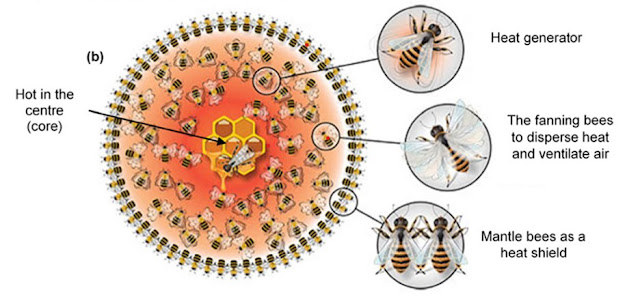
Like summer bees, winter bees practice a division of labor within the cluster to effectively maintain the core temperature around 32-36°C. The cluster is layered in three parts (see Figure 1). The inner circle, outer circle, and “mantle”. The inner circle can be thought of as the central heating system of a building. Here, the bees remain relatively stationary and produce heat through contractions of the thoracic flight muscles- shivering. Surrounding these bees are the ventilators. Ventilator bees move around and fan to distribute the heat produced in the core as well as regulate CO2 levels. The “mantle” bees form the outer layer. They link closely together to create a barrier that keeps the heat within the cluster, much like a layer of insulation around a building. Individual bees take turns in each of these roles, based on the needs of the colony at that time. There are other mechanisms which bees use to maintain hive temperature that are similar to human infrastructure, as well. For example, bees use propolis to seal cracks and crevices in the same way that humans use caulking or other sealants.

Figure 1. Diagram of the layering of winter bees within the cluster. Heat generator bees shiver to produce heat, fanning bees distribute the heat and regulate CO2, and mantle bees contain the heat within the cluster (Jarimi et al. 2020 modified from Purdue Extension 2017).

As beekeepers, it is valuable to understand what is going on in our hives so that we can provide them the best environment possible for their productivity. Through the activities described above, honey bees have adapted to successfully endure winters. However, honey bees did not develop these adaptations in the unique Atlantic Canadian climate nor did they evolve within Langstroth hive boxes. As such, we can take care by doing things such as providing top entrances to support ventilation, wrapping hives to reduce air gaps, providing additional insulation, and being sure to leave plenty of sealed food reserves for the hive to obtain its energy through the long winter months. 


1. Knoll, Stephane, Walter Pinna, Antonio Varcasia, Antonio Scala, and Maria Grazia Cappai. 2020. “The Honey Bee (Apis Mellifera L., 1758) and the Seasonal Adaptation of Productions. Highlights on Summer to Winter Transition and Back to Summer Metabolic Activity. A Review.” Livestock Science 235 (May): 104011. https://doi.org/10.1016/j.livsci.2020.104011.

2. Sammataro, Diana, and Alphonse Avitabile. 2011. The Beekeepers Handbook. 4th ed. Cornell University Press.

Essential Oils to Suppress Varroa Mites

Thursday, 9 December 2021

During the upcoming holiday season, we will be partaking in those indulgences saved only for this celebratory time of year.  The odor of cinnamon, cloves and nutmeg will fill the air.  As we gather together not only will we be surrounded by these favorite smells and flavors, we will be exchanging gifts.  We all recognize the offerings by the Magi of gold, frankincense and myrrh as the original gifts of Christmas.  What might you ask has this to do with beekeeping?  You will be surprised, so read on to learn more.

Another launch of a “Beekeeping Minute” video.  These short videos are bite size pieces of beekeeping presented to help new entrants understand basics of both the art and science of keeping honey bees.  This week's video is on cleaning hive tools and can be found here: Atlantic Bees: https://youtu.be/4xWgErUbw6w

Essential Oils to Suppress Varroa Mites

Beekeepers are continually battling varroa mite with all the weapons available to us!  Experienced beekeepers know that high varroa mite levels will result in lost colonies.  The arsenal to fight these parasites is down to only one reliable chemical treatment and there is concern that this may be coming to the end of its life cycle.  Resistance seems to be inevitable and we have had a good run with Apivar.  Beekeepers who are keeping their fingers crossed and hoping it remains effective are likely also expecting Santa Clause to come this Christmas!  So alternatives need to be considered.  We have options that due to their mechanism of action and being naturally derived will not create resistant mites as far as we know.  One of these options is essential oils.

What are essential oils is a fair question to ask.  The definition from the Commission of the European Pharmacopoeia, essential oils are odorous products, usually with a complex composition, obtained from a botanically defined plant raw material by steam distillation, dry distillation, or a suitable mechanical process without heating1..  Closer to home, the government of Canada definition states, “Essential oils are complex mixtures of volatile compounds produced as secondary metabolites in aromatic plants. They can be extracted from these plants by distillation, solvent extraction, cold pressing, and other means.”2.  Therefore, these are plant-based products extracted so as to be little altered from the original botanical compounds found naturally.  Along with the definitions above, these oils must maintain the “essence” of the original plant which for our understanding would mean odor.  The odor being the volatile products, or vapors, of these substances and important for their mode of action as a pesticide.  The original purpose of these substances in the plant are complex but often act as insect repellants.

How do they work?  The mechanism of action is poorly understood.  They operate at a molecular level to perturb cellular, ionic and enzymatic activities.  It would seem that evolutionarily, there are target insects for these plant compounds as either repellants or attractants.  It could also be suggested that entomophilous plants, requiring insect pollination, would not target bees negatively with these natural defenses.  This suggests why certain essential oils are not as toxic to bees as they are to mites!

So a few examples of essential oils include frankincense and myrrh, to bring us back to our Christmas theme.  An additional list of other examples reads like part of a Christmas pudding recipe: cinnamon, cloves, nutmeg, ginger and mace.  For a more extensive list of essential oils tested experimentally as controls for varroa mites, read Evaluating the Efficacy of 30 Different Essential Oils against Varroa destructor and Honey Bee Workers (link provided below)..  With all these examples, we must remember that we can only treat our bees with products which have been registered for use in Canada.  There are two essential oil products available for beekeepers in Canada to control varroa mites.

Thymovar is derived from the herb thyme with the active ingredient thymol and has been licensed in Canada in 20162.. ApiLife Var is a combination of essential oils including Eucalyptus oil, levomenthol, camphor, and thymol; licensed in Canada 20204..  Recent research in Canada has demonstrated that thymol based acaricides can be up to 96.6% effective in controlling varroa mites5..

Hundreds of essential oils have been tested as acaricides 6..  We have two essential oil products available for use here in Canada.  These are proven effective and also have the advantage of being a natural plant derived product.  If used correctly they also have no effects on human health and a reduced chance of harmful residue compared to synthetic acaricides.  There seems to be no concerns of resistance developing in mites with these products.  Current research indicates low toxicity for honey bees and even less than formic acid or oxalic acid.

As concern over the long-term efficacy of chemical treatments grows, we are looking optimistically at alternatives.  As part of an integrated pest management approach to controlling Varroa destructor we must use varied strategies to ensure the health of our bees.  As we are now planning our IPM strategies to control varroa mites this coming season, consider all treatment options including essential oils.  As wise men knew in the past, essential oils are to be valued whether as Christmas gifts or in maintaining healthy honey bee colonies! 

 1. Hýbl, M.; Bohatá, A.; Rádsetoulalová, I.; Kopecký, M.; Hoštiˇcková, I.; Vaníˇcková, A.; Mráz, P. (2021) Evaluating the Efficacy of 30 Different Essential Oils against Varroa destructor and Honey Bee Workers (Apis mellifera). Insects, 12, 1045. https://pubmed.ncbi.nlm.nih.gov/34821845/

 2. Pest Management Regulatory Agency (2017) Regulatory Directive DIR2017-02, Essential Oil-based Personal Insect Repellents (EOPIR) https://www.canada.ca/en/health-canada/services/consumer-product-safety/reports-publications/pesticides-pest-management/policies-guidelines/regulatory-directive/2017/02-regulatory-directive-essential-oil-based-personal-insect-repellents-dir-2017-02.html

3. Pest Management Regulatory Agency (2016) Registration Decision RD2016-16, Thymol, https://www.canada.ca/en/health-canada/services/consumer-product-safety/reports-publications/pesticides-pest-management/decisions-updates/registration-decision/2016/thymol-rd2016-16.html#a3

4. Pest Management Regulatory Agency (2020) Racemic camphor,eucalyptus oil, lmenthol and thymol and Api Life VAR, https://publications.gc.ca/collections/collection_2020/sc-hc/h113-9/H113-9-2020-12-eng.pdf

5. Qodratollah Sabahi, Nuria Morfin, Berna Emsen, Hanan A Gashout, Paul G Kelly, Stephanie Otto, A Rod Merrill, Ernesto Guzman-Novoa, Evaluation of Dry and Wet Formulations of Oxalic Acid, Thymol, and Oregano Oil for Varroa Mite (Acari: Varroidae) Control in Honey Bee (Hymenoptera: Apidae) Colonies, Journal of Economic Entomology, Volume 113, Issue 6, December 2020, Pages 2588–2594, https://doi.org/10.1093/jee/toaa218

6. Abdessamad Aglagane, El-Mustapha Laghzaoui, Sana Ben Elfakir, Omar Er-Rguibi, Abdelaziz Abbad, El Hassan El Mouden & Mohamed Aourir (2021) Essential oils as sustainable control agents against Varroa destructor (Acari, Varroidae), an ectoparasitic mite of the western honeybees Apis mellifera (Hymenoptera: Apidae): Review of recent literature (2010-onwards), International Journal of Acarology, 47:5, 436-445


                                                Connecting with ATTTA Specialists


If you’d like to connect with ATTTA specialists or learn more about our program, you can:

2021 CAPA AGM

Thursday, 2 December 2021

Earlier in the month the Canadian Association of Professional Apiculturists (CAPA) hosted their Annual General Meeting virtually. We were very happy to take part and grateful to for the opportunity to represent the Atlantic honey bee industry! Provincial apiarists, researchers, educators, and other honey bee specialists joined together to discuss the key happenings of the Canadian beekeeping industry over this past year. It is also an opportunity to highlight priorities as we look ahead and make plans for the upcoming 2022 beekeeping season. Keep reading for more information on some key updates, announcements, and discussions that were shared during the 2021 CAPA AGM.

News on upcoming industry meetings! Get your calendar ready and keep reading to find out what dates to save and where to keep an eye out for more information to come on these approaching events!

2021 CAPA AGM – November 4/5th, 2021

The Canadian Association of Professional Apiculturists is our national governing body of beekeeping, and this group works collaboratively to “study, educate and administrate in the field of apiculture and pollination”. Under this umbrella, CAPA members are engaged in various aspects of apiculture, including honey bee regulations, research and inspections, statistical oversight, quality inspection of hive product, conservation efforts for native bee species, and working towards ensuring the Canadian apiculture industry continues in a sustainable manner. An example of the excellent work of CAPA that will be familiar to most beekeepers is the Annual Colony Loss Report.

This year’s CAPA AGM included many updates and announcements shared over the two-day event.  These included presentations from top honey bee researchers, the Canadian Honey Council (CHC), tech transfer teams, and more! There was some especially exciting news that, with the addition of a new tech transfer team in BC, for the first time Canada now has apiculture tech transfer programs in place across the breadth of the country!

In addition to the shared updates and reports from representatives of each tech transfer program across Canada, provincial apiarists (PAs) also reported on the 2021 beekeeping season in their respective provinces. 
The PAs from the Atlantic provinces provided an overall positive report on the past beekeeping season with some concerns over varroa mite levels. Other provinces saw variable beekeeping seasons with some reports of severe draughts effecting honey bee colonies. Similar to the tech transfer teams, this is an important opportunity for provincial apiarists to not only advocate for their own provincial beekeeping industries but also to provide support to other provinces in the case of common concerns and sustainability efforts.

One such common concern among provinces, and also relating to sustainability efforts, is the matter of varroa mite management. 
There is a perceived need to work towards more sustainable pest management strategies to control the number one pest of honey bee colonies more effectively. It makes much more sense for professional apiculturists from all provinces concerned to work collaboratively towards addressing this concern. Knowledge sharing is valuable!

Speaking of knowledge transfer and staying connected, it is always great to hear from our American counterparts. CAPA members were joined this year by Apiary Inspectors of America (AIA) President, Kim Skyrm. The AIA is similar to CAPA in that, “The AIA goal is to provide accurate and helpful information for the successful management of honey bees, while seeking new information and ideas in honey bee management and plant pollination." One neat tool that AIA has supported is the creation of an online map point logging system (MiteCheck Survey) where beekeepers become citizen scientists and submit their mite levels for the purpose of visualizing the geographic distribution and severity of varroa mite infestations across North America. For more information about what the AIA is and what they have been up to, check out their website HERE.

This year, CAPA AGM attendees also heard from Judy Wu-Smart from the American Association Professional Apiculturists, who spoke on the ongoing environmental crisis at an ethanol plant located in Mead, Nebraska. At the plant, ethanol is produced using waste agricultural seeds that have various fungicide and insecticide coatings. 
Leaching from these improperly stored seeds creates a waste by-product laced with seed coating products, which is allowed to enter the broader environment. The effects of this environmental contamination are being seen by beekeepers and negatively impacting colonies in the area. The Sierra Club, Nebraska Chapter is working to put an end to this and inform others on this environmental disaster to hopefully avoid future cases. For more information on this situation, check out the Sierra Club’s website, HERE.


Save the Date - Upcoming AGMs

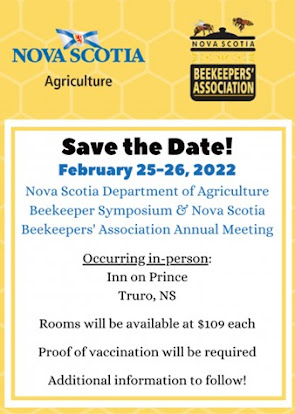
Nova Scotia:

For more information see the NSBA website, HERE.

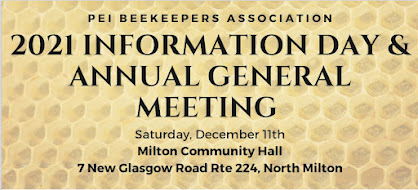
Prince Edward Island:

For more information, see contact information below. 


PRE-REGISTRATION FOR THIS EVENT IS NECESSARY. In order to safely adhere to the maximum number of participants as outlined in Provincial meeting guidelines, all participants (in-person or online) have to pre-register for this event by Tuesday, December 7th by contacting our office at 902-268-7289 (call), joann@peifa.ca (email) or 902-314-8465 (text)


Connecting with ATTTA Specialists


If you’d like to connect with ATTTA specialists or learn more about our program, you can:


Report: Honey Authenticity Surveillance Results

Thursday, 25 November 2021

Last week we tied up our series on the health benefits of hive products for both humans and for bees; some good information to keep in mind as we are getting into our typical ‘seasonal cold’ time of year. But of course, that’s not the main focus of the quickly approaching holiday season! With holidays comes giving and gifting and cozy cups of tea (or your hot beverage of choice), sweetened with some of the best honey if you’re lucky, Atlantic Canadian honey. Keep reading to learn more about the uniqueness and high quality of Canadian honey, especially that of Eastern Canada, and some thoughts and suggestions for beekeepers to keep in mind as we approach the holiday season.

We are excited to announce the release of the third video in our “Canadian Beekeeping Minutes” YouTube series of introductory beekeeping demonstrations. The winter season is a great opportunity for beekeepers to brush up on beekeeping practices and knowledge when we’re not running off our feet tending to our bees. Keep reading below to find out what this new demonstration is all about and where to find it.

Report: Honey Authenticity Surveillance Results*

(Originally published, in part, December 10, 2020: Blog No. 27)

The Canadian Food Inspection Agency (CFIA) examines the authenticity of Canadian honey through sampling, testing and collaboration of honey samples obtained from all around the world. The purpose of this process is to, “detect misrepresentation of honey adulterated with foreign sugars in both domestic and imported honey sold in Canada.” To detect any foreign sugars, honey samples were tested using two analyses: Stable Isotope Ratio Analysis (SIRA) and Nuclear Magnetic Resonance (NMR) analyses. These analyses compare specific characteristics of the sugars present in the samples to known characteristics of other sugar molecules in order to determine the source and origin of the sugars in a sample. This reveals whether the sugars present in a honey sample are naturally occurring in honey or are foreign and have been added, thereby revealing any adulteration of the honey product.

In the latest roundup of honey for testing, a total of 275 samples of honey that is sold in Canada were collected from across the country. 127 of these samples were targeted samples from sources with a greater chance of not complying to product analysis, and the other 148 samples were gathered by an independent third party to provide an overall monitoring of the honey marketplace in Canada.

In the category of targeted sampling, 16/127 samples were domestic and 111/127 were imported, with adulteration analyses results revealing:

  • 110/127 samples were satisfactory
  • 17/127 samples were unsatisfactory
    • 16/17 of these were imported honey samples

In the category of marketplace monitoring, 103/148 samples were domestic and 45/148 were imported, with adulteration analyses results revealing:
  • 145/148 samples were satisfactory
  • 3/148 samples were unsatisfactory
    • 3/3 of these were imported honey samples

“As a result of CFIA’s actions, an estimated 83,461 kg of adulterated honey was prevented from being sold in the Canadian marketplace [over the most recent round of honey sampling and testing].”* As almost all of the adulterated honey samples were imported (except for one), which goes some way to demonstrate that Canadian honey is a quality, pure product.

* Government of Canada, Canadian Food Inspection Agency. "Report: Honey authenticity surveillance results (2019 to 2020)" Full report available ONLINE.


Appreciating Atlantic Honey

Beekeepers are often eager to share the experience of tasting their hard-earned harvest and watch the expression of the Atlantic honey experience spread across the taster’s face. But, by being a beekeeper that sells honey, there also comes a responsibility to ensure this specialty product, produced and harvested by our hardworking Maritime bees and beekeepers, is not taken for granted. Instead, honey should be enjoyed with the full appreciation and awareness that it deserves. This is especially important during the holiday season of giving and appreciating, which is often expressed in the way of gifts. But beekeepers beware, although gifting honey is a lovely way to share this unique Atlantic specialty, receivers should be made aware of the value of this special gift. Unfortunately, in today’s society, much of a product’s value seems to be indicated by its price tag. So, if beekeepers choose to gift honey but not communicate its unique value or selling honey for less than full market value a full appreciation may not be realized. We want to ensure there is no unintentional depreciation in the value of Atlantic honey. Getting beekeepers talking about this topic and working together on improving the appreciation of Atlantic honey is to everyone’s benefit.


Canadian Beekeeping Minutes Demonstration #3

Make sure you are prepared for managing varroa mites next beekeeping season! Watch this ATTTA demonstration to learn how to perform an alcohol wash varroa mite sample, HERE.

Varroa mite management is one of the most important parts of honey bee pest and disease management. Management of varroa mites begins with performing a round of varroa mite sampling to get a measurement of the present varroa mite infestation level. Watch this ATTTA demonstration for step-by-step instructions on how to sample for varroa mites using the alcohol wash method. For more information on varroa mite management, to make sure both beekeepers and hives are prepared with the appropriate tools and knowledge to combat varroa mites next beekeeping season, please see ATTTA’s factsheet: Varroa Mite Management Options for Atlantic Canada.


Connecting with ATTTA Specialists


If you’d like to connect with ATTTA specialists or learn more about our program, you can:


Honey Has Numerous Health Benefits for Bees

Thursday, 18 November 2021

Over the past month or so, we have been exploring the potential values and applications of hive products in the world of human healthcare. We investigated as to what these potential values were, and which components of these natural bee products are responsible for lending these bioactivities that have potentials to promote human health. This week, we will take a look at the other side of that same frame (not sorry for the beekeeping pun!) and consider what health promoting factors honey holds for the honey makers themselves; honey bees!

Opportunity for PEI beekeepers: ATTTA is hosting a limited series of monthly informative discussion sessions with the PEI beekeeping industry. The second workshop of the series is set for November 24th, 2021. These sessions are offered through the PEI Beekeepers’ Association. See the infographic at the end of this week’s blog for all the details!

Honey Has Numerous Health Benefits for Bees*

This interesting article, delving into the health benefits of honey for honey bees, was published by the Smithsonian Magazine a few weeks ago and discusses a variety of benefits that honey offers to its little insect creators. It seems far-fetched that such a complex collection of organisms can be fueled and sustained by plain sugar water alone; there must be some other beneficial components in the main food source of bees that provide essential nutrients to sustain the proper healthy functioning of a honey bee colony. This article helped to highlight some of the key ways in which honey supports the health of honey bees. But, as the author highlights, this is no coincidence and is performed intentionally by bees as shown if you, “Offer a sick bee different varieties of honey, for example, and it will choose the one that best fights off its infection.” Bees have known about and have been taking advantage of the health benefits of various plant-derived chemicals (phytochemicals) through the collection of floral nectars and the making and consumption of honey and other hive products long before humans have! Honey is mostly sugar; however, it also contains other components including beneficial enzymes, vitamins, minerals, and various organic molecules. Thanks to these beneficial components, bees are able to collect and create their own functional food source that, compared to a diet of just plain sugar water, can:
  • Positively influence honey bee lifespan
  • Increase the tolerance of honey bees to extreme cold and other harsh environmental conditions
  • Improve the ability of honey bees to combat infections and promote wound healing
Interestingly, we can see some of these phytochemicals in action in some well-known honey bee health products. For example, thymol is a phytochemical from the thyme plant that has been found in honey and shown to significantly reduce fungal spores in honey bees. When bees forage from thyme plants, they are incorporating this natural defense into their functional diet to improve their overall health. There are similar phytochemicals present in some honey that are able to defend against European foulbrood and American foulbrood-causing bacteria. Some phytochemicals achieve this by altering the activity of certain honey bee genes that are involved in immunity and processes of detoxification. By altering certain genes, the production of various proteins, enzymes and other bioactive components is also altered; to potentially yield a greater benefit depending on the particular phytochemicals collected from a particular floral sources that contributed to a particular store of honey.
*McCoy, Berly, Knowable. “Honey Has Numerous Health Benefits for Bees”. October 25, 2021, Smithsonian Magazine. Full text available ONLINE.


Honey Bee Alchemy. A Contemporary Look at the Mysterious World of Bees, Hive Products and Health

If you are interested in learning more on the topic of hive products for both honey bee and human health, this book (originally written and published in Polish) has recently been translated to English and explores the following:

“This is the first English edition of an important book on “Honey bee alchemy” by a Polish researcher. An entirely original, unparalleled work dedicated to the mysterious aspects of the life of bees, the magical properties of the products they produce, and the chemical composition associated with their medicinal properties. This book will be of great interest to beekeepers where they will find answers to many questions, such as: • Is royal jelly really a “panacea”? • Can “contamination” of royal jelly have a beneficial effect on its quality, and how can it be “contaminated”? • What is the “defensive power” of propolis? • Why microbes that can resist even antibiotics can’t cope with propolis? • What are the bees guided by when collecting herbal balms? • What new have we learned about honey recently? • Is honey a dietary product or a drug? • Are “herbal honeys” a gross fake or a new valuable beekeeping product? •.Why is beebread called “food of the gods”? • What is a drone brood: a troublesome waste of an apiary, or a valuable product? • What threatens bees and can they be treated without chemicals? The work of Professor lsidorov shows how little we still know about the secrets of bees, and how much needs to be done to learn them.”

Of course, there are many other insect pollinators that produce honey, however, honey bees set themselves apart thanks to their unique ability to producing enough honey to both support themselves AND provide beekeepers with the opportunity to harvest a share of their hard-earned food stores for human purposes.

More information about this book is available HERE.


Opportunity for PEI Beekeepers Association Members:


Connecting with ATTTA Specialists


If you’d like to connect with ATTTA specialists or learn more about our program, you can:


Royal Jelly: The Queen Ingredient

Thursday, 11 November 2021

Last week we discussed some potential beneficial bioactivities of pollen for human health and considered the differences in these qualities observed in raw collected pollen compared to fermented pollen. Interestingly, the fermented pollen lent greater potential beneficial bioactivities for human health compared to the raw-form pollen. This week, we are tying up our ‘Hive Products for Human Health’ series with an investigation of the potentially beneficial bioactivities of royal jelly for human health. Keep reading to learn more about these potential bioactivities and potential applications of royal jelly for the purpose of protecting and promoting human health.

We are excited to announce that our second beekeeping demonstration of our ‘Canadian Beekeeping Minutes’ YouTube series is now available. Keep reading to find out what you can learn from our latest ATTTA demonstration and where to find this series!

Royal Jelly: The Queen Ingredient

Royal jelly is a protein-packed substance secreted by the hypopharyngeal and mandibular glands within the head of a worker bee. Royal jelly is a sort of “mother’s milk” equivalent for bees to provide to their young as a first source of nutrients to fuel development. The purpose of this substance within the hive is to act as a food source for developing larvae, however, the proportion of royal jelly to other food components (i.e., beebread) depends on the caste of larva that is receiving the food. As the name indicates, royal jelly is fed to developing queens, and exclusively makes up the entire diet of queen larvae. Royal jelly is also fed to developing worker and drone larvae, but these castes also receive beebread as a part of their developmental diet fed by the nurse bees of the colony. This factor in diet is the only difference between the new larva in a queen cup and the new larva in a standard comb cell set on the path of becoming a worker bee, prior to being fed their respective diets. As has been noted for all previously discussed hive products for human health, these potentials are influenced by the floral sources accessed by the bees which are producing the royal jelly being analyzed.

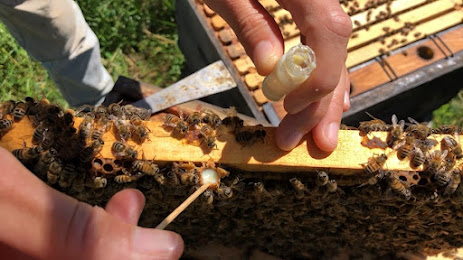
Harvesting royal jelly from queen cell on the bottom bar of a frame (note: frame is sitting upside down).


A review on health benefits and biological action of honey, propolis and royal jelly*

In the world of human “superfoods” and “dietary supplements”, royal jelly has been consumed since ancient times with the strong belief that it would make you live a longer and healthier life. However, since harvestable royal jelly is produced by bees in such small quantities and in such specific colony conditions, it was reserved for individuals of only the highest status during ancient times. Nowadays, royal jelly is consumed much more widely as a dietary supplement thanks to the bioactivities that – depending on the floral sources that the foraging bees have gathered the colony’s food sources from – may be present:
  • Antibacterial
  • Antitumor
  • Antiallergy
  • Anti-inflammatory
  • Immunomodulatory
Royal jelly is composed of water, proteins, carbohydrates, lipids, and various salt minerals and vitamins; where the main protein, royalactin, is present both as the main component, and as the key to its potentials for human health applications, for example:
  • Rebalancing blood hormone levels (decreases follicle-stimulating hormone) in menopausal women, and promoting quality of life in postmenopausal women
  • Protection against photoaging from UV, and enhancing wound-healing activity in cases where injured skin tends to peel off (e.g., sunburns, heat burns, various irritants etc.) by promoting collagen production
Although these potential bioactivities of royal jelly have been investigated and reported, there is some skepticism surrounding the practical value of the health benefits of royal jelly. Much of this skepticism surrounds the potency of these bioactive components in the small amounts of royal jelly that is consumed/applied in the name of promoting human health. However, with this being understood, royal jelly is still viewed and used by many natural health enthusiasts as a health stimulant or ‘boost’ rather than a main treatment product.

* Vazhacharickal, P, J. 2021. A review on honey health benefits and biological action of honey, propolis and royal jelly, Journal of Medicinal Plants Studies. Full text available ONLINE.


‘Canadian Beekeeping Minutes’ Demo 2: Opening a Hive & Handling Frames

Knowing how to properly open a hive and then maneuver, remove, and handle frames from a honey bee hive requires some proper technique and awareness. Watch this ATTTA demonstration to learn what tools and tricks you can use to minimize the reaction from the colony and maximize your beekeeping experience the next time you visit your hive(s)! Beginning and ending hive inspections a certain way can help to create good beekeeping habits and consistency in your bee yards.

Watch this ATTTA demonstration to learn how to open a honey bee hive and handle the frames, HERE.


Connecting with ATTTA Specialists


If you’d like to connect with ATTTA specialists or learn more about our program, you can:

Pollen: The Protein Source of Bees

Thursday, 4 November 2021

Natural foods and health products has gained significant interest, especially over the past decade, as the link between good nutrition and good health has also gained interest in research studies. These studies help to provide a better understanding of the potential health benefits and applications of natural products, including various hive products. So far, in our ‘Hive Products for Human Health’ mini-series, we have discussed some health-related beneficial bioactivities and applications of honey, propolis, and beeswax. This week we are moving on to pollen; keep reading to learn about potential human health benefits of the protein source of bees: pollen.

What’s the Buzz with ATTTA Podcast Episode 10 is now available! Keep reading for a sneak peek of what this episode’s discussions are all about. 

We’ve began creating weekly “ATTTA Buzz” posts to share ATTTA news, announcements, and timely reminders intended for beekeepers in Atlantic Canada, but available to all others that are interested! We will be sharing these posts from our Twitter account (@beeatlantic) and through social media pages of some beekeepers’ associations and other beekeeping groups in our maritime region. Keep an eye out for the weekly ATTTA Buzz to stay up to date with what we’ve up to, we are glad to have you following along!

Pollen: The Protein Source of Bees

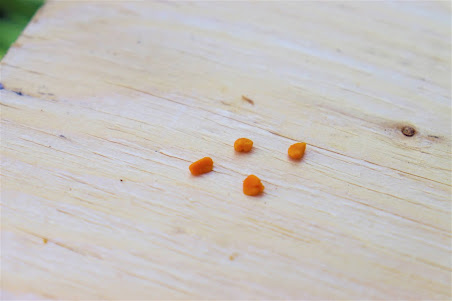
Pollen is collected by foraging worker bees and brought back to the hive to be made into bee bread used to feed larvae to provide essential proteins required for successful worker and drone brood production. A developing queen does not receive pollen in her diet. The pollen that is found stored within the hive is compositionally unique from its original form when it was produced by the flower from which it was collected. When bees collect pollen from a flower, they incorporate small amounts of nectar and a saliva-like substance that contains enzymes. This makes the pollen sticky enough to be packed neatly into a secure pellet in the worker bee’s ‘pollen basket’, located on her hindlegs. The composition of pollen itself is unique depending on the floral source, geographic location, and other environmental conditions; similar to honey and beeswax, as discussed earlier in this mini-series. Since foraging worker bees also add nectar and enzyme-containing saliva to the pollen to ready it for transport, compositional variation from these additions are also incorporated into the pollen. This is important to consider when discussing the composition and potential beneficial uses and therapeutic applications of honey bee collected pollen and pollen products (i.e., bee bread).

Antimicrobial and antioxidant activities of natural and fermented bee pollen *

Bee pollen is sold as a hive product for human health and nutrition in various forms including natural pollen pellets, capsules, powder, and also bee bread pellets and other forms of pollen that has undergone fermentation processes. Even if the same pollen source was used in a particular set of products, that include both pollen pellets and bee bread, the digestibility and bioactivities of the natural pollen and the fermented pollen tend to vary. Even between fermented pasteurized pollen and fermented natural pollen, the bioactivities of the product can vary. This study aimed to evaluate the bioactivities of both natural and pasteurized pollen that has undergone either spontaneous fermentation or fermentation through bacterial activity by two lactose related bacteria: Lactocoocus lactis and Lactobacillus rhamnosus. The results of this investigation indicate effective beneficial bioactivities and dietary values of various forms of pollen, for the purpose of consumption with the goal of improving of human health, including:

  • Fermentation = greater antioxidant activity
  • Antioxidant activity of fermented natural pollen > fermented pasteurized pollen
  • Antioxidant activity of bacteria fermented pollen > spontaneously fermented pollen
  • Fermentation = greater microbial activity; other microbial compounds are also produced by bacteria through the fermentation process
  • Fermentation = greater antifungal activity

Small variations and changes in the activities of all evaluated pollen were attributed to the botanical origin of the pollen itself and the type of fermentation process performed. This study concludes these findings with the idea that highlighting the improvement of bioactivities and health-benefitting potentials of bee pollen after fermentation has the potential to “open more applications of bee pollen in the food and pharmaceutical industries.”


* Kaskaniene, V., Adaskevicitue, V., Kaskonas, P., Mickene, R, and Maruska, A. 2020. Antimicrobial and antioxidant activities of natural and fermented bee pollen, Food Bioscience. Full text available ONLINE.


What’s the Buzz with ATTTA Podcast Episode 10

Dr Andony Melathopoulos is a researcher and beekeeper with direct ties to eastern Canada.  Having spent time at Nova Scotia’s Dalhousie University (AC campus) while undertaking his doctoral studies, Andony contributed in a positive, and long lasting way to our industry.  Through his research work and enthusiastic teaching Andony left a strong impression on those he met while in Nova Scotia.  Listen to our latest podcast to learn about Andony’s beekeeping journey from eastern Canada to his position on the faculty of Oregon State University.  Find out about his current research related to pollination and honey bee health! You will encounter few beekeepers who are as interested and energetic about honey bees as this months guest, so take a few minutes to meet or reacquaint yourself with this fascinating beekeeper. Listen from your choice of podcast streaming platforms HERE.


Connecting with ATTTA Specialists


If you’d like to connect with ATTTA specialists or learn more about our program, you can:


Beeswax: Bees’ Built-in Building Material

Thursday, 28 October 2021

Following a brief interruption in our latest series last week, to share some updates on the 2021 blueberry season and harvest, this week we are picking back up on the topic of hive products for human health. We have discussed some of the components and qualities of both honey and propolis that have undergone analyses to determine their potentials to lend benefits in the world of human health. This week, we explore the health benefits related to the building material of honey bees: beeswax.

ATTTA’s “Canadian Beekeeping Minutes” video series of short and informative beekeeping demonstrations has launched! Keep reading below for more details.

Beeswax: Bees’ Built-in Building Material

Beeswax is produced by 4 wax glands on the underside of the abdomen of adult worker bees that are at least 12-18 days old, since this is when the wax glands achieve full development. Beeswax is secreted as a liquid and then solidifies into flakes once it comes into contact with air. These wax flakes are passed to the bee’s mouth and mixed with glandular secretions before being used for building comb, capping comb, and other construction activities in the hive that require beeswax. Understanding this lends awareness to the variability of components in beeswax depending on the consumed honey and pollen which supplied the materials necessary for the bee’s body to produce beeswax. Once built into the hive, beeswax comes into contact with many other materials, some of which may also contribute to the compositional makeup of the wax. For these reasons, it is important to recognize that beeswax components can vary, just like in honey and other hive products.

Beeswax: A minireview of its antimicrobial activity and its application in medicine *

Beeswax is made up of over 300 constituents, including hydrocarbons, various forms of fatty esters, diesters, and other substances from external sources (e.g., propolis, pollen, and pollution residues). Beeswax is hydrophobic (meaning it does not mix with water), allowing it to provide natural protective properties, which have contributed to its popularity in the industry of cosmetics and other topical body products. Beyond this protective property, beeswax also presents certain therapeutic properties. In ancient Egypt and ancient Rome, beeswax was used as a main ingredient in various topical healing ointments, used particularly for treating burns, wounds, and joint pain. In ancient Greece, Hippocrates also recommended beeswax in the treatment of purulent tonsillitis. This particular study was one of the first to explore and quantify the antimicrobial properties and activities of beeswax against certain pathogenic microorganism species. When used in combination with other natural products (i.e., honey or olive oil), these benefits of beeswax are often enhanced. The results of this investigation indicate effective therapeutic activities of beeswax against human health conditions associated with pathogenic microorganisms including:

  • Staphylococcus aureus – a staph infection-causing bacteria
  • Salmonella enterica – a salmonellosis-causing pathogen
  • Candida albicans – a fungal infection-causing yeast
  • Aspergillus niger – a “black mold” disease-causing fungus

Since beeswax is hydrophobic and repels water, it is able to mix with and absorb lipid-based components that it may come into contact with, such as residues of antibiotics, pesticides, and other similar products that are used in beekeeping. This emphasizes the importance of purifying beeswax, especially if its intended use involves some aspect of human health.

* Fratini, F., Cilia, G., Turchi, B. and Felicioli. A. 2016. Beeswax: A mini review of its antimicrobial activity and its application in medicine, Asian Pacific Journal of Tropical Medicine. Full text available ONLINE.


Canadian Beekeeping Minutes – By ATTTA

ATTTA’s series of short demonstration videos, intended for beginner beekeepers, launched on Wednesday and the first video is now available for your watching and learning pleasure! We hope you enjoy and find these demonstrations informative and helpful. If you would like to suggest a demonstration topic for a future video, we are always open to new ideas! Help us help you and we will do our best to provide our supporters with a prepared and well-informed toolbox of best management techniques for beekeeping in Atlantic Canada.

You can find our “Canadian Beekeeping Minutes” series HERE.


Connecting with ATTTA Specialists


If you’d like to connect with ATTTA specialists or learn more about our program, you can: