Showing posts with label Queens. Show all posts

Queen Quality

Thursday, 22 January 2026

To maintain productive and healthy colonies it is important that beekeepers consider the quality of their queens. The presence of a healthy and productive queen is essential for colony survival both because of the offspring she produces and the presence of her pheromones which facilitates colony behaviour. Read this week’s blog to learn about indicators of good and poor queen quality and recommendations for when queens should be replaced within an operation.

Queen Quality

Good quality queens are essential for strong and healthy colonies that successfully overwinter. She is the sole reproductive female of the hive, builds the colony population and provides essential pheromones that facilitate social coherence of a colony. Each year in the Canadian Association of Professional Apiculturists (CAPA) colony winter loss survey “poor queens” is continually reported by beekeepers as a top reason for colony winter loss1.

Queen quality can be diminished due to a variety of factors such as age, mating success, injury, the presence of pests and/or diseases, and miticide exposure2. Generally, queens live one to three years2,3, however, she is most productive laying eggs when she is less than 2 years old2. Compared to other insects, a honey bee queen has a relatively long life2. As a queen ages so does the likelihood of a supersedure event occurring or the queen dying2,3. To avoid an interruption in brood production, or having a queenless colony late in the beekeeping season, best practice is to requeen colonies every two to three beekeeping seasons3. Additionally, anytime a queen’s performance is questionable beekeepers should monitor her performance and consider requeening2. If a beekeeper is choosing to replace queens after a particular number of beekeeping seasons, it is recommended that beekeepers mark their queens to be certain of her age.

There are several indicators that a queen is of good quality and performing well within a colony. One indication the queen is performing well is the overall brood pattern. Ideally, the brood should be located at the center of the hive, and, on a single frame, food resources should form an arch over the brood4. Additionally, beekeepers should check if the brood pattern is solid (not “spotty”), as a  spotty brood pattern may indicate a poor performing queen, and may also be a sign of various brood diseases2. Low bee populations can be attributed to a failing queen2. One way to assess a bee population is both honey production and consumption, both of which should be high with a strong colony population2. Beekeepers should be assessing for how well the queen is mated. If there is an abnormally high percentage of drones and drone brood compared to workers this may indicate that the queen is not well mated and is only laying drones5. Colonies that are prone to pests and diseases, in particular high varroa mite loads, may have a queen with poor genetics. Beekeepers should also recognize that overtime miticide exposure can impact the health of the queen and also the viability of sperm stored in her spermatheca2. Excessive debris on the bottom board can be a sign the queen has genetics associated with poor hygienic behaviour. Finally, observe and keep records of colony behaviour. When a queen is aging and/or failing, her pheromone production drops, leading to noticeable changes in colony behavior, such as an overly defensive colony, and the presence of supersedure cells if the colony has decided to requeen2.

A
B
Comparison of brood patterns: (A) Good arching, solid, brood pattern (©ATTTA 2024); (B) Spotty brood pattern (©David Evans 2018)

Worker bees forming a retinue around queen honey bee (ATTTA© 2025), which is facilitated by the queen’s retinue pheromone.

The age of the queen has a direct impact on the colony winter survivability. A 2007 study conducted in Turkey found that colonies with first year queens had a 100% survivability rate, colonies with 1-year-old queens had a 100% survivability rate, colonies with 2-year-old queens had a 60% survivability rate, and colonies with 3-year-old queens had a 40% survivability rate (N = 5)6. The research also found that there is a correlation between queen age and honey production, brood production and population of adult bees, where colonies with older queens (2-3 years old) had less honey production and brood production and a smaller population of adult bees compared to young queens (less than 2 years old)6.

Globally, in addition to parasites and pathogens, failure or loss of queens has been considered one of the most important factors leading to colony losses7. Beekeepers should remain vigilant monitoring the performance of their queens and intervene when required. Overall, having healthy, productive queens with desirable genetics provides the greatest opportunity for colonies to build up throughout the beekeeping season and successfully overwinter. For any questions regarding queen quality and colony performance please contact a member of the ATTTA team.

References

  1. Canadian Association of Professional Apiculturist. 2025. Statement on honey bee wintering losses and disease management in Canada for 2025.
  2. Sammataro, D., and Avitabile, A. 2021. A beekeeper’s handbook: fifth edition. Cornell University Press .
  3. Lee, K.V., Goblirsch, M., McDermott, E., Tarpy, D.R. and Spivak, M., 2019. Is the brood pattern within a honey bee colony a reliable indicator of queen quality?. Insects10(1), p.12.
  4. Camazine, S., 1991. Self-organizing pattern formation on the combs of honey bee colonies. Behavioral ecology and sociobiology, 28, pp.61-76.
  5. Pernal, S. F., and Clay, H., 2013. Honey bee diseases and pests, 3rd Edition. Canadian Association Professional Apiarists, Beaverlodge, AB, Canada 68 pp.
  6. Akyol, E., Yeninar, H., Korkmaz, A. and Çakmak, I., 2008. An observation study on the effects of queen age on some characteristics of honey bee colonies. Italian Journal of Animal Science7(1), pp.19-25.
  7. Amiri, E., Strand, M.K., Rueppell, O. and Tarpy, D.R., 2017. Queen quality and the impact of honey bee diseases on queen health: potential for interactions between two major threats to colony health. Insects8(2), p.48.

Connecting with ATTTA Specialists

If you’d like to connect with ATTTA specialists or learn more about our program, you can:

visit our website at https://www.perennia.ca/portfolio-items/honey-bees/

Email attta@perennia.ca


Summary of ATTTA Summer Field Work 2024

Thursday, 26 September 2024

The Atlantic Tech Transfer Team for Apiculture has been busy this past summer conducting research in apiaries, wild blueberry fields and within our own lab facilities. Our projects have largely focused on supporting the pollination industry and on honey bee health. Read this week’s blog for a brief summary of our main projects from summer 2024.

Summary of ATTTA Summer Field Work 2024

ATTTA Regional Varroa Mite Survey

This summer ATTTA has been conducting a regional Varroa mite survey involving 23 different beekeepers from New Brunswick, Nova Scotia and Prince Edward Island. These beekeepers represent a significant portion of Maritime beekeeping operations. The survey is intended to broadly sample across the Maritime region. Those who participate have been asked to provide ATTTA with 3 samples of approximately 300 honey bees 3 times throughout this beekeeping season (prior to pollination, after pollination and late season). Samples were only taken from commercial beekeepers who use their colonies for wild blueberry pollination. The survey has several main goals, including determine Varroa mite levels across the region at three important time points during the current season; collect Varroa mites for miticide efficacy testing; establish temporal measurements for annual comparison of Varroa burden for the Maritime region; and create a stored bank of samples for possible future testing (e.g. tracheal mite). In next week’s blog we will provide details of the results of the survey to date.

ATTTA apiculturist (Kayla Gaudet) conducting an alcohol wash to assess Varroa mite load in a colony (Perennia©2024).

Pollination Efficiencies for Wild Blueberry Production

ATTTA has a continued goal of supporting the wild blueberry pollination industry. This year ATTTA had three projects that focused on assessing wild blueberry bloom, and the requirements (timing and stocking density) of pollination units. The first project involved assessing wild blueberry bloom during the months of May and June. The aim of this project is the creation of a growing degree day bloom model, using local weather stations, to better predict the timing for placement of pollination units. An original GDD model of wild blueberry bloom was based on a single field and across one season (White et al., 2012).  At the time of publication, the authors recommended the need for additional data sets to be collected, throughout the region. This improved model will also include the endodormancy and ecodormancy requirements of the wild blueberry plant to establish a starting point for GDD modeling.  This is now the second year of this three-year collaborative project with Dalhousie University and ATTTA.  The second project involved assessments of sprout year fields. The goal of the project is to assess how early in the year floral and leaf buds can be distinguished, and how early accurate bud counts can be achieved. This will help to determine the crop year floral density as a predictor of pollination requirements. The hope is to support blueberry producers and beekeepers through a better understanding of bloom as one component of a predictive model determining the demand for pollination services. Finally, ATTTA followed up on a study from 2022, that assessed sequential loading of honey bee units on wild blueberry fields. This study will validate the previous work by repeating the 2022 trial on limited number of fields with are reversal of the control and treatment groups.  ATTTA will be reporting on all wild blueberry pollination work in the months to come.

ATTTA seasonal apiculturist (John MacDonald) presenting at the Bleuets NB Blueberry meeting in East Galloway, NB in July (Perennia©2024).

Queen Rearing

The ATTTA team has slowly started to resume rearing queens for research purposes. This summer we focused on building up colony numbers, as any queen producer knows it takes an abundance of bees and resources to raise queens. A member of our team received specialized training to learn how to raise queens on a large commercial scale, and ATTTA has plans to resume research on outdoor overwintering of banked queens starting next season.

Queen honey bee (with green marker) surrounded by her attendants (Perennia©2024).

Bumble Bee Captive Breeding and Overwintering

The final project to discuss is ATTTA’s work involving captive breeding, housing and overwintering Bombus impatiens. As a continuation from last year’s trials, the ATTTA team captively bred Bombus impatiens queens on a weekly basis throughout July and August. After mating, queens were cared for daily in ATTTA’s indoor facility. Each queen was kept in a temperature-controlled environment and fed both pollen and sugar water. The team also exposed each queen to the needed conditions to stimulate her to start producing brood. These conditions included a small amount of carbon dioxide exposure and a low temperature environment for a period of time. The intention of the project is to now manage these queens into the winter months. There were multiple objectives to meet throughout this project, including: evaluating the percentage of queens that artificially mate: assess if mated queens will produce honey cups, eggs and larvae; assess the timeline of colony build-up; determine the time a mated queen will survive in simulated diapause; and determine if queens will survive diapause long term (i.e. through the winter). Overall, this project allows the team to gain a deeper insight into these important pollinators and to better support producers relying on insect pollination.

ATTTA seasonal apiculturist (Greg Dugas) feeding bumble bee queens (Perennia©2024).  Work is undertaken in red light as this is invisible to bees.

References

White, S.N., Boyd, N.S. and Van Acker, R.C. 2012. Growing degree-day models for predicting lowbush blueberry (Vaccinium angustifolium Ait.) ramet emergence, tip dieback, and flowering in Nova Scotia, Canada. HortScience, 47(8), pp.1014-1021.

Connecting with ATTTA Specialists

If you’d like to connect with ATTTA specialists or learn more about our program, you can:

visit our website at https://www.perennia.ca/portfolio-items/honey-bees/

Email abyers@perennia.ca

New Bees for Newbies

Thursday, 13 January 2022

Winter months are a time for planning in the beekeeper’s calendar. Planning the upcoming season will allow your apiary to run smoother, regardless of how many hives you manage. This is also a great time for someone who has only yet been considering beekeeping to prepare to dive in! Over the next few blogs, we will consider a few points that would be valuable to organize this winter. This week, we will begin with a discussion of ordering bees.

New Bees for Newbies

When spring comes and hives are unwrapped, beekeepers find out how many survived the winter. Overwintering strong hives which have been properly treated, fed, and winterized will be valuable in minimizing overwintering losses. A compelling article from researchers in Switzerland was recently released which further corroborates evidence that proper varroa mite management of winter bees improves colony success in the spring (Julie et al. 2021). Nonetheless it is not uncommon to lose a small percentage of hives to winter stresses. Beekeepers often make up for these loses by replacing colonies in the early spring. 

Unfortunately, a major challenge for the Atlantic Canada beekeeping industry is the lack of early spring queens (Bixby et al. 2019). Virgin queens typically cannot mate until late May or June at the earliest due to the absence of mature drones. Historically, the solution has been to order bees from warmer climates where queen rearing can begin much earlier, such as New Zealand and Hawaii. It is important to place these orders in the winter to ensure that they arrive when you want them. Ordering bees from outside of Canada requires special protocols which must be followed via the Canada Food Inspection Agency. There are also unique protocols for ordering bees from out of province within Canada (see protocols for Maritime provinces below). Rather than taking this on directly, it can be helpful to order imported bees through local bee suppliers who are more familiar with the legal process. 

Honey bees ordered from abroad typically come as packages of many bees or a single mated queen. A package generally holds 1-1.5 kg of adult bees as well as a mated queen. A mated queen will arrive with attendant worker bees, who are often removed from the cage before introducing the queen to a hive. Packages and individual queens must be installed into proper hives after transport and you should be prepared to do so when the bees arrive.  

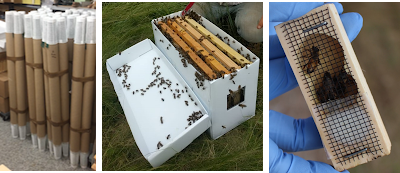
Figure 1. Three common ways to buy bees. From left to right: honey bee packages (source: countryfields.ca), nucleus colony, caged queen.

If you are not anxious to have new bees immediately at the start of spring, buying local nucleus colonies (nucs) and queens is a great way to support the Atlantic beekeeping industry. There are suppliers of local nucs and queens throughout the Atlantic provinces who typically sell between May and July. Provincial beekeeping association websites can be a valuable resource in connecting with reputable providers. Once again, it is recommended that orders be placed early because lists are typically first come, first served and supplies are limited. This is especially true for beekeepers in Newfoundland and Labrador, where honey bee importation is exceptionally restricted!

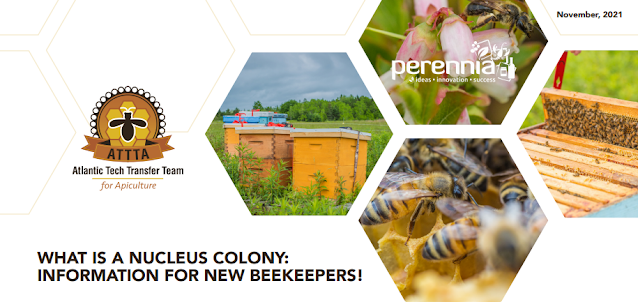
For new beekeepers, nucs are a great way to get started because they already contain the necessary building blocks for starting a new colony- bees and drawn comb! There are some considerations to keep in mind when buying a nucleus colony. A nuc should include a mated queen, frames with drawn comb and food stores, and bees of all life stages. Typically, there are 3-5 frames holding a combination of these resources. For more information on nucs, explore the new ATTTA factsheet “What is a Nucleus Colony: Information for New Beekeepers!


Bixby, M., M.M. Guarna, S.E. Hoover, and S.F. Pernal. 2019. Canadian Honey Bee Queen Breeders’ Reference Guide. Canadian Association of Professional Apiculturists Publication 55 pp. 

H. Julie, J. Hattendorf, A. Aebi, et al., Compliance with recommended Varroa destructor treatment regimens improves the survival of honey bee colonies over winter, Research in Veterinary Science (2021), https://doi.org/10.1016/ j.rvsc.2021.12.025


Pollinator Education New Video Release! Assessing Hive Strength: Counting Flying Bees Returning to the Hive

Check out our latest video on ATTTA's YouTube Channel about assessing hive strength. This video discusses how to assess hive strength by counting flying bees returning to the hive and the pros and cons of using this method. Watch HERE to learn more!


Connecting with ATTTA Specialists


If you’d like to connect with ATTTA specialists or learn more about our program, you can:


Royal Jelly: The Queen Ingredient

Thursday, 11 November 2021

Last week we discussed some potential beneficial bioactivities of pollen for human health and considered the differences in these qualities observed in raw collected pollen compared to fermented pollen. Interestingly, the fermented pollen lent greater potential beneficial bioactivities for human health compared to the raw-form pollen. This week, we are tying up our ‘Hive Products for Human Health’ series with an investigation of the potentially beneficial bioactivities of royal jelly for human health. Keep reading to learn more about these potential bioactivities and potential applications of royal jelly for the purpose of protecting and promoting human health.

We are excited to announce that our second beekeeping demonstration of our ‘Canadian Beekeeping Minutes’ YouTube series is now available. Keep reading to find out what you can learn from our latest ATTTA demonstration and where to find this series!

Royal Jelly: The Queen Ingredient

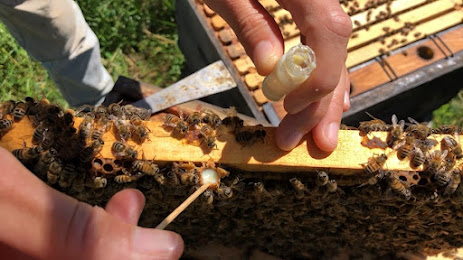
Royal jelly is a protein-packed substance secreted by the hypopharyngeal and mandibular glands within the head of a worker bee. Royal jelly is a sort of “mother’s milk” equivalent for bees to provide to their young as a first source of nutrients to fuel development. The purpose of this substance within the hive is to act as a food source for developing larvae, however, the proportion of royal jelly to other food components (i.e., beebread) depends on the caste of larva that is receiving the food. As the name indicates, royal jelly is fed to developing queens, and exclusively makes up the entire diet of queen larvae. Royal jelly is also fed to developing worker and drone larvae, but these castes also receive beebread as a part of their developmental diet fed by the nurse bees of the colony. This factor in diet is the only difference between the new larva in a queen cup and the new larva in a standard comb cell set on the path of becoming a worker bee, prior to being fed their respective diets. As has been noted for all previously discussed hive products for human health, these potentials are influenced by the floral sources accessed by the bees which are producing the royal jelly being analyzed.

Harvesting royal jelly from queen cell on the bottom bar of a frame (note: frame is sitting upside down).


A review on health benefits and biological action of honey, propolis and royal jelly*

In the world of human “superfoods” and “dietary supplements”, royal jelly has been consumed since ancient times with the strong belief that it would make you live a longer and healthier life. However, since harvestable royal jelly is produced by bees in such small quantities and in such specific colony conditions, it was reserved for individuals of only the highest status during ancient times. Nowadays, royal jelly is consumed much more widely as a dietary supplement thanks to the bioactivities that – depending on the floral sources that the foraging bees have gathered the colony’s food sources from – may be present:
  • Antibacterial
  • Antitumor
  • Antiallergy
  • Anti-inflammatory
  • Immunomodulatory
Royal jelly is composed of water, proteins, carbohydrates, lipids, and various salt minerals and vitamins; where the main protein, royalactin, is present both as the main component, and as the key to its potentials for human health applications, for example:
  • Rebalancing blood hormone levels (decreases follicle-stimulating hormone) in menopausal women, and promoting quality of life in postmenopausal women
  • Protection against photoaging from UV, and enhancing wound-healing activity in cases where injured skin tends to peel off (e.g., sunburns, heat burns, various irritants etc.) by promoting collagen production
Although these potential bioactivities of royal jelly have been investigated and reported, there is some skepticism surrounding the practical value of the health benefits of royal jelly. Much of this skepticism surrounds the potency of these bioactive components in the small amounts of royal jelly that is consumed/applied in the name of promoting human health. However, with this being understood, royal jelly is still viewed and used by many natural health enthusiasts as a health stimulant or ‘boost’ rather than a main treatment product.

* Vazhacharickal, P, J. 2021. A review on honey health benefits and biological action of honey, propolis and royal jelly, Journal of Medicinal Plants Studies. Full text available ONLINE.


‘Canadian Beekeeping Minutes’ Demo 2: Opening a Hive & Handling Frames

Knowing how to properly open a hive and then maneuver, remove, and handle frames from a honey bee hive requires some proper technique and awareness. Watch this ATTTA demonstration to learn what tools and tricks you can use to minimize the reaction from the colony and maximize your beekeeping experience the next time you visit your hive(s)! Beginning and ending hive inspections a certain way can help to create good beekeeping habits and consistency in your bee yards.

Watch this ATTTA demonstration to learn how to open a honey bee hive and handle the frames, HERE.


Connecting with ATTTA Specialists


If you’d like to connect with ATTTA specialists or learn more about our program, you can:


Black Queen Cell Virus: One of the Most Prevalent Viral Pathogens of Honey Bees

Thursday, 26 August 2021

During the current pandemic, social isolation has helped control the spread of Covid-19.  Unfortunately, honey bees are unable to socially isolate to curb the spread of viral diseases in their populations.  They live in large numbers, in very close proximity, engage in trophallaxis and allogrooming.  Spread of viral disease in a honey be colony is almost inevitable.  Interestingly, although honey bees may struggle to prevent viral diseases moving through their colonies, they may be helping us stay healthy.  There is recent work investigating how hive products can fight Covid-19 (Yahya Al Naggar, 2021) and even how honey bees are able to diagnose the Coronavirus.  Honey bee scientists in the bio-veterinary research laboratory at Wageningen University have successfully trained bee to detect Coronavirus positive samples to gain a food reward (Wageningen, 2021).  Even when it comes to viruses, we find further examples of how honey bees help us!  This week we will look at Black Queen Cell virus as we near the end of our series on honey bee viruses.

Black Queen Cell Virus: One of the Most Prevalent Viral Pathogens of Honey Bees

As the name implies, the Black Queen Cell Virus (BQCV) is a disease associated with developing queens at the larval and pupal stages.  The virus is transmitted horizontally by the worker bees as they move from infected cells to healthy queen cells.  There is also a suggestion that vertical transmission may occur from the queen through to her eggs.  Infection of BQCV in a developing queen larva will result in the death and ultimate necrosis of the pupa.  This results in the blackened, decomposing, undeveloped queen and the classic symptoms used to diagnose this disease.  This virus is most commonly seen in the spring of year but not limited to that season.  It has been suggested that this is the most common, although least understood, of the approximately 24 viruses infecting honey bees.  Believed to be present asymptomatically in adult queens and workers, the elevated titres seen in the developing queens cause morbidity.  Therefor this is a serious disease for the honey bee queen production industry.


Figure1. Virion Structure of the Black Queen Cell Virus (Spurny et al. 2017).


It has become obvious from our previous discussions that varroa infestation is linked to viral infections of honey bees.  This is not the only pest or disease which is been associated with viral disease transmission.  Nosema and  BQCV have been demonstrated in coinfections.  It has even been suggested that Nosema ceranae and BQCV act synergistically to significantly decrease host survival.  Additionally, Nosema and varroa have a negative, interactive effect on honey bee health.  So it is not surprising that varroa mite infestation are associated with this virus as well.  It would be easy to imagine this infectious triad could collapse a colony.  Optimistically, all three of these are less likely to occur in strong, healthy colonies.


Figure 2. Queen cell showing BQCV infection (Photo: Robert Snyder, BeeInformed)

There is no treatment for BQCV but there are ways to manage the risk of this disease.  As suggested above, ensure that your colonies are kept strong and healthy.  Manage your varroa mite populations.  Apply standard biosecurity practices, such as flaming hive tools, moving bees and equipment carefully between apiaries and operations.  Monitor for Nosema and treat if necessary.  Specific to queen operations, ensure specialist equipment such as grafting tools are sterile.  Ensure that cell builder and finisher colonies are healthy.  Mating nucs should be kept well fed, healthy and disease free!  If you find an incidence of BQCV in your operation, put appropriate measures in place to trace back the source and stop onward spread.

Next week will conclude this short series on honey bee viral disease as we look at Kashmir Bee virus.  This virus is also linked to varroa mite infestation and a close relative of the previously discussed Acute Bee Paralysis Virus.  Make sure not to miss any of our blogs by subscribing through the link in the left hand column.

Spurny R, Pridal A, Palkova L, Kiem HKT, de Miranda JR, Plevka P. Virion Structure of Black Queen Cell Virus, a Common Honeybee Pathogen. J Virol. 2017; 91(6): e02100–16. pmid:28077635

Wageningen University 2021 https://www.wur.nl/en/news-wur/Show/Training-bees-to-smell-the-coronavirus.htm

Yahya Al Naggar, John P. Giesy, Mohamed M. Abdel-Daim, Mohammad Javed Ansari, Saad N. Al-Kahtani, Galal Yahya, 2021 Fighting against the second wave of COVID-19: Can honeybee products help protect against the pandemic?, Saudi Journal of Biological Sciences, Volume 28, Issue 3, Pages 1519-1527


Connecting with ATTTA Specialists


If you’d like to connect with ATTTA specialists or learn more about our program, you can:


Dutch Honey Bees Resistant to Varroa Mite Imported to Australia to Help Guard Against the Pest

Thursday, 29 July 2021

We have covered introductory information on queen production in previous blogs, meanwhile there are current practices and research working at the cutting edge of this aspect of our industry.  The use of selective breeding, artificial reproductive technologies, and controlled mating are improving honey bee stocks worldwide.  In this week’s blog, we will explore a recent article from the Australian Broadcasting Corporation with exciting news on beekeepers’ fight against varroa mites! We discuss the implications of this work for Atlantic beekeepers and how this links to local research around improving Canadian honey bee stocks.

Dutch Honey Bees Resistant to Varroa Mite Imported to Australia to Help Guard Against the Pest

Managing for varroa mites has become a standard part of the beekeeping season for most of the world. In 2013, a global effort by apiarists began in earnest to try to mitigate the impact of varroa mites on honey bees. Together with support from European and American beekeepers and entomologists, Dutch apiarist JanBart Fernhout began practicing intense selection and controlled mating to develop a progeny of bees resistant to varroa infestation. His highly focused breeding program progressively bred queens and drones of higher hygienic behavior until he finally attained a stock of varroa resistant honey bees!

Only a scarce few regions in the beekeeping world remain free of varroa mites and Australia is one of them. Consequently, importation of any honey bee material is extremely limited on this continent. This is why beekeepers and scientists are thrilled with the successful importation of the varroa resistant stock of bees from the Netherlands, which were first subject to intensive screening and quarantine. Australians are hopeful that this successful importation might pave the way for more safe imports.

After screening, Australian bee breeder David Briggs managed to encourage the new stock to mate with one another, allowing him to then collect fresh, young larvae for his own breeding purposes. Briggs sought to raise queens using the imported, varroa resistant Dutch bees and artificially inseminate them with sperm from highly selected Australian drones. In this way, an Australian varroa-resistant honey bee stock could be locally available to beekeepers. The initial breeding was successful. With skill and a microscope, he was able to carefully inseminate the queens with semen collected from Australian drones. Artificial insemination is the most controlled form of honey bee breeding. When spring comes in Australia, the bees from this first successful breeding will begin laying eggs and the breeding program will continue to develop the Dutch-Australian varroa resistant stock.


Another region where varroa mites have yet to spread is our very own province of Newfoundland and Labrador! Like Australia, Newfoundland has strict importation laws and protocols. Perhaps in the future, the successful import of varroa resistant bees may offers one option to support this provinces beekeeping industry. Furthermore and nearer to home, there are Canadian scientists who are also working hard to improve our own stock of bees in Canada. Dr. Pierre Giovenazzo is one such scientist from Quebec. 

Dr. Giovenazzo has undertaken research to improve the Canadian bee stock through selective breeding. His work explores the possibilities of improving early spring development, honey production, winter consumption, and hygienic behavior, in addition to resistance towards varroa infestation. These traits would be beneficial to Canadian beekeepers in the face of long, northern winters. Complimentary to this work, Dr. Giovenazzo has most recently published research on overwintering Canadian queens in queen banks. With the development of successful mass-queen overwintering, Canada can become less reliant on imports of queen honeybees in the spring. With this comes reduced risk of invasive foreign pests and diseases and a honey bee stock more strongly adapted to our particular environment.

Reproductive technologies and selective breeding techniques have proven to be powerful tools in improving other livestock species.  Practices like artificial insemination are common place in, for example, dairy cow production.   How these emerging technologies and practices will be fully applied to honey bee husbandry is yet to be determined but we are entering an exciting time when science and research will blend more fully into our hands on beekeeping practices for the overall benefit of our industry!

*https://www.abc.net.au/news/2021-07-16/bee-imports-to-protect-against-varroa-mite/100289356


Connecting with ATTTA Specialists


If you’d like to connect with ATTTA specialists or learn more about our program, you can:


Cell Builder Colonies

Thursday, 17 June 2021

Welcome back for another post of the Queen Production Series! The previous blog provided an overview of how to obtain larvae for queen production. Today, we discuss the next stage of development for these larvae, which occurs in cell builder colonies. There are different options for cell builders and in this blog, we describe one way to use a starter and finisher colony to raise your queens.

Cell Builder Colonies

Queen production requires manipulation of honey bee colonies so that workers feel the impulse to raise queens. Naturally, there are three instances which trigger worker bees to raise queens.  These include bees preparing to swarm, emergency queen replacement and supersedure.  Cell builder colonies are designed to mimic the first two situations.

Cell building refers to the process of placing a grafting frame containing young larva into a colony to allow the worker bees to develop these into queen cells.  As the larva ages, workers extend the wax cells to accommodate its growth and eventually fully encapsulate, in the queen cell, the pupa which can now develop into an adult. In queen production, this takes place in two stages. The first stage occurs within a starter colony and the second within a finisher colony.


Figure 1 A grafting frame showing the bees drawing out queen cells when placed in the starter colony. (photo: University of New Hampshire Cooperative extension).


The starter colony is typically a single hive and must be queenless. By placing a grafting frame full of fresh, young larvae into a queenless colony, you provide the workers with the material needed to become queenright again and they will quickly begin to raise the larvae as queens. Queen producers often prepare their starter colony a day before introducing the grafting frame. The colony should be strong and requires a particular composition of frames.  This may need additional resources from donor colonies. The middle space should be reserved for the grafting frame. On either side of the grafts, provide a frame of pollen and a frame of older larvae to attract the nurse bees to this area. Surrounding these, place frames of capped brood and feed frames against the walls. It is also advisable to provide a frame of foundation, to help deter this very strong hive from swarming. The grafting frame remains in the starter colony for 48 hours. After this time, the cells should be packed with royal jelly and wax begun to be drawn out.

Figure 2 Queen cells taken from finisher colony, ready to be transferred to queenless colonies (splits) or mating nucs. (Photo: M. Girard in Bixby et al., 2019*)

The next stage of development occurs inside a finisher colony. The finisher is a strong, queenright colony where queens can complete their development as they would in a swarming situation. After 48 hours in the starter, carefully transfer the graft into your cell finisher colony, prepared ahead of time. The finisher must be a double chamber hive and the queen must be excluded to the bottom chamber, away from the developing queen cells. Once again, the composition of the frames within the hive boxes is particular. In the bottom hive box, include frames of feed, open brood, an empty laying frame for the queen, and the queen herself! Then, place a queen excluder on top of the bottom box. The graft frame should be placed in the top box in the middle position, once again sandwiched between older larvae and pollen frames, then surrounded by capped brood, a foundation frame, and frames of honey.

After eight days in the finisher colony, the queen cells will be capped over and the cells will be ready to harvest! Be sure to remove the cells before the virgins begin to emerge, or there will be problems for the other queens. At this point, your queen cells are ready and might be placed in a mating nuc, a queenless colony or sold! But that is a topic for another day!

Reminder

We would also like to encourage everyone to complete our brief survey posted last week, FOUND HERE! Thank you to those who have completed the survey and we are looking forward to hearing from more of our readers. 

*Bixby, M., M.M. Guarna, S.E. Hoover, and S.F. Pernal. 2019. Canadian Honey Bee Queen Breeders’ Reference Guide. Canadian Association of Professional Apiculturists Publication pp 55.


 Connecting with ATTTA Specialists


If you’d like to connect with ATTTA specialists or learn more about our program, you can:


The Doolittle Method

Thursday, 3 June 2021

This week, the queen series returns to the discussion of how to raise queen honey bees. This blog is about obtaining larvae for queen rearing using the Doolittle method. The Doolittle method is a common and efficient way to raise many queen cells. It requires a few tools and some practice, and before long can be quite an enjoyable process. Read on to gain an overview of how you can begin to raise queens following the Doolittle method.

The Doolittle Method

Grafting young larvae from the brood nest is the essence of the Doolittle method. There are a few special tools that are required to facilitate this process: a grafting tool, cell cups, grafting bars, and grafting frames. These tools can be found at most beekeeping supply stores. Some beekeepers also choose to fashion their own. A grafting tool is a hand-held tool with a very fine tip, used to pick up larvae and place them in cell cups. Manufactured grafting tools sometimes include springs to help guide the larvae off the tip. Cell cups are used to hold the larvae which will develop into queens. They are the base of the queen cell and have dimensions equal to that of natural queen cups. Cell cups can be made of either wax or plastic. These cups adhere to grafting bars, also called cell bars, which are designed to hold up to 20 cell cups and fit into the grafting frame. Grafting frames have slots along the inner sides of the frame for the bars to slide in and out of and typically hold up to three grafting bars full of cell cups. With this equipment and a few strong, healthy hives- you can begin to graft!

Start by obtaining a frame from a strong hive which has lots of young larvae. It is critical that the larvae be young because these will develop into the strongest queens. Ideally, your larvae should be 12-24 hours old- the smallest larvae that you see in the frame. Using a head lamp or other source of cool lighting can help you to see these tiny organisms. Scoop a larva from the frame with the grafting tool and transfer it into the cell cup, which should be already secured onto the grafting frame. It is best to prepare the cell cups beforehand by adding a drop of royal jelly to the base. Royal jelly is the food that workers feed to larvae in order for them to develop into queens, so this jumpstarts that process and helps prevent the young larvae from drying out. Royal jelly can be purchased at some beekeeping supply shops, but does have the potential to spread pathogens between hives, as it is a hive product. Another option is to harvest your own royal jelly from swarm cells or unneeded queen cells in your own hives.

When your grafting bars are full of cell cups and your cell cups are full of larvae, the bar can be placed into a grafting frame. This completes the steps of the Doolittle method! The next step is to place this frame into a starter colony where the workers will begin to raise the larvae as queens. We will elaborate on this phase of queen rearing in the next post of the series. 


Connecting with ATTTA Specialists


If you’d like to connect with ATTTA specialists or learn more about our program, you can: