Showing posts with label spring. Show all posts

2025 season outlook – NL

Thursday, 15 May 2025

Wrapping up the series on spring management and an outlook on the 2025 beekeeping season across Atlantic Canada, this week’s blog will discuss early beekeeping trends in Newfoundland and Labrador. Read this week’s blog to learn the highlights of how NL colonies faired through winter, and how colonies are building up across the province this spring.

2025 season outlook – NL

Across Newfoundland and Labrador beekeepers are reporting low winter loss and average spring build up. It is still early in the season to confirm the province’s average winter loss, and an official report will be provided later in the season from the Canadian Association of Professional Apiculturists (CAPA) and from the Newfoundland provincial apiarist, but, so far, the province has no concerns of above average loss this season. Newfoundland’s beekeeping season is typically a few weeks behind the rest of the Atlantic provinces, and that seems to be the trend for 2025 as well. Earlier in the spring there was a series of warmer days, but then the temperatures regressed, and temperatures are still not consistently above 10C. Other Atlantic regions have also been experiencing cooler spring temperatures.

That being said, across the province, bees are bringing in pollen from a variety of floral sources including coltsfoot, crocus, hyacinth and muscari. Additionally, hives have come out of winter with good food stores.

Bees bringing in early sources of pollen (ATTTA©2023)

Beekeepers in Newfoundland and Labrador have less pressure to have hives build up quickly in the spring as most beekeepers involved with pollination services send their bees to cranberries (early to mid-summer) rather than wild blueberries like the Maritime provinces (mid to late-May).

So far, reports are indicating that the Newfoundland and Labrador beekeeping industry is off to a good start for the 2025 season. A reminder that the Newfoundland and Labrador Beekeeping Association is hosting their annual general meeting and a workshop on May 30 to June 1 at the Royal Canadian Legion, Pleasantville, St John's, NL. Visit the following link to register: https://www.nlbeekeeping.com/.

Across the Atlantic region beekeepers are experiencing variable winter loss this season, and varying degrees of spring dwindle. Some individual beekeepers are reporting nearly 100% loss of colonies where many others are reporting manageable winter loss.

That being said, the global beekeeping industry is concerned about beekeeping losses reported from the United States. American beekeepers report losing 1.6 million honey bee colonies between June 2024 and March 2025. Commercial beekeepers in the US report losing 62% of their colonies, and hobbyist and sideliner beekeepers report losing 51% and 54%, respectively. There is still no official report to indicate the top reasons for record breaking winter loss across the country.

Overall, the situation in the US has made it evident that all beekeepers must be vigilant in monitoring the health of their colonies and adequately preparing them for winter each season. The ATTTA team is always willing to assist beekeepers with pest and disease testing, and we encourage beekeepers to reach out about the testing available. Additionally, for any questions regarding spring management and pest/disease monitoring and treatment please reach out to the ATTTA team. We wish all Atlantic beekeepers a prosperous summer of beekeeping as we enter the next stage of our beekeeping season.

Connecting with ATTTA Specialists

If you’d like to connect with ATTTA specialists or learn more about our program, you can:

visit our website at https://www.perennia.ca/portfolio-items/honey-bees/

Email attta@perennia.ca


2025 season outlook – NB

Thursday, 8 May 2025

Continuing with the series on spring management and an outlook on the 2025 beekeeping season across Atlantic Canada, this week’s blog will discuss early beekeeping trends in New Brunswick. Read this week’s blog to learn the highlights of how NB colonies faired through winter, and how colonies are building up across the province prior to wild blueberry pollination.

2025 season outlook – NB

Across New Brunswick beekeepers are reporting variable winter loss similar to the other Maritime provinces. Some individual New Brunswick beekeepers are reporting nearly 100% loss of colonies where many others are reporting manageable winter loss (range 20-30%). There are also some commercial beekeepers who are reporting higher than their average winter loss. It is still early in the season to confirm the province’s average winter loss, and an official report will be provided later in the season from the Canadian Association of Professional Apiculturists (CAPA) and from the New Brunswick provincial apiarist.

New Brunswick beekeepers should aim to determine the reason behind colony loss by examining dead outs and potentially seeking laboratory testing to determine if any pests and/or disease were the reason for colony loss. This past weekend the Nova Scotia Beekeepers’ Association, in partnership with the Atlantic Tech Transfer Team for Apiculture, provided a workshop on examining dead outs and investigating the cause of colony loss. Continue reading this week’s blog for a recap on the workshop. 

Dead colony in the spring (ATTTA©2021)

The official report identifying top reasons for colony loss in New Brunswick will be provided by CAPA later this season. The ATTTA team is always willing to assist with pest and disease testing on dead outs, and on live colonies throughout the season. We encourage beekeepers to reach out about available testing.

So far this spring New Brunswick beekeepers have not had the best weather conditions for early spring beekeeping, but recently there have been more nice beekeeping days across the province. New Brunswick beekeepers are now busy preparing hives for wild blueberry pollination later this month, and some are starting to recover from winter loss.

NSBA Spring Workshop Recap

This past Saturday the Nova Scotia Beekeeper’s Association, in partnership with the Atlantic Tech Transfer Team for Apiculture, provided a workshop on conducting hive autopsies located at Kittilsen’s Honey in Debert, NS. Nearly 20 beekeepers were in attendance. Beekeepers worked in groups to work through examining a dead hive step-by-step looking for key indicators to identify the cause of colony loss. 

The session was a great opportunity for new beekeepers to ask questions around the various factors for colony loss, and a good reminder for experienced beekeepers to thoroughly examine dead hives to determine the cause for loss. It is important to recognize that a variety of factors can all contribute to a colony not surviving the winter season, and sometimes it is challenging to a identify one reason above others. Additionally, there are times when bees have absconded from the colony which leaves very little behind to examine. Regardless, it is recommended that beekeepers examine each of their dead hives and try to determine what occurred so that they can either protect remaining colonies and/or improve in their beekeeping practices. For questions around conducting hive autopsies please contact the ATTTA team.

Connecting with ATTTA Specialists

If you’d like to connect with ATTTA specialists or learn more about our program, you can:

visit our website at https://www.perennia.ca/portfolio-items/honey-bees/

Email attta@perennia.ca

Beekeeper’s Calendar Series: Spring

Thursday, 21 March 2024

Spring is here! With its arrival, many beekeepers across the Maritimes have started to peek into their hives after the winter season. Throughout the spring months, bees are actively raising brood and increasing their population. Beekeepers are engaged in assessing winter losses, managing dead hives, providing emergency spring feed to colonies, setting up electric fencing, eventually inspecting hives for pests and diseases, and unwrapping hives. Towards the end of spring bees will be sent to pollinate wild lowbush blueberries in the Maritime region. Read this week’s blog to learn more about a beekeeper’s calendar during the busy spring season.

Beekeeper’s Calendar Series: Spring

The onset of the spring beekeeping season starts on that first warm sunny day with an ambient temperature greater than 5°C, typically in mid-March for the Atlantic region. By mid-March it is a good idea to do a quick hive check to assess winter loss, emergency feed if needed, and do any planned Varroa mite treatments, such as placing Apivar® strips. This is however meant to be a very quick check, and the brood nest should not be disturbed. As snow melts away beekeepers should also reconnect their electric fencing, as bears will soon be a concern.

ATTTA©2021

If a colony is low on food stores, fondant is recommended. Conduct a heft test to assess food stores. A general rule is that if a hive can be lifted easily with one hand, then it is too light. Fondant is preferred over sugar syrup because bees will not consume syrup if the temperature is below 10°C.

During early spring, colonies are often fed pollen patties when natural pollen is unavailable. This is because bees require pollen for rearing brood. Feeding pollen patties in preparation for pollination is a practice supported by research and proven to be economically beneficial.

April is typically the time for the first major hive inspections in the Atlantic region. Beekeepers should now monitor Varroa mite levels monthly and provide treatment when necessary. As Apivar has a 56-day treatment period and a 2-week withdrawal period, this particular Varroa treatment needs to begin early in the spring season (mid-March) to ensure completion of the withdrawal period before placing honey supers. Brood should also be inspected for signs of diseases such as European foulbrood, American foulbrood, and Chalkbrood, and appropriate treatment measures should be taken.

By the end of April, hives are usually unwrapped in the Atlantic region. Towards the end of April, nighttime temperatures should consistently remain above 0°C. There is no urgency to unwrap hives in the Atlantic region, as keeping them wrapped helps with early brood rearing. Typically, hives are unwrapped to facilitate easy access for beekeepers to work through them.

During May, hives will be sent across the Maritime region to pollinate wild lowbush blueberries. Up until this point beekeepers need to be assessing hive strength to make sure each colony will be a standard pollination unit. This will require splitting strong colonies and boosting weak colonies. Beekeepers also need to facilitate communication with their blueberry grower partners to make sure plans are in place and consider having a pollination contract.

To read more about a beekeeper’s calendar stay tuned for our next blog post in this series, where the summer season will be discussed.

Connecting with ATTTA Specialists

If you’d like to connect with ATTTA specialists or learn more about our program, you can:

visit our website at https://www.perennia.ca/portfolio-items/honey-bees/

Email abyers@perennia.ca

Spring Preparation

Thursday, 9 March 2023

As discussed in previous blogs, the 2022-2023 winter has been unusual for Atlantic Canada, and uncommonly warm weather may have repercussions for resident honey bees. In this week’s blog, we will discuss spring beekeeping preparations with a focus on the potential implications of warm winter weather on colony management. 

Spring Preparation

The 2022 fall was distinct in Atlantic Canada, with ambient temperatures remaining warm as November progressed. This extended the timeframe during which honey bees could consume and cure sugar syrup for the winter to come. However, as the feeding period eventually ended, sporadic warm days persisted.  This unusual weather created more potential flying days for honey bees than seasonally typical. This means that foragers may have been out flying and expending energy without the reward of nectar to support their energy use. 

It is important, now, to assess the food stores remaining in your colonies. This can be done most easily and efficiently through the heft test. By lifting colonies individually, beekeepers can assess how heavy they are and estimate the remaining food supply. To lift hives, tilt them forward while gripping the bottom board. A luggage scale can also be used for a more precise measure. When food stores of a colony start to dip below 10kgs (20lbs) and there is no impending nectar flow, it is time to consider emergency feeding. An empty, double Langstroth hive, complete with 10 frames and honey bees, weighs around 15kgs (35lbs). Therefore, when an overwintering hive weighs around 25kg, it is time to feed. 

In cold temperatures, less than 10°C, honey bees cannot consume and process liquid sugar syrup. Consequently, feeding below this temperature threshold requires a solid sugar form. Fondant is the most nutritionally available feeding option for a hungry winter colony. Best practice is to buy commercially prepared fondant. If you do choose to make your own, be sure to not overheat the sugar because this can be harmful to bees and lead to digestion issues. Once you begin to feed a colony, continue to monitor them until the nectar flow starts in earnest with the blooming of dandelions. Before this flow, early spring feeding using 1:1 sugar-water syrup can begin when daily temperatures start to exceed 10°C.

Honey bees returning to a wrapped hive with early spring pollen. Remember to take shrew guards off once you see this, so that pollen is not scraped off the legs of returning foragers!

In cold temperatures, less than 10°C, honey bees cannot consume and process liquid sugar syrup. Consequently, feeding below this temperature threshold requires a solid sugar form. Fondant is the most nutritionally available feeding option for a hungry winter colony. Best practice is to buy commercially prepared fondant. If you do choose to make your own, be sure to not overheat the sugar because this can be harmful to bees and lead to digestion issues. Once you begin to feed a colony, continue to monitor them until the nectar flow starts in earnest with the blooming of dandelions. Before this flow, early spring feeding using 1:1 sugar-water syrup can begin when daily temperatures start to exceed 10°C.

Spring varroa mite management is important, as well. Varroa mites are a major issue in beekeeping and led to devastating overwintering losses in 2022 (Ferland, Wilson, and Nasr 2022). Using an integrated pest management approach to keep varroa mite populations low throughout the beekeeping season is the best way to manage mites in honey bee colonies. This begins with monitoring as early as possible in the spring and continuing monthly monitoring throughout the season. When mite levels exceed the economic treatment threshold, treat colonies and test again to ensure the treatment was successful. Alternating management options is important for maintaining miticide integrity and delaying varroa mite resistance to powerful synthetic treatments, such as Apivar®. See the ATTTA factsheet Varroa Mite Management Options for Atlantic Canada for more information. 

So far, ATTTA has heard positive reports from local Atlantic beekeepers checking their colonies. Remember that productive, healthy colonies during the peak summer season are a reflection of diligent management year-round!

References
Ferland, Julie, Geoff Wilson, and Medhat Nasr. 2022. “Canadian Association of Professional Apiculturists Statement on Honey Bee Wintering Losses in Canada (2022).” Canadian Association of Professional Apiculturists.


Fundamentals of Beekeeping!

Registration is open for the Fundamentals of Beekeeping with ATTTA and Dalhousie Extended Learning! Click here to learn more and register. We hope to see you there!


Connecting with ATTTA Specialists


If you’d like to connect with ATTTA specialists or learn more about our program, you can:


Some Weather!

Thursday, 5 May 2022

Don’t we all love to talk about the weather? Being aware of the weather and keeping an eye on forecasts can be very helpful in organizing beekeeping activities. Weather dictates when we unwrap hives, make treatments, collect honey, dispatch pollination services, raise queens, and impacts the plans of beekeepers daily. Read on to see what some of our familiar weather sources have predicted for Atlantic Canada’s long-term spring and summer forecast.

Some Weather!

The Old Farmers’ Almanac – Long Range Weather Forecast 2022 Atlantic Canada

April and May will have near-normal temperatures and be drier than normal. Summer will be warmer and rainier than normal. The hottest periods will be in late July and mid- to late August.


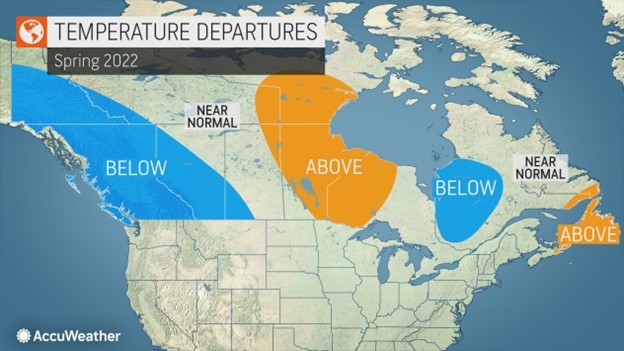
AccuWeather – AccuWeather’s 2022 Canada spring forecast

Wet, mild pattern could raise flood concerns in Atlantic Canada… Despite the unsettled weather pattern, temperatures across much of southeastern Canada are forecast to be around average levels, with above-normal warmth possible for parts of northeastern Nova Scotia and into Newfoundland… Above-normal water temperatures in the northwest Atlantic will also play a role in the mild pattern for this part of the country. ‘The nearby ocean water may be as much as 2-5 F (1-3 C) above normal during the spring,’ Anderson said. This will help to keep air temperatures in populated areas along the coast above normal, especially during the overnight hours.

Farmer’s Almanac – Nova Scotia, Prince Edward Island, New Brunswick, Quebec Long Range Weather Forecast

May 8th-11th A pleasant spell. May 12th-15th Thunderstorms sweep east, followed by clearing skies. May 16th-19th Showers, followed by fair, cool weather. May 20th-23rd Fair skies for National Patriots’ Day in Quebec and Victoria Day festivities in Nova Scotia and Prince Edward Island. May 24th-27th Squally weather, followed by fair skies.

The Weather Network – Welcome to spring, Canada! Your next three months of weather here

After a mild winter, this region is settling into a more typical spring pattern with back-and-forth temperature swings that will come close to offsetting each other… While localized spring flooding could still occur, the risk for widespread flooding appears lower than normal across the region as thaws during February and March have already significantly reduced (or eliminated) the snowpack.

In our experience, normal spring weather has been arriving a bit faster than normal this year in Atlantic Canada, but not as rapid as last year. That said, we all know that Atlantic weather can change in the blink of an eye. Apiaries and blueberry fields will also experience their own microclimate, which can create conditions in your yards that vary from the regional trend. To help with localized weather tracking, Perennia is undertaking a weather station project that some Nova Scotia blueberry producers will already be familiar with. Read on to learn more!

Nova Scotia Weather Station Assistance Program

The Nova Scotia Weather Station Assistance Program encourages producers to embrace on-farm weather station technology and adopt tools that allow them to fully utilize the data gathered. The program is now closed for new applications, but the weather stations are currently in the process of being installed. 

Anyone can download the free Davis “WeatherLink” app to their phone from the Apple App Store or the Google Play Store and create a free account to access the live data from the weather stations. If you search on the map “Location” page of the app, you can see what weather stations there are currently installed in your area. Any stations with the naming code “Community Name (NSW###)”, for example “Glenholme (NSW001)” indicates the weather station was funded and installed under this program. The NSW number is the unique station ID assigned to the station. The weather station locations and data can also be view on the Cape Breton Mesonet at www.capebretonweather.ca

Perennia’s Wild Blueberry Blog also includes some great links to information based on the data collected by these weather stations. Any weather stations installed in wild blueberry fields can be found under the “Weather” page (http://www.novascotiawildblueberryblog.com/p/weather.html) where you can view the current conditions at each site. 


Read full weather reports


Connecting with ATTTA Specialists


If you’d like to connect with ATTTA specialists or learn more about our program, you can:


Black Queen Cell Virus: One of the Most Prevalent Viral Pathogens of Honey Bees

Thursday, 26 August 2021

During the current pandemic, social isolation has helped control the spread of Covid-19.  Unfortunately, honey bees are unable to socially isolate to curb the spread of viral diseases in their populations.  They live in large numbers, in very close proximity, engage in trophallaxis and allogrooming.  Spread of viral disease in a honey be colony is almost inevitable.  Interestingly, although honey bees may struggle to prevent viral diseases moving through their colonies, they may be helping us stay healthy.  There is recent work investigating how hive products can fight Covid-19 (Yahya Al Naggar, 2021) and even how honey bees are able to diagnose the Coronavirus.  Honey bee scientists in the bio-veterinary research laboratory at Wageningen University have successfully trained bee to detect Coronavirus positive samples to gain a food reward (Wageningen, 2021).  Even when it comes to viruses, we find further examples of how honey bees help us!  This week we will look at Black Queen Cell virus as we near the end of our series on honey bee viruses.

Black Queen Cell Virus: One of the Most Prevalent Viral Pathogens of Honey Bees

As the name implies, the Black Queen Cell Virus (BQCV) is a disease associated with developing queens at the larval and pupal stages.  The virus is transmitted horizontally by the worker bees as they move from infected cells to healthy queen cells.  There is also a suggestion that vertical transmission may occur from the queen through to her eggs.  Infection of BQCV in a developing queen larva will result in the death and ultimate necrosis of the pupa.  This results in the blackened, decomposing, undeveloped queen and the classic symptoms used to diagnose this disease.  This virus is most commonly seen in the spring of year but not limited to that season.  It has been suggested that this is the most common, although least understood, of the approximately 24 viruses infecting honey bees.  Believed to be present asymptomatically in adult queens and workers, the elevated titres seen in the developing queens cause morbidity.  Therefor this is a serious disease for the honey bee queen production industry.


Figure1. Virion Structure of the Black Queen Cell Virus (Spurny et al. 2017).


It has become obvious from our previous discussions that varroa infestation is linked to viral infections of honey bees.  This is not the only pest or disease which is been associated with viral disease transmission.  Nosema and  BQCV have been demonstrated in coinfections.  It has even been suggested that Nosema ceranae and BQCV act synergistically to significantly decrease host survival.  Additionally, Nosema and varroa have a negative, interactive effect on honey bee health.  So it is not surprising that varroa mite infestation are associated with this virus as well.  It would be easy to imagine this infectious triad could collapse a colony.  Optimistically, all three of these are less likely to occur in strong, healthy colonies.


Figure 2. Queen cell showing BQCV infection (Photo: Robert Snyder, BeeInformed)

There is no treatment for BQCV but there are ways to manage the risk of this disease.  As suggested above, ensure that your colonies are kept strong and healthy.  Manage your varroa mite populations.  Apply standard biosecurity practices, such as flaming hive tools, moving bees and equipment carefully between apiaries and operations.  Monitor for Nosema and treat if necessary.  Specific to queen operations, ensure specialist equipment such as grafting tools are sterile.  Ensure that cell builder and finisher colonies are healthy.  Mating nucs should be kept well fed, healthy and disease free!  If you find an incidence of BQCV in your operation, put appropriate measures in place to trace back the source and stop onward spread.

Next week will conclude this short series on honey bee viral disease as we look at Kashmir Bee virus.  This virus is also linked to varroa mite infestation and a close relative of the previously discussed Acute Bee Paralysis Virus.  Make sure not to miss any of our blogs by subscribing through the link in the left hand column.

Spurny R, Pridal A, Palkova L, Kiem HKT, de Miranda JR, Plevka P. Virion Structure of Black Queen Cell Virus, a Common Honeybee Pathogen. J Virol. 2017; 91(6): e02100–16. pmid:28077635

Wageningen University 2021 https://www.wur.nl/en/news-wur/Show/Training-bees-to-smell-the-coronavirus.htm

Yahya Al Naggar, John P. Giesy, Mohamed M. Abdel-Daim, Mohammad Javed Ansari, Saad N. Al-Kahtani, Galal Yahya, 2021 Fighting against the second wave of COVID-19: Can honeybee products help protect against the pandemic?, Saudi Journal of Biological Sciences, Volume 28, Issue 3, Pages 1519-1527


Connecting with ATTTA Specialists


If you’d like to connect with ATTTA specialists or learn more about our program, you can:


ATTTA’s Spring Honey Bee Management Guide

Thursday, 8 April 2021

As we approach mid-April and with warmer weather on the way, spring beekeeping is upon us! Have you got your to-do list laid out and your tasks organized in a spring honey bee management plan catered to your goals for this season? If you are not quite there yet, no need to worry, ATTTA’s Spring Honey Bee Management Guide is a great resource to help you make sure you hit all the key points of honey bee management for spring.

Announcement: ‘What’s the Buzz with ATTTA’ beekeeping podcast Episode 3 is now live and ready for your listening, learning, and enjoyment! Keep reading for more details on what topics are discussed in the third episode of our podcast.

ATTTA’s Spring Honey Bee Management Guide

There are a number of spring housekeeping practices to ensure hives are clean and colonies can build up. Spring housekeeping tasks include:

1.  Unwrap hives

The timing for unwrapping hives is largely dependent on weather, but hives are typically unwrapped in April in Atlantic Canada. The timing of unwrapping is important since brood can get chilled and die if a colony is unwrapped too soon and the bees are not able to keep the entire broodnest warm enough. If in doubt, wait; the risk of overheating in spring due to the wrap is very low.

2.  Remove entrance reducers  

Although shrew guards have already been taken off, entrance reducers can be removed in spring to allow for more ventilation as the weather gets warmer and to provide a larger entrance/exit for foragers to pass through. If a colony is weak, the entrance reducer may be kept in place so that the colony has a smaller opening to defend.

3.  Check and clean bottom boards

When cleaning bottom boards, check for dead bees, observe any abnormalities, and remove residue (can be scraped with a hive tool). Reverse the bottom board if reversible and/or torch the bottom board after scraping to help destroy diseases that may be present.

4.  Reverse hive bodies to move cluster to the bottom box

Hive bodies (chambers) can be reversed for colonies overwintered in doubles. As the cluster moves through the hive over the winter, it will end up in the top box in the spring. Take the top box and reverse it with the bottom box to encourage bees to move through hive but leave some honey in the bottom to provide a close food source during cool weather. Before reversing, make sure to assess the colony’s broodnest placement and check the weather forecast. If it gets too cold after reversing and the broodnest is not a single continuous unit, a colony might abandon a section of brood to preserve another if there are not enough bees to keep both brood sections warm!

5.  Assess comb

Inspect and replace comb in the spring. Try to rotate comb out every three to five years. Inspect for signs of American Foulbrood (AFB). Check out last week’s blog to learn more about why old comb should be rotated out and how the age of comb impacts a colony’s productivity!

6.  Feed hives

A 1:1 solution of sugar syrup can be fed to stimulate brood rearing. Be careful to not feed too much in case the hives become ‘honey bound’ too early, causing the queen to run out of room to lay eggs and potentially stimulating swarming. If the hive contains too many honey frames and there is limited room to lay, remove some of the honey frames and replace with drawn empty frames to encourage brood rearing. Pollen patties can also be fed.

7.  Monitor for diseases and pests

Sample for Varroa mites (see Integrated Pest Management section of ATTTA’s Spring Honey Bee Management Guide for further information) and send off bee samples for Nosema spore counts (or count on your own with a microscope). If Nosema spores exceed threshold, feed fumagillin in sugar syrup. Beekeepers may add thymol or other products to sugar syrup to lower the Nosema spore count if the threshold has not yet been exceeded. If mites exceed threshold, select a treatment method not used in previous 12 months.

For more tips and information on spring beekeeping duties, check out the full ATTTA Spring Honey Bee Management Guide available online.


What’s the Buzz with ATTTA Beekeeping Podcast: Episode 3!

The third episode of ATTA’s beekeeping podcast is now live and ready for you on a variety of listening platforms! With this month’s podcast, the conversational tour of beekeeping in our regions continues and talk to well known local beekeeper Chris Lockhart. Chris is from New Brunswick and keeps bees around the Moncton area. As a second-generation beekeeper, his business, Lockhart Apiaries, is involved in pollination and honey production. He sells quality, local honey under the brand Atlantic Gold which is found in stores across the region. During conversation, Chris talks about the challenges of running and growing a beekeeping business during these difficult times of Covid-19 and climate change. Listen to the podcast to find out more about beekeeping, pollination services and baseball bats! An informative chat of interest to anyone beekeeping in Atlantic Canada!

To access Episode 3 of the ATTTA podcast from a variety of listening platforms, visit the ‘What’s the Buzz with ATTTA’ beekeeping podcast website. Hope you enjoy!


Connecting with ATTTA Specialists


If you’d like to connect with ATTTA specialists or learn more about our program, you can:


Spring and Summer 2021 Weather Forecast

Thursday, 25 March 2021

Happy Spring everyone! We are looking forward to some warmer weather as spring progresses following its official arrival last Saturday. We hope your bees made it through the winter and are getting ready in their hives to take on the 2021 season! Bees are out flying around already in some places with the recent warm weather; keep reading for a sneak peek into what weather we can expect for this upcoming beekeeping season.

Lessons and learning for Course 1: The Very Beeginnings has been taking place this week, beginning on Tuesday, and wrapping up this Saturday. This has been a new experience for many of us and we appreciate all the support and participation we received from the Atlantic beekeeping community for this first course rollout!

Spring and Summer 2021 Weather Forecast

The spring equinox was last Saturday, March 20th, and it has brought with it some fantastic weather for the Atlantic Canada region! Since beekeeping and colony activities are largely dictated by weather, it is a good idea as a beekeeper to be informed on weather forecasts, and also not a bad idea to compare season predictions across various sources. This is especially a good idea for the spring season as the bees are coming out of overwintering. For the 2021 season, the following weather forecasts have been announced:

  • The Old Farmer’s Almanac – 2021 Long Range Weather Forecast for Atlantic Canada*:
“April and May will be slightly warmer than normal, with precipitation below normal in the north and above normal in the south. Summer will be warmer than normal, with rainfall below normal in the north and above normal in the south. The hottest periods will be in mid-June and early and mid-August. Watch for a tropical storm threat in early to mid-August. September and October temperatures will be near normal, with above-normal rainfall.” * (full report here)

  • The Weather Network – Welcome to spring, Canada! Your next three months of weather here*:
“Back-and-forth temperature swings are expected to tip to the warm side normal across Atlantic Canada, but we will still see the inevitable periods of colder weather that will test our patience as we wait for consistently warm weather. Also, the milder forecast does not rule out late winter-like storms.

Near normal precipitation is expected, but we have a lower than typical risk for widespread spring flooding due to the below normal snowpack across the region.” * (full report here)

  • Farmer’s Almanac – Nova Scotia, Prince Edward Island, New Brunswick, Quebec Long Range Weather Forecast for March 24th to April 23rd*:
“March 24th – 27th Storm tracks through upstate NY and central New England, bringing a widespread snowfall; March 28th – 31st Continued unsettled, followed by gradual clearing; April 1st – 3rd Initially pleasant weather, then becomes unsettled; April 4th – 7th Rainy skies for Easter Sunday and Monday, then becoming fair. April 8th – 11th Fair weather, then turning stormy. April 12th – 15th Thunderstorms clear over the Maritimes, becoming fair; April 16th – 19th Becoming unsettled with showers; April 20th – 23rd Fair skies, unseasonably warm.” * (full report here)

  • AccuWeather – AccuWeather’s 2021 Canada spring forecast*:
“As stormy conditions set up over western Canada, a secondary storm track will develop over the Great Lakes and eastern Canada. “This pattern will lead to above-normal precipitation and the risk for significant, early-spring snowfall over northern and central Ontario as well as into Quebec,” Anderson said…Despite the unsettled weather pattern, temperatures across much of eastern Canada are forecast to climb above average. Above-normal water temperatures in the northwest Atlantic Ocean will play a role.” (full report here)

Not only is it a good idea to keep an eye on the weather for determining the best day to perform beekeeping management activities, but it also provides insight into timing of plant blooming and pollen availability. As climate trends change over time and spring forecasts predict earlier and warmer spring seasons, plants will naturally alter their blooming times to match the weather. In beekeeping, it is especially important to consider the interconnectivity among weather trends, plant growth and bloom timings, and the timings of colony activities.


Fundamentals of Beekeeping Course 1: The Very Beeginnings is Underway

Teaching and learning for the first course of the Fundamentals of Beekeeping certificate program commenced this past Tuesday and is scheduled to conclude this Saturday! This first course has been a success thus far and Course 2: Working Bees and Hive Health is slated to continue the program in May. Stay tuned for updates and additional information regarding Course 2 of the Fundamentals of Beekeeping program over the upcoming weeks!


Connecting with ATTTA Specialists


If you’d like to connect with ATTTA specialists or learn more about our program, you can: