Showing posts with label integrated pest management. Show all posts

Update on Newly Registered Varroa Mite Treatments in Canada

Thursday, 14 May 2026

Over the past six months new commercially-made Varroa mite treatments have been registered for use in Canada, including VarroxSanTM, Apivar 2.0®, and Amiflex®. The Maritime beekeeping industry has waited eagerly to learn the availability these products from local and national retailers. Read this week’s blog to learn which products are already on the shelves, and when we can expect to purchase each product locally and nationally.

Update on Newly Registered Varroa Mite Treatments in Canada

These past 6 months have brought options for Varroa mite management in Canada, as the Pesticides Regulatory Directorate (formerly PMRA) registered three new Varroa mite treatments: VarroxSanTM, Apivar 2.0®, and Amiflex®. VarroxSanTM, developed and manufactured by Vita Bee Health Canada Ltd., contains the active ingredient oxalic acid dihydrate (18.42%) and is administered using strips. Apivar 2.0®, manufactured by Véto-pharma, contains the active ingredient amitraz (3.00%) and is a contact acaracide delivered using plastic strips. Amiflex, also manufactured by Véto-pharma, contains the active ingredient amitraz (1.99%) and is administered to colonies as a gel. To learn more about each of these products, review the previous blog posts by ATTTA: “New Varroa Mite Treatment Product: VarroxSanTM” published on November 13, 2025, “What Beekeeper's Should Know about Apivar 2.0®” published on November 27, 2025, and “What Beekeepers Should Know about Amiflex®” published on January 15, 2026.

The availability of each of these commercial products differs at both the local and national levels. To start, of the three products, currently, only VarroxSanTM is being sold from Maritime beekeeping stores including Country Fields Beekeeping Supplies (Fall River, NS), Maritime Bee & Agriculture Supplies (Sussex, NB) and Buzzworks Beekeeping & Apiary Supplies (Moncton, NB). All three have VarroxSanTM in stock in both 20-strip and 60-strip packs. Golden Greens Beekeeping Supplies (Onslow, NS) anticipates selling VarroxSanTM in the near future. Currently, the local beekeeping stores do not have Apivar 2.0® or Amiflex® on their shelves. Apivar 2.0® is expected to be available locally either late 2026 or in spring 2027, but there is no definite availability date for the Maritime region yet. Amiflex®, although not currently on the shelves of these stores, could be purchased locally as Country Fields Beekeeping Supplies has the ability to bring in bulk orders if requested by commercial beekeepers.

Although not all three products are able to be purchased locally this season, beekeepers can shop outside the region. The national distributors, Bee Maid Bee Supplies and Dancing Bee Equipment, both have VarroxSanTM, Apivar 2.0®, and Amiflex® available for purchase. These national stores have VarroxSanTM in stock in both 20-strip and 60-strip packs. There is an expected shipment of VarroxSanTM into Canada later this summer, which should provide a consistent supply of the product throughout the season. For any Maritime beekeepers eager to use Apivar 2.0® or Amiflex®, both are available to ship to the Maritimes this beekeeping season.

Left to right: VarroxSanTM, Apivar 2.0® and Amiflex® (Dancing Bee Equipment)

The registration of VarroxSanTM, Apivar 2.0®, and Amiflex® has provided the Canadian beekeeping industry with 3 new products, which can be incorporated within integrated pest management plans. In order to gain familiarity, ATTTA will be using all three new products this season and be able to answer beekeepers’ questions.  For any questions regarding Varroa mite treatment and management, reach out to the ATTTA team.

Connecting with ATTTA Specialists

If you’d like to connect with ATTTA specialists or learn more about our program, you can:

visit our website at https://www.perennia.ca/portfolio-items/honey-bees/

Email attta@perennia.ca

What Beekeepers Should Know about Amiflex®

Thursday, 15 January 2026

Over the past few months a couple of Varroa mite treatments have been registered for use in Canada, including VarroxSanTM and Apivar 2.0®. Adding to that list, the Canadian Pest Management Regulatory Agency (PMRA) has recently registered Amiflex®, which is a gel formulated product containing the active ingredient amitraz (1.99%). Read this week’s blog to understand how Amiflex® may be incorporated into Canadian beekeepers’ Varroa mite management plans.

What Beekeepers Should Know about Amiflex®

Amiflex® is a Varroa mite treatment containing the active ingredient amitraz (1.99%) and is administered to colonies as a gel. The product, manufactured by Véto-pharma, has recently been registered for use in Canada by the Pest Management Regulatory Agency (PMRA). As part of an integrated pest management approach to controlling Varroa mites, beekeepers need to use a variety of chemical treatments and reduce reliance on a singular product. Having multiple treatment options available makes it easier for beekeepers to work different products into their IPM plan.

Amiflex® can be used to treat phoretic mites whether or not brood is present in the colony, but the product does not target mites under capped brood cells. Additionally the product is not temperature-dependent and can be used throughout the beekeeping season.

To apply Amiflex®, beekeepers must ensure that honey supers are removed, as the product cannot be administered while honey supers are present. Then beekeepers should scrape frames clear of all excess wax and propolis that could prevent the bees from coming in contact with the gel. In particular, top bars, top feeders, and the bottom of the frames in the top brood box should be well scraped. Next, beekeepers can load and secure the Amiflex® syringe into the dosing gun following manufacturer instructions. Using the dosing gun, an application of 2 doses of 3mL per brood box should be applied to the included tongue depressors, which are placed on the top bars of two different frames. Beekeepers should leave a minimum of one frame between the two frames with gel. The product should be applied to frames in the centre of the brood nest. For a double colony the total application should be 4 doses of 3mL (12mL) (2 frames in each brood box).

Beekeeper applying Amiflex® treatment to honey bee colony ©Thierry Vincent (Véto-pharma).

The treatment period of Amiflex® is 7 days. After 7 days any leftover treatment should be removed, and honey supers are allowed to be placed on colonies.

According to the manufacturer, Amiflex® is different from other amitraz products as it has a relatively quick action. Additionally, according to the PMRA label, the product can be used two times a year, either as two applications 14 days apart, or as two separate applications (7 days each) at different times during the year. If a colony or yard has high Varroa mite levels, it is recommended to apply the second application of Amiflex® 14 days after the first application to target emerging bees and phoretic mites.

Beekeepers must remember that Amiflex®, just like any other Varroa mite treatment, should only be applied when monitoring indicates mite levels are at or exceeding the economic threshold. Beekeeper should monitor following treatment to understand if the treatment was effective. Additionally, it is important that beekeepers understand that Amiflex® does not provide a new active ingredient to the Canadian beekeeping industry, but rather a new application of an already registered active ingredient – amitraz. So, if beekeepers want to use an amitraz-based product as part of their IPM plan, it is recommended that they select one of the available delivery methods (strips or gel) and alternate this treatment with another product that contains a different active ingredient.

The registration of Amiflex® will hopefully provide the Canadian beekeeping industry with another Varroa mite treatment option. Beekeepers can anticipate that the product will be available to purchase in the near future, but the exact date this product will be available in beekeeping stores is still unknown. For any questions regarding Varroa mite treatment and management, reach out to the ATTTA team.

References

Pest Management Regulatory Agency. https://pr-rp.hc-sc.gc.ca/1_1/view_label?p_ukid=402262946

Véto-pharma. https://www.veto-pharma.com/beekeeping-products/amiflex-amitraz-flash-treatment/

Connecting with ATTTA Specialists

If you’d like to connect with ATTTA specialists or learn more about our program, you can:

visit our website at https://www.perennia.ca/portfolio-items/honey-bees/

Email attta@perennia.ca


What Beekeeper's Should Know about Apivar 2.0®

Thursday, 4 December 2025

Recently, there have been multiple discussions within the beekeeping industry around what new products will be available to beekeepers next spring. Although the Maritime industry does not have a definitive answer on what products will be on the shelves of local bee supply stores, beekeepers are adjusting their expectations based on what products have recently been registered by the Pest Management Regulatory Agency (PMRA). One new product that has recently been registered for use in Canada is Apivar 2.0®. Read this week’s blog to understand the product formulation and application of Apivar 2.0®.

What Beekeeper's Should Know about Apivar 2.0®

To effectively manage Varroa mites, beekeepers need a variety of chemical treatments with good efficacy to use within their integrated pest management plan. Recently, the Pest Management Regulatory Agency (PMRA) has registered Apivar 2.0® for Varroa mite treatment1. Beekeepers are familiar with Apivar® which contains the active ingredient amitraz (3.33%) and is a contact acaracide delivered using plastic strips. Apivar 2.0® contain the same active ingredient (amitraz) but at a lower dose (3.00%). According to the manufacturer, Véto-pharma, the decrease in the dose of amitraz does not mean the product has lower efficacy compared to the original Apivar®2. This is because Apivar 2.0® has been developed to release amitraz at an accelerated rate, particularly during the first few weeks of treatment, which means the product can achieve similar efficacy with a lower dose of the active ingredient. Overall, using the lowest concentration of a synthetic product such as amitraz, but still achieving desired efficacy, helps reduce the risk of miticide resistance. This is because high concentrations and prolonged exposure of miticides can facilitate various mechanisms in Varroa mites that lead to reduced efficacy3.

Another difference between the original Apivar® and Apivar 2.0® is the design of the plastic strips. Apivar 2.0® has improved tabs for hanging strips between frames. Additionally, the product has adaptable strip lengths that are compatible with various hive configurations, including Langstroth and Dadant2.

Apivar 2.0 placed in honey bee colony (Véto-pharma©).

Probably the most significant difference between Apivar® and Apivar 2.0®, that will be of benefit to beekeepers, is that the new product does not have a withdrawal period prior to placing honey supers. As directed by the label, beekeepers will be able to place their honey supers immediately following the treatment period1. However, honey supers are still not permitted during the treatment period1.

As directed, colonies should be treated with two Apivar 2.0® strips per brood box, with a minimum distance of two frames between strips1. Strips should remain in the hive for a minimum of 42 days1. The label directions instruct that if there is a lot of brood when starting the treatment that the strips should be left in the hive for a total of 70 days1. Strips must be removed after a maximum of 70 days1.

Additionally, it is recommended to check strips mid treatment, and potentially scrape the strips to remove propolis, wax and/or honey1. If the bee cluster has moved away from the strips then beekeepers should reposition the strips within the bee cluster at this time1.

Now that Apivar 2.0® is registered within Canada, beekeepers can anticipate that the product will be available to purchase in the near future. However, the exact date this product will be available from Canadian beekeeping stores is still unknown. It is expected that there will be a period of time that both Apivar® and Apivar 2.0® will co-exist on the market, but the manufacturer’s intention is for Apivar 2.0® to eventually replace the original product2.

A reminder that beekeepers should not apply more than one mite treatment simultaneously, and all colonies in an apiary should be treated with the same product and dosage following the manufacturer instructions. Also, synthetic products such as Apivar and Apivar 2.0® should only be used once every 12 months to help prevent reduced efficacy, and only applied when required as determined through monitoring. Reach out to the ATTTA team for questions regarding Varroa mite treatment and management.

References

  1. Pest Management Regulatory Agency. https://pr-rp.hc-sc.gc.ca/1_1/view_label?p_ukid=396264759.
  2. Véto-pharma. https://www.veto-pharma.com/beekeeping-products/apivar-2-0-varroa-treatment/.
  3. Van Leeuwen, T. and Dermauw, W., 2016. The molecular evolution of xenobiotic metabolism and resistance in chelicerate mites. Annual review of entomology, 61(1), pp.475-498.

Connecting with ATTTA Specialists

If you’d like to connect with ATTTA specialists or learn more about our program, you can:

visit our website at https://www.perennia.ca/portfolio-items/honey-bees/

Email attta@perennia.ca


New Varroa Mite Treatment Product: VarroxSan

Thursday, 13 November 2025

Across the globe beekeepers continue to rely on various chemical treatments to manage Varroa mites. The use of chemicals is essential for a successful integrated pest management (IPM) approach to controlling mite levels. Researchers are continually assessing the efficacy of current mite treatments, developing novel treatment formulations and applications, and working with various companies and regulatory agencies to make these products available to beekeepers. This week’s blog will discuss a new product which was recently registered by the Canadian Pest Management Regulatory Agency (PMRA).

New Varroa Mite Treatment Product: VarroxSanTM

As part of an integrated pest management approach to controlling Varroa mites, beekeepers need to use a variety of chemical treatments and reduce reliance on a singular product. Having multiple treatment options available makes it easier for beekeepers to work different products into their IPM plan. Recently, the Canadian Pest Management Regulatory Agency (PMRA) registered a new product for Varroa mite management known as VarroxSanTM. VarroxSanTM, developed and manufactured by Vita Bee Health Canada Ltd., contains the active ingredient oxalic acid dihydrate (18.42%) and is administered using strips.


VarroxSanTM strips for Varroa mite treatment (©Vita Bee Health).

As specified by the PMRA label, to treat colonies using VarroxSanTM, a beekeeper can use a maximum of 4 VarroxSanTM strips per 10-frame box of bees. The number of strips should be adjusted depending on the total number of frames of bees, but never exceeding 4 strips per 10-frames (see table below).

Table 1. Required number of VarroxSanTM strips per number of frames of bees, as indicated on the product label.
Number Frames of Bees
0 – 2.5
3 – 5
6 – 7.5
8 – 10
Number of VarroxSanTM Strips
1
2
3
4

Treatment of bees with VarroxSanTM, as with any miticide product, should only be provided after monitoring indicates mite levels are above the economic threshold (1% or 1 mite per 100 bees). To treat, the appropriate number of strips should be folded in half and hung over one comb frame within the cluster of bees. For example, this may be a singular strip placed over frame 2, 4, 6, and 8, again, considering the number of frames of bees within the box and adjusting accordingly. Strips should be hung so that the bees can walk on the strips, slightly away from the surface of the frames. Strips should be left inside the hive between 42 days to 56 days, and must be removed after a maximum of 56 days. After 42 days, strips should be repositioned to remain within the brood cluster.

To give an indication of cost, American beekeeping supply companies are selling a 60-pack of VarroxSanTM for anywhere between $78.95 USD to $89.95 USD.  The Canadian price is yet to be determined but local beekeeping supply stores expect the product to be available shortly.

The product label indicates that VarroxSanTM is a treatment option in spring, summer and fall, indicating that the product does not have strict temperature restrictions and is suitable for the variation of temperatures experienced throughout the Canadian beekeeping season. A main benefit to beekeepers with this new product application is that the label states that VarroxSanTM can also be used with honey supers on. This will provide a summer Varroa mite treatment option for beekeepers who are focused on honey production.

According to Vita Bee Health, VarroxSanTM has an average efficacy of 96.80% based on a number of studies conducted in various geographic and climatic conditions. Additionally, Vita Bee Health states that oxalic acid dihydrate, active ingredient, works as a contact acaracide that is lethal to Varroa mites, but the full extent of the mode of action is not yet understood.

It is important that beekeepers understand that VarroxSanTM does not provide a new active ingredient to the Canadian beekeeping industry, but rather a new application of an already registered active ingredient – oxalic acid dihydrate. Oxalic acid dihydrate is already registered for beekeeper use by administering through vaporizers or the dribble method. So, if beekeepers want to use oxalic acid as part of their IPM it is recommended that they select one of the delivery methods (strips, vaporization, or dribble) and alternate this treatment with another product that has a different active ingredient (i.e. Apivar®, formic acid, or essential oil products). There may be opportunity for a beekeeper to use an oxalic acid product more than once per season, especially if using VarroxSanTM mid-season, but beekeepers do need to reduce reliance on a single active ingredient when planning for treatments and alternate with products containing different active ingredients.

A reminder that beekeepers should not apply more than one mite treatment simultaneously. Therefore, VarroxSanTM, as with all miticides, must not be administered during the treatment period of any other Varroa mite treatments. Applying more than one product at the same time may interfere with the chemistry of a product potentially changing efficacy or causing harm to bees.

Overall, VarroxSanTM provides the industry with another Varroa mite treatment option, and it is one of few that is allowed to be used with honey supers on. Now that VarroxSanTM is registered for use in Canada beekeepers can expect the product to available for use in Canada next beekeeping season. 

Connecting with ATTTA Specialists

If you’d like to connect with ATTTA specialists or learn more about our program, you can:

visit our website at https://www.perennia.ca/portfolio-items/honey-bees/

Email attta@perennia.ca

The Host-Parasite Interactions of Varroa Mites and Honey Bees: Colony Level Impacts

Thursday, 9 October 2025

Wrapping up our blog series focused on varroa mite biology, and the host-parasite interactions of mites and honey bees, this week’s blog will focus on the damage caused by varroa mites at the colony level. The impacts of varroa mite parasitism are often cumulative on the overall decline in health and population of a honey bee colony. Read this week’s blog to learn about varroa mite damage at the colony level, and to better understand the management steps beekeepers can utilize to help keep their colonies strong and healthy.

The Host-Parasite Interactions of Varroa Mites and Honey Bees: Colony Level Impacts

The last couple of blogs have explored how varroa mites not only cause direct damage to honey bees through feeding but they also vector viruses which infect honey bees and cause multiple honey bee health issues. Beekeepers often recognize varroa mite damage at the colony level, which occurs when mite levels have reached a critical level, and both the health and population of the colony has been weakened.

Varroa mite damage at the colony level results from a cascade of impacts caused by mites. It starts with the physical damage caused by mites when feeding from honey bee fat bodies. These feeding wounds impair the honey bee’s immune defenses and make them more susceptible to viral transmission. Viruses transmitted by the mites cause a wide array of deformities and health impacts on honey bees, which overall shorten their lifespan. Shortened honey bee lifespan decreases the colony population which also impacts the colony’s ability to effectively manage the hive. For example, a decreased population means less bees are available to forage for resources, which means less resources are available in the hive, and brood production will slow down - further declining the population size. Other cascade impacts from high varroa mite levels include the colony being more susceptible to robbing and pest problems, which further weakens the colony; also, there are less nurse bees in colony which can lead to increased susceptibility to other honey bee diseases.

Furthermore, worker bees that are infested with varroa often exhibit impaired navigation, which reduces the success of them finding their home colony, and increases drifting of bees to neighboring colonies3. Drifting inadvertently transfers mites and viruses between colonies, apiaries, and operations. This phenomenon, known as the “mite bomb effect” demonstrates how an unmanaged colony causes widespread colony infestation and loss throughout a region4.

Overall, colonies with high varroa mite levels are at high risk of dying before or during the winter months. Having a high over winter loss has other impacts on a beekeeping operation, such as: not being able to meet pollination contracts, decreased honey production, and decreased production of bees, all of which decreases beekeeping revenues.

Impacts of Varroa destructor (ATTTA 2025) (Created in https://BioRender.com)

Although varroa presents a significant threat to the global beekeeping industry, beekeepers are able to successfully manage this pest using an integrated pest management (IPM) approach. This includes monitoring mite levels throughout the beekeeping season, alternating chemical treatments, providing treatments following the manufacturer’s instructions, and implementing cultural and/or physical control methods (ex. brood interruption). To learn more about IPM read past ATTTA blogs: “An IPM Series: The Importance of Monitoring for Pests and Diseases” (September 28, 2023), “An IPM Series: How Reduced Efficacy Occurs” (October 12, 2023), and “The Advantage of Splitting for Varroa Mite Management: an IPM Approach” (January 16, 2025).

References

  1. Doublet, V., Oddie, M.A., Mondet, F., Forsgren, E., Dahle, B., Furuseth-Hansen, E., Williams, G.R., De Smet, L., Natsopoulou, M.E., Murray, T.E. and Semberg, E., 2024. Shift in virus composition in honeybees (Apis mellifera) following worldwide invasion by the parasitic mite and virus vector Varroa destructor. Royal Society Open Science, 11(1), p.231529.
  2. Ramsey, S.D., Ochoa, R., Bauchan, G., Gulbronson, C., Mowery, J.D., Cohen, A., Lim, D., Joklik, J., Cicero, J.M., Ellis, J.D. and Hawthorne, D., 2019. Varroa destructor feeds primarily on honey bee fat body tissue and not hemolymph. Proceedings of the National Academy of Sciences, 116(5), pp.1792-1801.
  3. Geffre, A.C., Gernat, T., Harwood, G.P., Jones, B.M., Morselli Gysi, D., Hamilton, A.R., Bonning, B.C., Toth, A.L., Robinson, G.E. and Dolezal, A.G., 2020. Honey bee virus causes context-dependent changes in host social behavior. Proceedings of the National Academy of Sciences, 117(19), pp.10406-10413.
  4. Dynes, T.L., De Roode, J.C., Lyons, J.I., Berry, J.A., Delaplane, K.S. and Brosi, B.J., 2017. Fine scale population genetic structure of Varroa destructor, an ectoparasitic mite of the honey bee (Apis mellifera). Apidologie, 48(1), pp.93-101.

Connecting with ATTTA Specialists

If you’d like to connect with ATTTA specialists or learn more about our program, you can:

visit our website at https://www.perennia.ca/portfolio-items/honey-bees/

Email attta@perennia.ca


Early Season Regional Trends in Varroa Mite Populations

Thursday, 19 June 2025

The Atlantic Tech Transfer Team for Apiculture is continuing with their second year of a regional varroa mite survey. This survey aims to determine seasonal trends in varroa mites across the region, and help assess the efficacy of mite management. This week’s blog will explore early season trends in varroa mite populations across our Maritime region, and discuss how this year’s mite levels compare to 2024, and other regions within Canada.

Early Season Regional Trends in Varroa Mite Populations

For the second season, ATTTA is conducting a regional varroa mite survey to assess temporal trends in mite levels and to assess the efficacy of amitraz (active ingredient in Apivar® - a synthetic miticide). This year, the survey consists of 20 beekeepers (7 in Nova Scotia, 9 in New Brunswick, and 4 on Prince Edward Island). For trial one, which took place mostly before colonies went to wild blueberry pollination, there was a total of 71 samples/colonies included.

Overall, the average mite load for trial one (April 30, 2025 – May 28, 2025) was 0.02%, 96% of colonies had 0% mite load, and no colonies had a mite load greater than 1% (Figure 1). The average number of bees per sample for trial one is 278, with a target sample size of 300. In comparison, in 2024, the average mite load for trial one (May 16, 2024 – June 25, 2024) was 0.09%, 93% of colonies had 0% mite load, and 5% colonies had a mite load greater than 1% (Figure 1). More data is needed to help establish a baseline for mite levels in spring across our region. Although there is a decrease in the percentage of colonies with detectable varroa, and the percentage of colonies with mites levels above 1%, between 2024 and 2025 (Figure 1), additional data is needed to support a downward trend, or assess if levels are potentially increasing or remaining stable from year to year.

Figure 1. Comparison of varroa mite loads in the Maritime region between 2024 and 2025.

It is important that beekeepers understand that 0% mite load, as determined by an alcohol wash, does not mean that no mites are present within the colony. There is always a background population of varroa mites within a single colony, and without frequent and representative monitoring the population can quickly increase above the level of detection. Beekeepers should manage their mite levels to be below 1% all throughout the beekeeping season, and intervene with treatment if levels reach/surpass 1% (1 mite per 100 bees).

A recently published study which took place in Ontario beekeeping operations (2015-2019) demonstrated a similar seasonal pattern in varroa mite populations, as observed from ATTTA’s research in 2024, and preliminary data for 2025 (Sobkowich et al. 2025). This seasonal pattern can be described by an initial spike in early spring around hive opening, followed by a sharp decline due to initial spring treatments, succeeded by a gradual population increase over the summer, leading to exponential growth in the mite population in early fall. This seasonal trend is consistent with previous knowledge on varroa mite population dynamics and global observations based on reported mite levels to the World Organization for Animal Health (Fanelli and Tizzani, 2020).

The Maritime industry must remain vigilant regarding the efficacy of Apivar® (active ingredient amitraz) as this is the only recommended synthetic miticide available, and widespread resistance is being reported across the globe. Following severe colony losses reported in early 2025 across the United States, researches of the United States Department of Agriculture (USDA), analyzed honey bee samples from 6 large commercial beekeeping operations and have submitted their results for publication. These operations represent a collective summertime high of 183,750 managed colonies, which is roughly 6.8% of all managed colonies in the United States. One of the preliminary results of this research is that 100% of the sampled varroa mites (n = 39) had amitraz resistant genetics.

Overall, although the early season trends in varroa mite populations across the Maritime region seem well managed, beekeepers must remain vigilant when monitoring for mites, and practice integrated pest management in all aspects of their mite management. For questions regarding mite management and treatment please reach out to the ATTTA team. We would like to thank all beekeepers who participated in trial one of our survey. We will be reporting on trial two of our survey later this summer.

Connecting with ATTTA Specialists

If you’d like to connect with ATTTA specialists or learn more about our program, you can:

visit our website at https://www.perennia.ca/portfolio-items/honey-bees/

Email attta@perennia.ca

References

Fanelli, A., & Tizzani, P. (2020). Spatial and temporal analysis of varroosis from 2005 to 2018. Research in Veterinary Science, 131(January), 215–221. https://doi.org/10.1016/j.rvsc.2020.04.017

Sobkowich, K.E., Berke, O., Bernardo, T.M., Pearl, D.L. and Kozak, P., 2025. Time series analysis of Varroa destructor counts in Ontario honey bee colonies and their association with weather variables. Journal of Apicultural Research, pp.1-8.


Review: Staying Ahead of Varroa Challenges and Strategies – Series 1: Varroa Management Successes and Failures

Thursday, 20 March 2025

On Saturday March 15th there was a international webinar on Varroa mite management. The webinar was organized by the Canadian Honey Council, in collaboration with the Canadian Bee Tech Transfer Programs and with support from Véto-pharma. The first webinar of this series had several guest speakers to discuss topics such as acaricide resistance management, Varroa management programs, and a panel discussion on the various Canadian provinces’ challenges and strategies for managing Varroa. Read this week’s blog to learn the highlights of the event.

Review: Staying Ahead of Varroa Challenges and Strategies – Series 1: Varroa Management Successes and Failures

The webinar “Staying ahead of Varroa: Challenges and Strategies – Series 1: Varroa Management Successes and Failures” took place on Saturday March 15th with over 200 virtual attendees across Canada, and with representation across the globe. This was the first webinar of the series with additional webinars expected in the future. The event was organized by the Canadian Honey Council, in collaboration with the Canadian Bee Tech Transfer Programs and with support from Véto-pharma.

Rod Scarlet (Canadian Honey Council) and Ulkrike Marsky (Véto-pharma) welcomed all attendees and presenters to the event and gave an overview of the webinar’s purpose. The first talk of the event was from Phil Lester (Victoria University of Wellington, New Zealand) who discussed integrated resistance management for acaracide use on Varroa mites. He discussed three key principles for integrated resistance management, including: alternating acaracides with different modes of action when providing chemical treatment, reducing the selective advantage of resistant individuals in a population (either increasing the pesticide uptake or suppressing detoxifying enzymes), and complementing chemical treatments with cultural and physical control measures. He also discussed the main two challenges for integrated resistance management, which include: no clear evidence of reduced reproduction of pesticide resistant mites (lack of fitness effects), and the incestuous mating system of Varroa mites which allows for pesticide resistant genetics to be maintained. Another interesting topic that was discussed is that some of the methods of integrated resistance management, such as pesticide rotation, will help slow resistance from occurring, but these practices are far less effective at removing existing pesticide resistance within Varroa mite populations.

The next talk was from Geoff Wilson (Saskatchewan Agriculture’s Provincial Specialist, Apiculture) who discussed Saskatchewan’s bee health program with a focus on Varroa mite management. Overall, Saskatchewan’s beekeeping industry has a focus on consistent and repeated messaging on Varroa mite management. The Saskatchewan government, association, tech transfer program and researchers all work to provide the same message on best practices for monitoring and treating Varroa mites. Geoff discussed the various miticides available to Saskatchewan beekeepers explaining when and how to apply the treatment, emphasizing always to follow the manufacturer instructions, and explaining how various treatments target mites based on the honey bee and mite life cycle.

Staying ahead of Varroa: Challenges and Strategies – Series 1: Varroa Management Successes and Failures

The final talk of the webinar was from Julie Ferland (Quebec Provincial Apiculturist). Julie presented a case study on the management of Varroa mites within a Quebec operation. She also discussed the history of the impact Varroa mites have had on the Canadian beekeeping industry including winter mortality and the overall number of colonies in the industry. Finally, Julie gave an overview on integrated pest management in Quebec discussing best management practices for treating and monitoring colonies

The webinar concluded with a panel discussion on managing Varroa mites within the various Canadian provinces/regions and the panelists consisted of Andrew Byers (Atlantic Tech Transfer Program), Matthew Polinsky (Manitoba Tech Transfer Program), Julie Ferland (Quebec Provincial Apiculturist) and Medhat Nasr (Saskatchewan Tech Transfer Program). The panelist discussed trends in Varroa mite levels within each province/region and spoke to mite treatment options. An important message that came from the panel discussion is the importance of frequent and representative monitoring, and to consider that current established economic thresholds are conservative with lengthening beekeeping season. Beekeepers should now consider the need for chemical treatment if mite levels are at or exceeding 1%.

Thank you to all of the organizers of the first workshop of this series. The ATTTA team will share with the Atlantic industry when future webinars are scheduled.

Connecting with ATTTA Specialists

If you’d like to connect with ATTTA specialists or learn more about our program, you can:

visit our website at https://www.perennia.ca/portfolio-items/honey-bees/

Email attta@perennia.ca


Status of Amitraz Resistance in Canada

Thursday, 6 February 2025

Since 2017, the Atlantic Tech Transfer Team for Apiculture has been testing the efficacy of the synthetic miticide Apivar®. The consensus across the Maritime region, and supported through ATTTA’s research, is that Apivar® remains a product with high efficacy for the management of Varroa mites. It is becoming increasingly prevalent how important it is for the Maritime region to maintain the efficacy of Apivar®, as there are continued reports of amitraz (active ingredient of Apivar®) resistance across the globe and within Canada. This week’s blog will highlight new research that demonstrates the prevalence of amitraz resistance is increasing, including proposed mechanisms of resistance.

Status of Amitraz Resistance in Canada

Across the globe, amitraz resistance is becoming increasingly prevalent. Over the past 20 years amitraz-resistant mite populations have been confirmed in the United States1,3, France1,2, Spain4, Argentina5, Mexico6, Czech Republic7, Portugal8, and Algeria9. The issue of amitraz-resistance is wide spread, and presents a large threat to the global beekeeping industry.

Within Canada, there have been anecdotal reports of decreasing Apivar® efficacy over the past decade. A recent Canadian study detected reduced Apivar® efficacy in apiaries across Alberta, with product efficacy ranging from 22% to 92%10, and the majority of included apiaries showing below 55% efficacy. The study also demonstrated that Apivar® efficacy has decreased since 2022, when similar research was conducted in Alberta apiaries11.

Other Canadian provinces do not report reduced efficacy of Apivar®. Previous Canadian studies show high product efficacy of Apivar® (>90%) in Nova Scotia, Prince Edward Island, New Brunswick12, and Ontario13. Additionally, within the Maritime region, the Atlantic Tech Transfer Team for Apiculture has evaluated the efficacy of Apivar® from 2017 to 2024, and has demonstrated that Apivar® is still a product with high efficacy, ranging from 89% to 98%. The team also conducted a study in 2024 that indicates low reduced efficacy of amitraz for a limited number of mites that were assessed from Maritime apiaries using a lab-based methodology. A report was recently publish explaining the methodology, results and conclusions of the mentioned study - https://www.perennia.ca/wp-content/uploads/2025/01/Varroa-Mites-REPORT.pdf.

Current research provides a greater understanding of how amitraz resistance can occur within a population of Varroa mites. Amitraz acts as an octopamine receptor agonist, which means it initiates a physiological response when combined with the receptor. When amitraz combines with the octopamine receptor it causes constant excitation and paralysis of the mite, and causes the mite to drop from the bee’s back14. Secondarily, mites die due to starvation because of this paralysis14. Specific genetic mutations within the octopamine receptor, such as N87S and Y215H, have been associated with reduced efficacy of amitraz in Varroa mite populations in both France and the United States1,3. More recently, in Spain, another mutation (F290L) was found to be associated with reduced efficacy of amitraz in mites4. Finally, a study in France, determined that the mutation at position 260, previously a possible mutation related to amitraz resistance, in fact does not directly cause reduced efficacy of amitraz2.

The recently published study by Alberta researchers also examined the mechanism of resistance for Varroa mites collected from Alberta apiaries10. The researchers found that none of the tested mites carried the N87S mutation, but the majority of the sampled mites carried the 2Y15H mutation10. The study concluded that the mutation Y215H is associated with amitraz resistance, and it is widely distributed across Alberta10. This is the first study to evaluate the presence and prevalence of mutations associated with amitraz resistance in Canadian beekeeping operations10.

The Canadian beekeeping industry is at high risk of losing the efficacy of amitraz if integrated pest management is not practiced. Beekeepers should be using a combination of cultural, physical and chemical controls to help manage Varroa mite populations. Beekeepers should be monitoring for mites on a monthly basis, and only providing chemical treatment if the population of mites is at or above the economic threshold. Beekeepers should remember that current established economic thresholds need to be contemplated against the changing climate and lengthening of seasons. Beekeepers should monitor following treatment to know if the product and delivery was effective. Finally, beekeepers should alternate between synthetic and non-synthetic (organic acids and essential oils) to help maintain the efficacy of products such as Apivar®. If you have any question on amitraz reduced efficacy, and/or best management practices for Varroa mites, please reach out to the ATTTA team.

High Varroa mite load shown from alcohol wash (ATTTA©2021).

Connecting with ATTTA Specialists

If you’d like to connect with ATTTA specialists or learn more about our program, you can:

visit our website at https://www.perennia.ca/portfolio-items/honey-bees/

Email attta@perennia.ca

References

  1. Hernández-Rodríguez, C.S., Moreno-Martí, S., Almecija, G., Christmon, K., Johnson, J.D., Ventelon, M., Vanengelsdorp, D., Cook, S.C. and González-Cabrera, J., 2022. Resistance to amitraz in the parasitic honey bee mite Varroa destructor is associated with mutations in the β-adrenergic-like octopamine receptor. Journal of Pest Science, pp.1-17.
  2. Marsky, U., Rognon, B., Douablin, A., Viry, A., Rodríguez Ramos, M.A. and Hammaidi, A., 2024. Amitraz Resistance in French Varroa Mite Populations—More Complex Than a Single-Nucleotide Polymorphism. Insects, 15(6), p.390.
  3. Rinkevich, F.D., Moreno‐Martí, S., Hernández‐Rodríguez, C.S. and González‐Cabrera, J., 2023. Confirmation of the Y215H mutation in the β2‐octopamine receptor in Varroa destructor is associated with contemporary cases of amitraz resistance in the United States. Pest Management Science, 79(8), pp.2840-2845.
  4. Hernández‐Rodríguez, C.S., Moreno‐Martí, S., Emilova‐Kirilova, K. and González‐Cabrera, J., 2025. A new mutation in the octopamine receptor associated with amitraz resistance in Varroa destructor. Pest Management Science, 81(1), pp.308-315.
  5. Maggi, M.D., Ruffinengo, S.R., Negri, P. and Eguaras, M.J., 2010. Resistance phenomena to amitraz from populations of the ectoparasitic mite Varroa destructor of Argentina. Parasitology research, 107, pp.1189-1192.
  6. Rodríguez-Dehaibes, S.R., Otero-Colina, G., Sedas, V.P. and Jiménez, J.A.V., 2005. Resistance to amitraz and flumethrin in Varroa destructor populations from Veracruz, Mexico. Journal of apicultural research, 44(3), pp.124-125.
  7. Kamler, M., Nesvorna, M., Stara, J., Erban, T. and Hubert, J., 2016. Comparison of tau-fluvalinate, acrinathrin, and amitraz effects on susceptible and resistant populations of Varroa destructor in a vial test. Experimental and applied acarology, 69, pp.1-9.
  8. Pires, S., Murilhas, A., Pereira, Ó. and Maia, M., 2005. Current effectiveness of amitraz against Varroa in Portugal. In Scientific Programme Apimondia Ireland 2005, 39th Apimondia International Apicultural Congress (pp. 78-78). Apimondia.
  9. Adjlane, N., 2017. Evaluation of the resistance of the mite Varroa destructor to the amitraz in colonies of honey bees (Apis mellifera) in Algeria. Uludağ Arıcılık Dergisi, 17(1), pp.1-6.
  10. Bahreini, R., González-Cabrera, J., Hernández-Rodríguez, C.S., Moreno-Martí, S., Muirhead, S., Labuschagne, R.B. and Rueppell, O., 2025. Arising amitraz and pyrethroids resistance mutations in the ectoparasitic Varroa destructor mite in Canada. Scientific Reports, 15(1), p.1587
  11. Bahreini, R., Nasr, M., Docherty, C., Muirhead, S., de Herdt, O. and Feindel, D., 2022. Miticidal activity of fenazaquin and fenpyroximate against Varroa destructor, an ectoparasite of Apis mellifera. Pest Management Science, 78(4), pp.1686-1697.
  12. Olmstead, S., Menzies, C., McCallum, R., Glasgow, K. and Cutler, C., 2019. Apivar® and Bayvarol® suppress varroa mites in honey bee colonies in Canadian Maritime Provinces. J Acadia Entomol Soc, 15, pp.46-49.
  13. Morfin, N., Rawn, D., Petukhova, T., Kozak, P., Eccles, L., Chaput, J., Pasma, T. and Guzman-Novoa, E., 2022. Surveillance of synthetic acaricide efficacy against Varroa destructor in Ontario, Canada. The Canadian Entomologist, 154(1), p.e17.
  14. Chen, A.C., He, H. and Davey, R.B., 2007. Mutations in a putative octopamine receptor gene in amitraz-resistant cattle ticks. Veterinary parasitology, 148(3-4), pp.379-383.

The Advantage of Splitting for Varroa Mite Management: an IPM Approach

Thursday, 16 January 2025

To effectively manage Varroa mites, beekeepers must adapt an integrated pest management approach, which includes various chemical, physical and cultural methods. Although the use of chemicals is important, beekeepers should not underestimate the value of the many cultural and physical methods available to keep mite levels under control prior to intervening with chemical treatments. This week’s blog will focus on specific non-chemical practices beekeepers do that help manage Varroa mites within an operation.

The Advantage of Splitting for Varroa Mite Management: an IPM Approach

It is a common practice of beekeepers to split colonies of bees each spring and summer. How often, and when, beekeepers split colonies depends on the needs of their operation. Typically hives are split in May, prior to pollination, which helps beekeepers equalize colonies prior to sending them to pollination, and can provide nucleus colonies to sell or keep. Hives can also be split following pollination, in June and July, which helps beekeepers prevent colonies from swarming, and can also increase their number of colonies. What beekeepers may not think of when splitting is how this practice helps manage Varroa mites.

Newly split colony ©ATTTA

To understand why splitting helps manage Varroa mites, it helps to have a general understanding of the Varroa mite life cycle. Mites spend part of their life cycle attached to adult bees, but move into brood cells to reproduce. A female mite will enter a brood cell just before it is capped, and she will lay her eggs within the cell. Then, once the bee emerges from the cell, any mature female mites will leave the cell to continue the life cycle. What this means is that the presence of brood is essential for mites to reproduce and grow their population. If there is a break in brood production, such as when a beekeeper splits a colony, this also creates a break in mite reproduction.

Splitting a colony creates a break in the honey bee brood cycle, but this break will differ in length depending on how the beekeeper chooses to make the split. The longest break resulting from a split is what beekeepers call a “walk away” or “queenless” split, which is when the beekeepers leaves the bees to make their own queens. From the day the colony is split, it will take approximately 14 days for a new queen to be made and emerged into a colony. It will take 5-7 days before the queen takes her orientation flight and mating flight. It will then take another 5-7 days before she starts to lay eggs, and workers will not emerge from the cell until 21 days after that. This means no new brood will emerge for at least 43 days after the split was done. It is important to understand that mite reproduction can resume once the queen starts laying eggs. So the 43 days to new brood emergence in walk away splits may only include a 22-day break in mite reproduction, which can significantly reduce population growth.

Another option beekeepers may choose when making splits is introducing queen cells. This option provides a shorter break in the brood cycle than a “walk away” or “queenless” split, but still provides a benefit of slowing mite reproduction. When a queen cell is introduced to a newly made split, the queen will emerge within the next 3-4 days depending on what day the cell was harvested and how long it was incubated. This means no new brood will emerge for approximately 33 days after the split was done, and provides an approximate 12-day break in mite reproduction.

Finally, beekeepers may choose to introduce a mated queen into their newly made split. This provides a much shorter break in the brood cycle as the queen will start to lay eggs shortly after being introduced into the colony, which allows mites to quickly resume reproducing.

Splitting colonies is something beekeepers do regularly, and it is an added advantage that it slows mite population growth. Beekeepers should consider the fact that making splits can be part of their integrated pest management approach to managing Varroa. Beekeepers should remember to monitor for Varroa mites each month during the beekeeping season to assess if their integrated pest management plan is working. Finally, there are other cultural and physical methods of managing Varroa mites, which will be explored in future blogs.

Connecting with ATTTA Specialists

If you’d like to connect with ATTTA specialists or learn more about our program, you can:

visit our website at https://www.perennia.ca/portfolio-items/honey-bees/

Email attta@perennia.ca

Practices to Protect Pollinators from Pesticides

Thursday, 13 June 2024

Pollination is here and with that, both beekeepers and blueberry growers need to consider how they can best protect honey bees, and other pollinators from the numerous pesticides used on wild blueberry fields. Recently, ATTTA and Pollinator Partnership Canada have published a best management practice guide “Protecting Pollinators from Pesticides – Wild Blueberry”1. We encourage you to read and engage with this guide found at https://www.perennia.ca/portfolio-items/honey-bees/. In this week’s blog we will cover the highlights of the various practices to protect pollinators from pesticides, but for a more in-depth understanding please read the guide in its entirety.

Practices to Protect Pollinators from Pesticides

The first approach for beekeepers and blueberry growers to protect pollinators, is the use of integrated pest management. The use of integrated pest management can help minimize the amount of pesticide use on wild blueberry fields2. The grower should monitor for the presence of various fungus, insect, and plant pests of wild blueberries, and only provide treatment when needed2. By minimizing the amount of product being used this lowers the risk of pollinators being exposed to harmful chemicals. An IPM approach has the added value of also saving the farmer time and money on product application2.

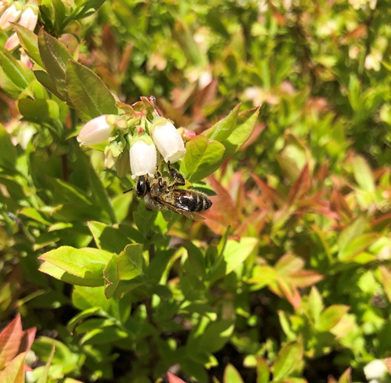
Honey bee on wild blueberry flower (ATTTA©2021)

Probably the most important component for protecting pollinators from pesticides is clear communication between growers and beekeepers. Both beekeepers and growers will benefit from having clear guidelines for each of their roles in the pollination process. If receiving or providing pollination services, it is recommended that a pollination contract is used. Examples of pollination contracts can be found within "Best Management Practices Guide for Honey Bee Pollination of Wild Blueberries in Atlantic Canada”3 at https://www.perennia.ca/portfolio-items/honey-bees/. Modify any template contracts as needed, but it is encouraged to include information on: the timing of arrival/departure of hives (needs to be in sync with wild blueberry bloom); responsibility of beekeeper to provide standard pollinating units; details of grower's responsibility to protect bees from any pesticide poisoning; designation of responsibility for periodically checking and caring for bees; designation of responsibility for providing hive protection (electric fencing); clear description of the pest management practices being used on the blueberry field before and during placement of hives; and details of hive placement location on the field.

Beekeepers and blueberry growers can both work to support pollinators through habitat development. Maintaining and creating habitat around blueberry fields can support honey bees and native pollinators4. Leaving non-invasive weeds, wildflowers, and other habitat patches around wild blueberries increases pollination and fruit production5. The presence of these native wild flowers will provide a diversity of pollen sources and will not deter honey bees and other pollinating insects from foraging for nectar on wild blueberry plants6. There are several things growers can do to help develop these habitats, such as delay flail or bush mowing areas around fields until after pollination and preserve wildflower diversity currently surrounding fields. On fields that border cultivated land, growers can create floral strips.

The use of pesticides is an integral part of wild blueberry production. There are several practices beekeepers and blueberry growers can follow to help minimize the impact of these products on pollinators. The first thing growers can do is select the least toxic pesticide to bees. Bees foraging on fields can be directly exposed to toxic products or exposed indirectly through ingesting pollen and nectar containing the product or contact with contaminated soil7. Generally, insecticides are more toxic to bees than herbicides or fungicides since insecticides are formulated to kill insects. The risk associated with a particular pesticide to bees is not only based on the toxicity, but also the residual toxicity. If a product is found to be toxic for greater than 8 hours than it is a higher risk to bees. For questions regarding a specific product’s risk to bees refer to the “Supplement Document for Protecting Pollinators from Pesticides” at https://www.perennia.ca/portfolio-items/honey-bees/.

Whenever applying a pesticide is essential to follow all label directions. When reviewing the label look for precautionary and advisory statements that state “toxic to bees”.

Best Management Practices Guide – Protecting Pollinators from Pesticides (ATTTA©2024)

Finally, growers and beekeepers need to minimize any potential exposure of bees to pesticides. Growers should avoid applying pesticides when bees are flying or clustered outside their hives; avoid applying pesticides to any blooming flowers around the field; place hives outside the range of pesticide application and consider developing a no spray buffer zone to protect hives; minimize pesticide drift when spraying; and look for nests of native bees around the field to avoid spraying near the area.

Protecting honey bees and other pollinators from pesticides is crucial for successful pollination. It is in the beekeeper’s and grower’s best interest to have conversations around pesticide use, and how they can work together to protect these vital insects.

References
  1. Orr, J., Byers, A., Morandin, L.A., Medeiros, S.J. and K. Law. 2023. Practices to Protect Pollinators from Pesticides: Wild Blueberry. Pollinator Partnership Canda and Atlantic Tech Transfer Team for Apiculture.
  2. Brodt, S., Zalom, F., Krebill-Prather, R., Bentley, W., Pickel, C., Connell, J., Wilhoit, L. and Gibbs, M., 2005. Almond growers rely on pest control advisers for integrated pest management. California agriculture, 59(4).
  3. Bennett, A. and A. Byers. 2023. Best Management Practices Guide for Honey Bee Pollination of Wild Blueberries in Atlantic Canada. Atlantic Tech Transfer Team for Apiculture.
  4. Park, M.G., Blitzer, E.J., Gibbs, J., Losey, J.E. and Danforth, B.N., 2015. Negative effects of pesticides on wild bee communities can be buffered by landscape context. Proceedings of the Royal Society B: Biological Sciences, 282(1809), p.20150299.
  5. Blaauw, B.R. and Isaacs, R., 2014. Flower plantings increase wild bee abundance and the pollination services provided to a pollination‐dependent crop. Journal of Applied Ecology, 51(4), pp.890-898.
  6. Girard, M., Chagnon, M. and Fournier, V., 2012. Pollen diversity collected by honey bees in the vicinity of Vaccinium spp. crops and its importance for colony development. Botany, 90(7), pp.545-555.
  7. Willis Chan, D.S., Prosser, R.S., Rodríguez-Gil, J.L. and Raine, N.E., 2019. Assessment of risk to hoary squash bees (Peponapis pruinosa) and other ground-nesting bees from systemic insecticides in agricultural soil. Scientific Reports, 9(1), p.11870.

Connecting with ATTTA Specialists

If you’d like to connect with ATTTA specialists or learn more about our program, you can:

visit our website at https://www.perennia.ca/portfolio-items/honey-bees/

Email abyers@perennia.ca