Showing posts with label hive strength. Show all posts

Review of the NSBA Technical Session in Parrsboro

Thursday, 2 July 2026

This week the Nova Scotia Beekeepers Association, along with ATTTA, hosted an afternoon beekeeping event in Parrsboro. Fourteen attendees joined the session, creating an engaged group with lots of discussion and questions! Events like these are so important, helping beekeepers learn from one another and connecting with people in similar areas. Field events give everyone a chance to ask questions, share experiences and see how others manage their own operations.

Review of the NSBA Technical Session in Parrsboro

This event started with introductions by Dr. Andrew Byers apart of the Atlantic Tech Transfer Team for Apiculture, followed by Zoshia Fraser, who represented the Nova Scotia Department of Agriculture. Jennifer and David Harrison then welcomed everyone and introduced themselves, sharing the history of their beekeeping operation, how they got started and the work they do today. We were grateful for them opening their operation and welcoming beekeepers into their apiary for the afternoon.

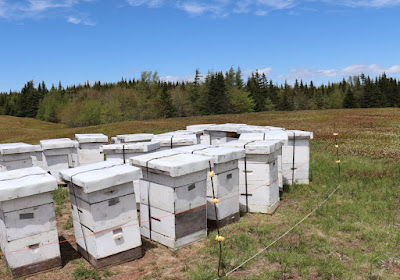
Figure 1: Attendees in Jennifer Harrison’s Apiary (ATTTA ©, 2026)

After introductions, everyone suited up and headed into the hives. Jennifer began by showing the tools and equipment she likes to keep on hand in her operation. She explained her record keeping system, based on the year colour of the queens, to mark her hives and label tasks that need to be done.  This highlighted the importance of implementing an efficient way to keep track of the hives in her apiary. She also demonstrated her queen marking tools, her Cloake board setup, and her grafting frames. One highlight was her mating nucs, which were a standard deep box divided into three sections, each with its own entrance. 

Figure 2: Jennifer Harrison showing equipment she uses in her operation (ATTTA ©, 2026)

The group then split into two, one group with Jennifer, where she walked through assessing hive strength. Students learned when to split based on resources in the hive and the strength of the colony. She shared examples from her own operation, giving attendees knowledge on how she manages colony growth. The second group joined Andrew, who demonstrated how to inspect a captured swarm. He explained what to look for, how to monitor for varroa, and how to test mite levels using both an alcohol wash and an ether roll. He also discussed what steps to take after catching a swarm to ensure the colony is healthy. 

Figure 3: Jennifer Harrison performing an alcohol wash (Left) and Dr. Andrew Byers conducting an ether roll (Right) (ATTTA ©, 2026)

The afternoon was filled with enthusiasm, questions and great conversation. With 14 participants, the event offered hands-on learning and important discussions. Thank you so much to the Nova Scotia Beekeepers Association for supporting such a valuable session. A special thank you as well to Jennifer and David Harrison for being such welcoming and generous hosts. Their willingness to share their operation made this event a success and highlighted the value of learning from others! 

 Written by Kaitlyn Newton, ATTTA Seasonal Apiculturist

Connecting with ATTTA Specialists

If you’d like to connect with ATTTA specialists or learn more about our program, you can:

visit our website at https://www.perennia.ca/portfolio-items/honey-bees/

Email attta@perennia.ca


Review of the NBBA Spring Workshop

Thursday, 28 May 2026

On Saturday May 23rd, 2026 the Atlantic Tech Transfer Team for Apiculture had the pleasure of joining the New Brunswick Beekeeper’s Association for a hands-on spring workshop in Memramcook. Workshops like this bring new and experienced beekeepers together to learn from each other, ask questions and make new connections.

Review of the NBBA Spring Workshop

The workshop was hosted by Anouk Utzdschneider at her farm, where participants split into small groups and rotated through different stations. Anouk took one group through her operation, showing beekeeping equipment and the supplies used for honey extraction. She highlighted the tools she values as a small-scale beekeeper, which was a great chance for newer beekeepers to see what a well-organized, practical, small scale setup looks like!

Marie-Pier Jones, NBBA board member, walked participants through a hive assessment, explaining what to look for when evaluating a colony. She discussed brood patterns, population dynamics, food stores and signs of a healthy queen. Her demonstration helped beekeepers understand what to look for in their own colonies and what kind of questions to ask a mentor.

Figure 1: Participants Watching a Live Demonstration of Creating a Split (ATTTA ©, 2026)

Andrew Byers, ATTTA, also went through a hive and discussed different ways to monitor for Varroa destructor. He demonstrated how to perform an ether roll and walked through how to do an alcohol wash; both are effective techniques for monitoring varroa levels. He highlighted why regular mite checks are essential, how to collect proper samples, how to interpret the results and the different monitoring methods available to beekeepers.

To wrap up the workshop, the group had the opportunity to learn how to make a split from an exceptionally strong colony with lots of brood and food stores. Participants learned how to choose frames, balance resources and set the new colony up for success, a valuable skill for new and experienced beekeepers!


Figure 2: Attendees of the NBBA Spring Workshop (ATTTA ©, 2026)

This workshop highlighted the importance of a mentor, someone who can guide you, answer questions, and help you navigate challenges that arise in beekeeping. Having an experienced beekeeper to lean on can make a significant difference in anyone’s beekeeping journey!

A big thank you to the NBBA for hosting such a valuable and welcoming workshop, and to board members for sharing their experiences and knowledge!

Written by Kaitlyn Newton, ATTTA Seasonal Apiculturist

Connecting with ATTTA Specialists

If you’d like to connect with ATTTA specialists or learn more about our program, you can:

visit our website at https://www.perennia.ca/portfolio-items/honey-bees/

Email attta@perennia.ca

Hive Strength for Wild Blueberry Pollination

Thursday, 21 April 2022

This week’s blog concludes our series on managing honey bee hives during wild blueberry pollination with a discussion of hive strength. Establishing a hive strength standard is an important tool for beekeepers and wild blueberry producers. A hive standard sets a guideline for the minimum requirement for colonies being used for pollination. It is measured in terms of colony strength, which is a measure of the population size and population structure of the colony. Read on for a more detailed look at hive strength and our hive strength recommendation for wild blueberry pollination. 

Hive Strength for Wild Blueberry Pollination

The determination of hive strength and a hive standard is an often-discussed topic in relation to the pollination of wild blueberries. There are acceptable standards recommended by provincial governments and national organizations, which use measures including frames of bees, amount of brood, number of hive bodies, number of bees, presence of a laying queen, and number of honey frames. Not all of these measures are included in each hive strength standard, but it is important to understand the reasoning behind each of these requirement factors. 

Frames of bees is an important consideration as this reflects the population of worker bees available in the colony for pollination. The actual number of bees provides the same information, in theory, but is more difficult to determine. Counting seams of bees, assessed by peering through the interspace between top bars, is another way to estimate the population of bees in a colony. The amount of brood is an indication of productiveness of the queen and how well the colony will be able to sustain the population of foraging worker bees. The number of hive bodies is important to consider since this determines how much space the colony has to support brood rearing and resource storage, both of which are key factors in maintaining colony strength and swarm management. Some hive strength standards explicitly state that a laying queen must be present, as this ensures that brood production will continue throughout the pollination timeframe. Some hive strength standards also require a certain number of honey frames be present in hives being used in pollination, which is important especially in the case of wild blueberry pollination since honey bees do not often collect substantial amounts of nectar from blueberry blooms to maintain optimal colony strength. All of these measures directly relate back to the strength of the colony and so are used to create these guidelines for hive strength standards.

ATTTA performed field work in the summer of 2021 to measure the average hive strength of honey bee hives used for wild blueberry pollination in Atlantic Canada. We assessed frames of bees, seams of bees, brood quantity, and flying bees in over 150 colonies which had just been placed on wild blueberry fields. We also assessed the pollination success on those fields, by measuring fruit set, the quantity of harvestable berries, berry weight, etc. Using our data, other accepted and relevant hive strength standards, and through discussion with industry and experts we recommend that, at placement for wild blueberry pollination the average honey bee pollination unit should be: the equivalent of 8 frames of bees and 4 frames of brood, a laying queen, approximately 20 000 bees in two 10 frame deep Langstroth hive bodies. Remember that hive strength standard is considered as an average among all hives involved, with some colonies being above and some perhaps slightly below but ultimately evening out to achieve the hive strength standard for pollination. 


In Memory of Alex Crouse

On April 6th we lost a vibrant member of the Nova Scotia beekeeping community, past NSBA President Alex Crouse. Alex was passionate beekeeper, always eager to engage and share his knowledge with others. We would like to remember him here for all that he has done for our beekeeping community. 

www.woodnhivehoney.ca


Connecting with ATTTA Specialists


If you’d like to connect with ATTTA specialists or learn more about our program, you can:


Daphne's Bees

Thursday, 24 March 2022

This week we are delighted to announce the release of a new honey bee book written by Atlantic beekeeper, Catherine Dempsey! Read on to learn more about this lovely book and the unique context in which it was written. We have also prepared a new factsheet to help beginning beekeepers understand basic beekeeping equipment. This will soon be made available on the ATTTA website alongside our additional factsheets and extension materials! 

Daphne’s Bees

Catherine Dempsey keeps bees in Flatrock, Newfoundland, by the edge of the Atlantic Ocean. On the island of Newfoundland, beekeeping comes with distinct challenges and advantages. To start, the island is infamous for unpredictable weather patterns and has a shortened beekeeping season, even when compared to the relatively short season of the Maritime provinces. Nonetheless, the industry is growing steadily and in 2020 Provincial Apiarist Karen Kennedy estimated there was around 100 Newfoundland beekeepers including both hobbyist and commercial operators. 

Most unique about Newfoundland beekeeping is that the island remains free of many pests which are common worldwide including Varroa mites, small hive beetle, honey bee tracheal mite, and greater wax moth! This is an advantage that comes with challenge and responsibility. To maintain this status, the government passed legislation in 1985 to limit the importation of honey bees into the province, granting exceptions extremely rarely and under strict protocols. As such, all growth in the Newfoundland beekeeping industry must come from within. Luckily, the island has highly motivated beekeepers including Catherine. Daphne’s Bee’s is a beautiful narrative alongside vibrant artwork to tell the story of a grandmother and granddaughter on a beekeeping journey. It is both youthful and educational to start budding beekeepers on the right path! 

Nouvelle Vidéo YouTube! - Évaluer la vigueur de la ruche - Compter le nombre d’abeilles qui retournent à la ruche

L’industrie de la pollinisation au Canada atlantique est en grande partie une collaboration entre les apiculteurs et les producteurs de bleuets sauvages. Les services de pollinisation sont les plus efficaces lorsque la vigueur des ruches est optimale pour la pollinisation, c’est ce que l’ETTACA présente dans sa série de vidéos sur l’éducation à la pollinisation. Il existe des standards de vigueur établis pour les ruches au Canada atlantique et les environs, et ceux-ci sont présentés dans notre vidéo intitulée Les abeilles et les bleuets sauvages au Canada atlantique – les standards de vigueur des ruches pour la pollinisation. La vigueur de la ruche peut être mesurée de plusieurs façon et il n’y a pas de protocole établi pour l’ensemble de l’industrie de la pollinisation au Canada atlantique. Dans cette vidéo, nous présentons une méthode de mesure de vigueur de la ruche, qui consiste à compter le nombre d’abeilles en vol qui retournent à la ruche. Dans notre évaluation de cette méthode, nous soulignons qu’elle est fiable seulement lorsque les conditions de vol des abeilles domestiques sont optimales. L’inspection de l’intérieur des ruches demeure une méthode d’évaluation plus précise de la vigueur des ruches au Canada atlantique. 


Connecting with ATTTA Specialists


If you’d like to connect with ATTTA specialists or learn more about our program, you can:


Pollination Services

Thursday, 27 January 2022

In 2020, wild blueberries were Canada’s greatest fruit export with an export value of $312 million (Agriculture and Agri-Food Canada 2021)! This was the result of 71,290 metric tons of wild blueberries, of which the Maritime provinces produced 52% and Quebec 48%. Wild blueberries are an economically valuable crop for the Maritimes and are closely linked to the honey bee industry because blueberry flowers rely on insects for pollination. As such, beekeepers and wild blueberry producers are key partners in eastern Canada. The season for pollination may seem far away, but now is a good time to start organizing pollination services! 

Pollination Services

Regionally, the demand for pollination by honeybees is greater than 50,000 colonies and projected to increase. This represents over $8 million per year in income to Atlantic beekeepers. If you are a beekeeper not already engaged in pollination, consider diversifying your operation through pollination services. Sending bees to blueberry fields is hard work, but it is an important service made easier through thoughtful planning. 

Always a valuable resource, Atlantic provincial beekeeping associations can help beekeepers and blueberry producers connect to establish a pollination partnership. Essentially, beekeepers transport their hives to blueberry fields by night when the fields are ready for pollination, around late May or early June. Hives remain on the fields for the duration of bloom and then are retrieved by the beekeeper. Producers typically pay per hive and there is no minimum number of hives that you need to get started! When you do begin, it is a good practice for beekeepers and blueberry producers to agree upon a contract prior to pollination season. Some aspects to consider are the number of colonies required, timing of hive placement and removal, who will be responsible for bear fencing, location for access, and details concerning agrochemical use. The Nova Scotia Beekeepers Association has a sample pollination contract which can be a good place to start.

Another critical point of the contract is establishing a hive strength standard. Optimal hive strength for pollination is a subject which is important to the industry and has not been wholly agreed upon. The NS Beekeepers Association and NB Beekeeper’s Association both offer slightly different provincial minimum hive strength standards for pollination and the Canadian Association of Professional Apiculturists (CAPA) presents yet another. To get to the bottom of this, ATTTA is currently researching hive strength for wild blueberry pollination so that we might be able to establish a uniform hive strength standard and means of assessment across Atlantic Canada for optimal wild blueberry pollination. For more information on measuring hive strength, watch our video on the ATTTA YouTube Channel entitled Bees and Blueberries in Atlantic Canada – the Hive Strength Standard

Hive strength can be measured in multiple ways. Elements of the hive which are often quantified are number of bees, amount of brood, and hive bodies. The trickiest of these to measure is the number of bees within a given hive. Common methods of estimating the population of a honey bee colony are counting full frames of bees, seams of bees, or flying bees. 

ATTTA collected data from blueberry fields in NB and NS this past summer to evaluate these methods as they relate to pollination success. Our latest video in our Pollination Education series discusses the reliability of counting flying bees returning to the hive as a means of measuring hive strength. Our findings suggest that this is not a reliable method of measuring hive strength in Atlantic Canada, and that cool ambient air temperature skews the results of this method further. For a more detailed account of these results watch the video Assessing Hive Strength: Counting Flying Bees Returning to the Hive

Stay tuned for more results about optimal hive strength for blueberry pollination and, if you aren’t engaged already, consider adding pollination services to your beekeeping repertoire!


A Guide for Managing Bees for Crop Pollination (1999) Canadian Association of Professional Apiculturists.

Evaluating the Strength of Honey Bee Hives for Wild Blueberry Pollination. New Brunswick Agriculture Aquaculture and Fisheries, Wild Blueberry Factsheet B.4.0.

Honey Bees and Blueberry Pollination, Fact Sheet No. 629, UMaine Extension No. 2079. 2002. 

Statistical Overview of the Canadian Fruit Industry 2020. Agriculture and Agri-Food Canada. June 2021. 


Connecting with ATTTA Specialists


If you’d like to connect with ATTTA specialists or learn more about our program, you can:


New Bees for Newbies

Thursday, 13 January 2022

Winter months are a time for planning in the beekeeper’s calendar. Planning the upcoming season will allow your apiary to run smoother, regardless of how many hives you manage. This is also a great time for someone who has only yet been considering beekeeping to prepare to dive in! Over the next few blogs, we will consider a few points that would be valuable to organize this winter. This week, we will begin with a discussion of ordering bees.

New Bees for Newbies

When spring comes and hives are unwrapped, beekeepers find out how many survived the winter. Overwintering strong hives which have been properly treated, fed, and winterized will be valuable in minimizing overwintering losses. A compelling article from researchers in Switzerland was recently released which further corroborates evidence that proper varroa mite management of winter bees improves colony success in the spring (Julie et al. 2021). Nonetheless it is not uncommon to lose a small percentage of hives to winter stresses. Beekeepers often make up for these loses by replacing colonies in the early spring. 

Unfortunately, a major challenge for the Atlantic Canada beekeeping industry is the lack of early spring queens (Bixby et al. 2019). Virgin queens typically cannot mate until late May or June at the earliest due to the absence of mature drones. Historically, the solution has been to order bees from warmer climates where queen rearing can begin much earlier, such as New Zealand and Hawaii. It is important to place these orders in the winter to ensure that they arrive when you want them. Ordering bees from outside of Canada requires special protocols which must be followed via the Canada Food Inspection Agency. There are also unique protocols for ordering bees from out of province within Canada (see protocols for Maritime provinces below). Rather than taking this on directly, it can be helpful to order imported bees through local bee suppliers who are more familiar with the legal process. 

Honey bees ordered from abroad typically come as packages of many bees or a single mated queen. A package generally holds 1-1.5 kg of adult bees as well as a mated queen. A mated queen will arrive with attendant worker bees, who are often removed from the cage before introducing the queen to a hive. Packages and individual queens must be installed into proper hives after transport and you should be prepared to do so when the bees arrive.  

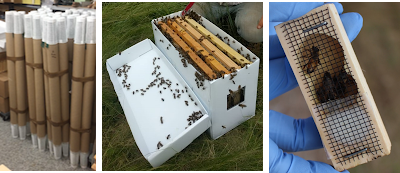
Figure 1. Three common ways to buy bees. From left to right: honey bee packages (source: countryfields.ca), nucleus colony, caged queen.

If you are not anxious to have new bees immediately at the start of spring, buying local nucleus colonies (nucs) and queens is a great way to support the Atlantic beekeeping industry. There are suppliers of local nucs and queens throughout the Atlantic provinces who typically sell between May and July. Provincial beekeeping association websites can be a valuable resource in connecting with reputable providers. Once again, it is recommended that orders be placed early because lists are typically first come, first served and supplies are limited. This is especially true for beekeepers in Newfoundland and Labrador, where honey bee importation is exceptionally restricted!

For new beekeepers, nucs are a great way to get started because they already contain the necessary building blocks for starting a new colony- bees and drawn comb! There are some considerations to keep in mind when buying a nucleus colony. A nuc should include a mated queen, frames with drawn comb and food stores, and bees of all life stages. Typically, there are 3-5 frames holding a combination of these resources. For more information on nucs, explore the new ATTTA factsheet “What is a Nucleus Colony: Information for New Beekeepers!


Bixby, M., M.M. Guarna, S.E. Hoover, and S.F. Pernal. 2019. Canadian Honey Bee Queen Breeders’ Reference Guide. Canadian Association of Professional Apiculturists Publication 55 pp. 

H. Julie, J. Hattendorf, A. Aebi, et al., Compliance with recommended Varroa destructor treatment regimens improves the survival of honey bee colonies over winter, Research in Veterinary Science (2021), https://doi.org/10.1016/ j.rvsc.2021.12.025


Pollinator Education New Video Release! Assessing Hive Strength: Counting Flying Bees Returning to the Hive

Check out our latest video on ATTTA's YouTube Channel about assessing hive strength. This video discusses how to assess hive strength by counting flying bees returning to the hive and the pros and cons of using this method. Watch HERE to learn more!


Connecting with ATTTA Specialists


If you’d like to connect with ATTTA specialists or learn more about our program, you can: