Showing posts with label blueberries. Show all posts

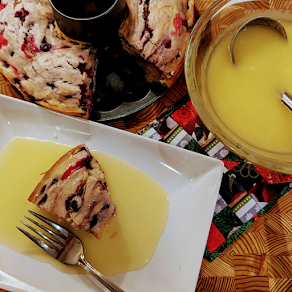
Cranberry & Wild Blueberry Cake with Warm Vanilla Sauce

Thursday, 22 December 2022

For this week’s blog, ATTTA is pleased to feature the Maritime chef Alain Bossé, otherwise known as the Kilted Chef! Chef Alain is an accomplished chef and with a reputation for promoting local ingredients. We would like to acknowledge and thank him for being, among other things, a supporter of Atlantic wild blueberries! When you are sharing meals with your loved ones this holiday season, consider trying this delicious cranberry and wild blueberry cake for a sweet treat!

Cranberry & Wild Blueberry Cake with Warm Vanilla Sauce

©The Kilted Chef


Cake

-          3 tbsp room temperature butter

-          1 cup sugar

-          1 egg

-          1 tbsp orange zest

-          2 cups flour

-          1 tsp salt

-          1 tsp baking powder

-          1 ¼ cup buttermilk

-          1 tsp vanilla extract

-          ¼ tsp almond extract

-          1 cup frozen wild blueberries

-          1 cup frozen cranberries

-          1 tbsp flour

Vanilla Sauce

-          ½ cup butter

-          1 tbsp flour

-          1 cup sugar

-          ¾ cup whipping cream

-          1 tbsp vinegar

-          1 tsp vanilla

To make your cake, first preheat your oven to 350° and prepare a 9x13 inch pan with grease.

Start by creaming together the butter and sugar in a large bowl. Next, mix in the egg, vanilla, almond extract, and orange zest. In a separate bowl, combine the flour, salt, and baking powder. Add the flour mixture and buttermilk to the creamed mixture, alternating between the two. Last, lightly flour the wild blueberries and cranberries and fold them into the batter. Pour the batter into the prepared pan and bake for 50-55 minutes.

To prepare the vanilla sauce, start by melting the butter in a heavy bottom pot. Add the sugar and flour and bring the to boil for 2-3 minutes. Remove the pot from the head and whisk in the vinegar, vanilla and cream. Allow the sauce to cool to room temperature, then pour the sauce over the warm cake.

Serve and enjoy!


Be sure to check out other recipes and learn more about the Kilted Chef on their social medias and website:

Facebook: The Kilted Chef

Instagram and Twitter: kiltedchefalain

Web site: www.kiltedchef.ca

Kilted Chef Media Kit: https://dashboardliving.lpages.co/kilted-chef-media-kit


Thank you, Chef Alain! Wishing a very merry holiday to everyone from the Atlantic Tech Transfer Team for Apiculture! Bon appetite!


Connecting with ATTTA Specialists


If you’d like to connect with ATTTA specialists or learn more about our program, you can:


ATTTA Summer Update

Thursday, 18 August 2022

It is that time of year! The beekeeping season is buzzing along, and the Atlantic Tech Transfer Team for Apiculture has been seizing every moment! For our field work, we are largely focused on three projects which span across the Maritime provinces. Read on for a glimpse into our major projects this summer and how they are progressing.

ATTTA Summer Update

Optimizing Wild Blueberry Pollination

This year, 2022, marks the final year of ATTTA’s five-year study regarding the optimization of wild blueberry pollination by honey bees. This season, we have eight research plots in wild blueberry fields in Nova Scotia, New Brunswick, and Prince Edward Island. We first visited these fields in May and early June, when honey bee hives were placed for pollination. At this time, we assessed the hives for strength and assessed the percent bloom on the fields. After the hives had been removed and pollinated flowers were beginning to develop into berries, we returned to the fields to assess what percent of flowers were successfully pollinated and appeared as unripe, green fruit set. Now, we are in the midst of returning to each field a final time to assess the percentage of ripe berries that are developed and ready for harvest! We also assess these berries in the lab for weight and seed count.


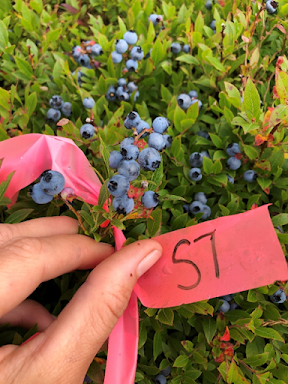
Wild blueberry stem marked for plant assessments (ATTTA©2022).

The aim of the research is to evaluate the effect of moving hives during pollination on blueberry fruit set and determining the optimal timing of placing honey bee for wild blueberry pollination.


Efficacy of Apivar® and Api Life Var® against Varroa destructor in eastern Canada

This summer, we are travelling through the Maritimes, collecting honey bee samples, in order to test the efficacy of Apivar® and Api Life Var® on Varroa mites. Starting at the end of July, we visited nine apiaries to collect samples of honey bees and their associated varroa mites for miticide testing. We brought the samples to our lab, treated the bees, and assessed the varroa populations effected by the treatments. This week, we began our second round of assessments, in which we return to the same apiaries for another collection of bees and mites to sample for treatment.

The aim of this project is to assess the efficacy of Apivar® (amitraz) against Varroa destructor in honey bee colonies in NB, NS, and PE; determine the efficacy of Api Life Var® against Varroa destructor in honey bee colonies in NB, NS, and PE.

Overwintering Queen Bank Trial

As a second year of pilot work, our overwintering queen bank trial has received additional funding and supported from Nova Scotia Beekeepers Association. We are working towards overwintering two hives with multiple queens banked within. In preparation for this, we completed two rounds of queen rearing at the end of June and early July. We are also growing strong colonies to eventually transform into our queen banks in the fall. In the spring, we will see how many queens survived the winter in the banks and measure the viability of those overwintered queens.


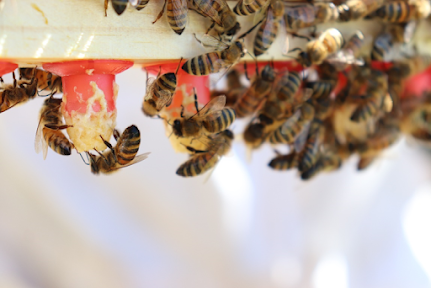
Worker bees on drawn out queen cups (ATTTA©2022).

The aim of this project is to determine the feasibility of mass queen overwintering outdoors in the Maritime region by evaluating the success of two different queen bank configurations.

Throughout the fall and winter, we will be able to assess the data that we collect in our summer field work. We look forward to sharing our findings at various honey bee and wild blueberry association meetings as well as here in our blog.

Connecting with ATTTA Specialists


If you’d like to connect with ATTTA specialists or learn more about our program, you can:


Provincial Blueberry Updates

Friday, 22 October 2021

Well, we are heading into the end of October and, looking back on the 2021 season, it has definitely been an interesting year for Maritime beekeepers and blueberry growers alike. This week we are sharing some insights on the 2021 blueberry harvest from our provincial blueberry specialists. Keep following below to find out what we know so far about this year’s blueberry harvest in Prince Edward Island, Nova Scotia, and New Brunswick.

This week, we are also excited to announce the upcoming launch of “Canadian Beekeeping Minutes”, ATTTA’s own video series of introductory beekeeping demonstrations. Keep reading for more details and release dates!

Provincial Blueberry Updates

Prince Edward Island

“The wild blueberry yield this year on PEI is estimated to be a little above 19 million pounds. This is about the yield we’ve been getting for several years now from Island blueberry fields. I was expecting a higher yield due to decent pollination and the great growing weather we had this summer (plenty of rain and sunshine compared to last summer’s drought). However, due to a June frost, and the dry weather we had in 2020 which would have affected the sprout field’s ability to set ample fruit buds, our yield was not anything of a bumper crop.”

    - Cameron Menzies (PEI Dept. Agriculture & Land)

Nova Scotia

“This year, we had a great production year in Nova Scotia. This past winter was warmer, and we observed minimal winter damage on blueberry stems in the spring. The season started early with early flower bud development in crop fields. The growing degree models indicated that we were well ahead of the last fivers in mid-April. This lack of frost in the ground and drier conditions have also led to increased soil temperature, which all contributed to the early development of the F2 flower bud stage in the lowbush blueberry fields in NS. We had a low mummy berry infection year due to cooler temperatures and dry conditions during the infection period. This season’s growing condition also provided good pollination on wild blueberry plants. The frost event in early June had influences on flowers and pollination, but the damage was not serious and only limited to few late development areas. The harvesting period went well, but a few wet periods and storms had delayed harvesting and might have caused yield loss. Overall, the season went well, and many wild blueberry growers are happy with the season and yield. Last year, we had about 36 million lbs. produced in NS under the drought influence, and we are expecting a higher yield this year. We don’t have the final number for the province yet, but we are looking at around 50 million lbs. The blueberry market is strong, and we are also optimistic about the price.”

    - Hugh Lyu (Perennia Food and Agriculture Inc.)

New Brunswick

“The wild blueberry crop is estimated to range from 55 to 60 M lbs.  The drought of 2020 reduced the total number of fruit buds per plant going into the winter.  Very little winter damage was observed in the spring (5 to 10% in certain fields).  In mid to late spring, a frost event occurred causing flower damage, mostly in Northeastern NB, although damage was visible in southern NB fields.  Despite the low number of fruit buds and flowers, pollination weather was excellent.  The information provided by most growers is that honey bees were at or above the written guideline for blueberry pollination.  The weather during bloom resulted is a high fruit set for fields with adequate pollinators.  A reasonable yield was observed by most growers.  Harvest period was about a week earlier than in previous years and was drawn out over 4 to 5 weeks to skilled labour operators.  It was also noted that Spotted Wing Drosophila (SWD) was severe in the last field harvested.”

    - Michel Melanson (NB Dept. Agriculture, Aquaculture and Fisheries)


Canadian Beekeeping Minutes – Presented by ATTTA

Canadian Beekeeping Minutes is a series of short videos that demonstrate how to perform some key introductory beekeeping techniques and tasks. These demonstrations are intended for beekeepers at the beginner level and are meant to provide quick and simple directions following best management practices for the management of honey bee colonies in Atlantic Canada. The first demonstration of the series will be released next Wednesday (October 27th, 2021), followed by subsequent demonstration video releases every other Wednesday. So, make sure to mark those bi-weekly Wednesdays on the calendar and we hope you enjoy!

Demo video 1 release date: Wednesday October 27th, 2021


Connecting with ATTTA Specialists


If you’d like to connect with ATTTA specialists or learn more about our program, you can:


Pollen Patties: To Feed or Not to Feed

Thursday, 24 June 2021

In order to optimize the health and survival of honey bees, beekeepers have historically provided nutritional supplementation.  Replacement of harvested honey through feeding of sugar syrup is common practice, as is protein supplementation with the use of pollen patties.  Through recent research undertaken by ATTTA and other groups, we are gaining further understanding of the merits of pollen patty use.  In this week’s blog, we undertake a mini review of some of this current research.

Pollen Patties: To Feed or Not to Feed

All livestock, including honey bees, require feeding!  As beekeepers we have, by tradition, supplemented the bee’s diet using pollen patties.  Most beekeepers use commercially available pollen patties, but some people choose to make their own. Either way these contain a few simple ingredients: sugar, a protein source, oil and sometimes a binding agent.  The protein source can be in the form of flour (rice, soybean), brewer’s yeast, milk and / or egg products, or protein from corn, potatoes or peas.  Some pollen patties contain natural pollen.  To clarify the semantics sometimes used when discussing pollen patties, the products containing natural pollen are referred to as supplements and those without natural pollen are called substitutes.  Ours and other research discussed in this blog refer to substitutes which contain no natural pollen.


Early work conducted in 2018 – 19 by ATTTA, examined growth and overwintering success of honey bee colonies fed pollen patties (McCallum et al, 2020)No significant difference was found between the groups of colonies which received the pollen substitution and those that did not receive the pollen substitution.  The conclusion was that these results showed no economic or biological benefit of feeding pollen patties for colony growth or overwintering success.  Additional work undertaken by ATTTA during 2019 examined the effect of pollen patties on honey bee colonies used for wild blueberry pollination.  Nutritional supplementation has long been thought to support the health of colonies used for pollination.  In this research colonies were assigned to three groups and given no pollen substitute, 1 pound of pollen substitute or 2 pounds of pollen substitute.  Our results suggested that there was no significant difference in colony strength or colony growth for honey bees sent to pollination that had been provided with pollen patties and those that had not.  See figure 1 for a graphic representation of these results.

Figure 1: Mean honey bee colony growth during blueberry pollination in Colchester County, Nova Scotia, 2019 among groups fed 0, 1, or 2lbs of pollen substitute. Error bars represent standard error. No significant difference was seen across the trial groups.

A similar trial was repeated in 2020 with additional colonies receiving pollen substitute and subsequently assessed for both growth and strength.  These assessments were undertaken during and after pollination.  In support of our previous work, there was no significant differences in the growth or strength of the colonies which received the pollen substitute and those which did not receive any nutritive supplementation.  Additional details of our results can be seen in figure 2 and figure 3.

Figure 2 Boxplot demonstrating the effect of pollen patties on colony strength in Nova Scotia during pollination season in 2020.  Figure "Time Point One". shows the results of adding pollen patties at the beginning of pollination, measured three weeks later.  Figure "Time Point Two". shows the results of the addition of pollen patties at the beginning of the pollination, three weeks of pollination and measured three weeks post pollination.  The box contains the 25 – 75th percentile range, the line represents the 50th percentile (median), whiskers show the range (min. to max. values).  There was no significant difference across the groups.
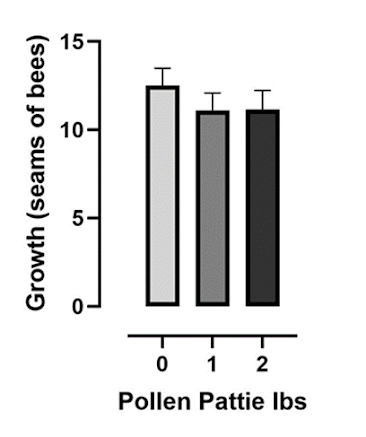
Figure 3 Mean Colony Growth (bar: SEM).  The graph represents the mean difference in seam counts from the first time point at the beginning of pollination in 2020 to the final time point, approximately three weeks post pollination, as a measure of hive growth.  The three treatments are shown, representing the control (0 pollen patty), treatment 1 (1lbs pollen patty) and treatment 2 (2 lbs pollen patty). There was no significant difference across the groups.

There has been some very interesting recent research from other groups who examined the way that honey bees use pollen substitutes (Noordyke et al 2021).  A team led by Jamie Ellis out of the University of Florida looked at how pollen patties were used by the bees and distributed through the hive.  Their results included some conclusions worthy of discussion.  They suggest that a portion of the pollen patty was ingested by the adult bees.  No portion of the pollen patty was fed to the larva or stored as bee bread.  Another portion of the pollen patty was removed as debris from the hive.

Our research suggests that there is no economic benefit of protein substitution (i.e. providing pollen patties) applied to honey bee colonies in order to support hive strength and growth during wild blueberry pollination or to improve overwintering success.  The work of Noordyke, Ellis and others shows that bees do ingest pollen substitute but this does indicate the level of  nutritional beneficial to the bees (i.e. ingestions does not equal digestion, absorption and utilization).  Also pollen substitute does not support the larva and is not stored for future periods of dearth.

The fact, as suggested by Ellis' group, that adult bees are ingesting pollen patties immediately may be worth further discussion.  Adult bees, compared to developing larva, have a lower nutritional need for protein.  Perhaps a benefit of pollen substitute to adult bees would be through the ingestion of the sugar portion of the pollen patty.  If this is the case, then pollen substitute may be a method, although arguably less effective than feeding sugar syrup, of supplementing sugar in the adult bee's diet.

There is still much that we do not understand about the overall efficacy and economic justification of feeding pollen substitute to honey bees.  The research discussed above presents some worthwhile discussion points and beekeepers, through their experience, must apply the management practices which work for them.

McCallum R, Olmstead S; Shaw J; Harrison J (2020) Evaluating late summer pollen substitutes on the growth and overwintering success of honey bee colonies and analyzing natural fall pollen nutrition in Nova Scotia, Canada. Journal of the Acadian Entomological Society . Nov2020, Vol. 16, p7-14. 8p.

Noordyke ER, van Santen E, Ellis JD. Tracing the Fate of Pollen Substitute Patties in Western Honey Bee (Hymenoptera: Apidae) Colonies.(2021) J Econ Entomol. May 27:toab083. doi: 10.1093/jee/toab083. Epub ahead of print. PMID: 34041543.

Ormstead S, McCallum R and Shaw J (2019) Evaluating the effect of feeding pollen substitute to honey bee colonies destined for wild blueberry pollination in Colchester County, Nova Scotia.  ATTTA fact sheet: https://www.perennia.ca/portfolio-items/honey-bees/ Fact sheets and publications.


 Connecting with ATTTA Specialists


If you’d like to connect with ATTTA specialists or learn more about our program, you can:


Atlantic Canada Beekeeping Season Update

Thursday, 10 June 2021


It is our birthday week! One whole year of blogging and what we want for our birthday is to hear your comments; keep reading for information on a survey to submit anonymous feedback.
 
We hope you have enjoyed learning about queens over the past short series on queen rearing in the Atlantic Canada region. Also, this week we are catching up on some things we want to share with you. We include a general beekeeping update for the Maritime region. Episode 5 of our ‘What’s the Buzz with ATTTA’ beekeeping podcast is now live and ready to be enjoyed.  For a sneak peek into our current podcast topics read on! We are also sharing an exciting opportunity from Perennia to take food-based marketing and sales to the next level.  Busy week for our birthday blog!

Happy 1st Birthday, “What’s the Buzz with ATTTA” Blog!

This week marks the one-year milestone since ATTTA began this bee-blogging journey! Thank you to our readers, we appreciate your interest and support greatly.  There was never any doubt that a blog for Atlantic Canadian beekeepers would be successful but the number of visitors has been surprising!  We have had over ten thousand (10 000!) visits this year and are currently exceeding 1000 visitors per month.  Already for the month of June, we have had over 500 people read our blog.  Although most of our readers are from Canada and the USA, we have regular visitors from many European countries, Israel, Indonesia and the United Arab Emirates.

To help celebrate ATTTA blog’s 1st birthday and improve it for the upcoming year, we have put together a quick survey and would love to get feedback directly from our readers! Thank you in advance for helping us grow and better our blog. This survey is ONLINE.


Atlantic Canada Beekeeping Season Update

Regular seasonal benchmarks are becoming less reliable for planning our beekeeping activities.  Providing further evidence of climate change, this year’s early spring has seen record breaking high temperatures and an early and dramatic build up of bees.  As beekeepers, we generally use 10⁰C as the threshold for beekeeping activity.  This is not an arbitrary number as it is also used as one important measure of seasonal growth and development: Base Degree Days.  Simply put, Base Degree Days, or growing degree days, are days which have a temperature which exceed 10⁰C as an indication of days suitable for plant and insect development.  As an example, the figure shows this seasons Degree Days measured in Nova Scotia at the Kentville weather station.  We can see that this season has already exceeded both the five and the ten-year average.  Although this does not reflect all areas of Atlantic Canada, it is an excellent model to indicate similar trends across our region.  There are implications for beekeepers to the early and warm season which are discussed below!

Base Degree Days Recorded at the Kentville, NS weather station: March to June 2021


Varroa Mites:

As a result of the mild winter and early spring in the Maritime region, varroa mites may infest honeybee hives with greater force this year. Many beekeepers have observed earlier brood rearing cycles in their hives, which allows colonies to undergo more cycles of brood production in total this season. Since varroa mites reproduce in honey bee brood cells, this early start in brood rearing also allows varroa mites more opportunities and cycles to reproduce with the potential to significantly increase infestation levels in hives. Beyond their feeding directly on the blood of bees, varroa mites also vector a number of harmful honey bee viruses. Regular monitoring of varroa mite levels in hives throughout the entire season is highly recommended to ensure infestation levels are kept low.  Be vigilant this year!

Small Hive Beetle:

Not a serious problem in our regions but nonetheless a reminder to keep an eye out for small hive beetles this season. There are traps available that are specifically designed to catch small hive beetles in honey bee hives, making monitoring for this pest a simple task for beekeepers to integrate into their apiary management strategies. The small hive beetle is a reportable honey bee pest in all Atlantic Canada provinces.  New Brunswick, the only Atlantic Canadian province reporting small hive beetle, has an excellent fact sheet on monitoring which can be accessed on the Dept. of Agriculture Aquiculture and Fisheries website HERE. 

Winter Mortalities:

This year’s mild winter and early spring resulted in lower mortality numbers in many beekeeping operations. The earlier spring allowed beekeepers to start beekeeping and feeding their colonies earlier in the season, supporting their success coming out of overwintering. Although this may not have been the case for all beekeepers, the overall mortality rate appears above average compared to previous years.  We will await reports from our provincial apiarist to confirm with statistics but feedback from beekeepers is positive!

Swarms

We predict that 2021 will be remembered as the season of swarms!  Already, swarms have been reported in unusual numbers and earlier in the season.  Beekeepers participating in pollination are seeing many hives swarming on blueberry fields.  This is not an unusual occurrence in itself but beekeepers suggest numbers are above normal.  Although a reassuring sign of strong and healthy colonies, beekeepers will need to be extra watchful to ensure they manage their swarms this year.  If you need some advice on how to prevent swarms visit our website and speak to your mentor or give us a call.


What’s the Buzz with ATTTA Beekeeping Podcast 

Episode 5 of ATTTA’s beekeeping podcast is now live and ready for your listening and learning enjoyment! This episode of What’s the Buzz with ATTTA Beekeeping Podcast reflects back to simpler times of beekeeping in the Atlantic region.  We talk to well-known local beekeeper Fletcher Colpitts about early days in beekeeping during times of significantly less pest and disease pressures.  Our talk includes a brief history of the pollination industry in eastern Canada.  We move through the 40 years of Fletcher’s beekeeping career towards a discussion of what the future might hold for our region’s beekeepers.  Fletcher draws on his experience as a third-generation apiarist, New Brunswick Chief Apiary Inspector, and a lifetime of thoughtful beekeeping to provide a unique insight into our industry. Access ATTTA’s podcast episodes HERE.


Special Announcement from Perennia

We are excited to re-launch the Accelerated Direct Marketing Program. For those not familiar with the program, it aims to help food-based companies quickly, conveniently, and professionally create an online store with product listing and e-commerce features.

This program is available to Nova Scotia agriculture and aquaculture operations and food businesses through a partnership with Local Line. Eligible businesses will receive up to the first six months of the core service free! The application for this program is available on the Local Line website.

We are also hosting a webinar with the Local Line team on June 17th at 12:30 PM. Registration for this session is available here.


Connecting with ATTTA Specialists


If you’d like to connect with ATTTA specialists or learn more about our program, you can:


Honey Bees & Blueberries: Season Updates

Friday, 7 May 2021

This week’s blog provides some updates on the progression of both the beekeeping and blueberry seasons so far. We reached out to a couple experts in these industries who were kind enough to shed some light on how this year’s season is shaping up, including some updates and predictions specifically for this year’s blueberry pollination! It has been a bit of an odd spring, so it is a good idea to make sure, if you are a beekeeper in blueberry pollination, that you are communicating and staying up to speed on how the blueberries are coming along.

ATTTA also has some exciting updates of our own to share! Keep reading to find out what new and exciting things are coming in our ‘What’s the Buzz with ATTTA’ beekeeping podcast and our Fundamentals of Beekeeping certificate program.

Honey Bees & Blueberries: Season Updates

Here in the Maritimes of Canada, the beekeeping industry and the honey bee industry are closely tied to one another through pollination. The blueberry growers need their blueberry blooms to be sufficiently pollinated for a good berry yield and the beekeepers have just the thing for the job! As a beekeeper involved in blueberry pollination, it is important to stay informed about the progression of blueberry bloom to ensure that colony management matches the timing of the season and that hives will be ready to go for pollination.

Cameron Menzies, Berry Crop Development Officer / Provincial Apiarist at PEI Department of Agriculture provided an update for the PEI area:

“Things are looking good here so far - don’t have any official numbers yet as to what our overwinter losses are but the anecdotal reports I’ve been getting from beekeepers are positive (10% - 20% loss range). Some beekeepers are even talking about swarm management now to deal with strong hives that came through the winter. 

Spring is advancing quite quickly here - we’re likely ahead by around a week in terms of blueberry bud development. I’m guessing wild blueberry pollination is going to start a week early here. Willow catkins are in full bloom and producing a lot of pollen - I’ve even seen some dandelions beginning to bloom.”

Michel Melanson, Crop Specialist at New Brunswick Department of Agriculture provided an update for the New Brunswick area:

“Blueberry fields have come through with very little winter injury observed, in most of the major growing regions. The early snow melt and warm March and April have accelerated blueberry development. Many of the region are 5 to 7 days in advance compared to previous years. 

As the crop is on track to be about 5-7 days earlier, growers and beekeepers are encouraged to make early contacts, as potential delivery dates and field pollination may be earlier than previous years.

Southern NB:

Many fields are now 50% or more at the F2 to F4 stage. Coastal fields are 30 to 40% F2. It is likely the first flowers will be visible in mid May

Northern NB: 

Fields visit in a few locations recorded about 20% F2 in certain areas of the field.  Again, these fields are 5 to 7 days advance compared to previous years. A few open flowers should be visible by Victoria Day weekend.”


Hugh Lyu, Wild Blueberry Specialist, Perennia Food and Agriculture Inc, provided an update on the Nova Scotia blueberry situation:

"Blueberry plant development: things are moving fast this spring. I am sure most of you would notice the fast development of blueberry plants this year. By the end of April, fields in southwest NS and Hants county, blueberry plants have reached more than 40% of F2 floral buds. That means fields in those areas are walking to the Monilinia blight season. Growers in those areas should monitor the forecast closely. Fields in other areas are not that far away from the threshold. Some early fields in Colchester and Cumberland got their first blight spraying in the last two weeks of April and the majority of fields are at 30% and above, therefore, those fields will walk into the blight season the first week of May or sooner. If you want to know more details about plant development in NS wild blueberry fields, please visit Perennia’s wild blueberry blog:                 http://www.novascotiawildblueberryblog.com/.


Figure 1. Blueberry Crop Field, 2021.

Figure 2. Blueberry floral buds at F1 and F2 stages.


Winter damage on floral buds: this past winter, we had low snowfall and little snow coverage in blueberry fields. I have concerns about potential winter damage on floral buds over the winter.  When I did blueberry stem bud counts over the last few weeks, I observed minimum to no winter damage on floral buds in Colchester and Hants. The average floral bud numbers in those areas range from 6-12 per stem.

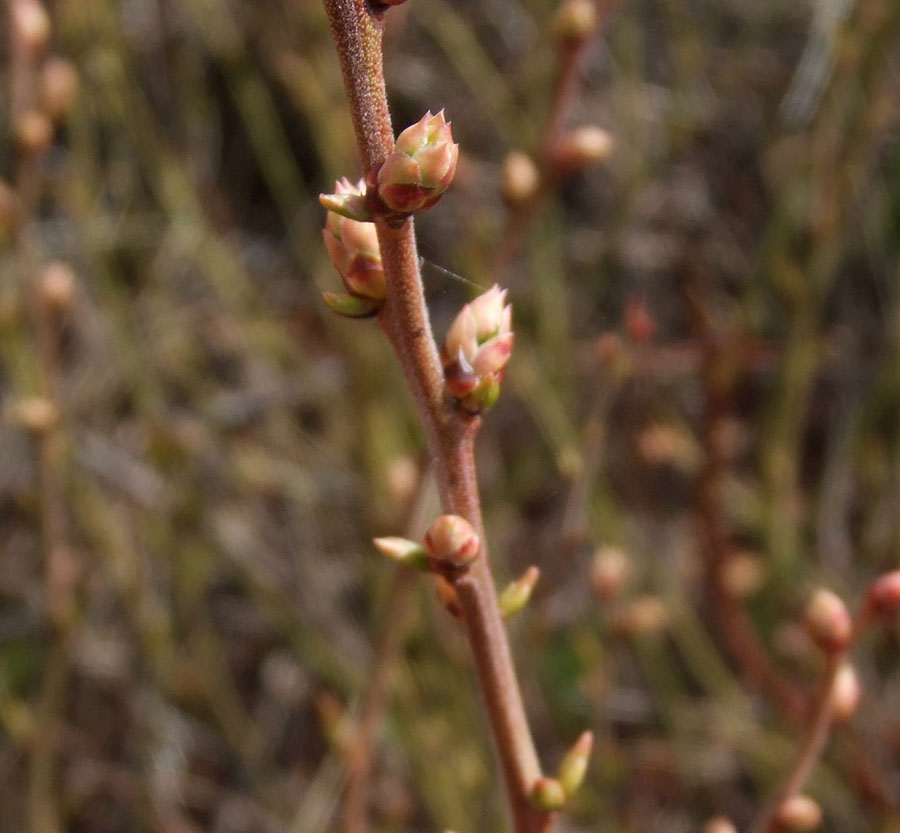
Figure 3. Blueberry stems with floral buds.


Pollination: With the fast plant development and warm weather, I expect we will get an early pollination season if the condition stays this way. The growing degree model data from the province show that we are well ahead of the last five years."


ATTTA Updates:

Episode 4 of our ‘What’s the Buzz with ATTTA’ beekeeping podcast is set to be released on Friday May 7th and will be available on a variety of platforms for your listening and learning enjoyment. Check it out, give it a listen, see what neat bee-related topics you will learn about in this hot-off-the-press podcast episode! Access our podcast episodes here.

The second course of our four-course beekeeping certificate program – offered in partnership with Dalhousie Extended Learning – is getting its final touches to be ready for its rollout early next week! Teaching and learning for our Fundamentals of Beekeeping program, Course 2: Working Bees & Hive Health will commence on Tuesday May 11th and conclude on Saturday May 15th. If you would like to be a part of this virtual and online beekeeping course, there is still time to register! Program, course, and registration details are found on the Fundamentals of Beekeeping program website


Connecting with ATTTA Specialists


If you’d like to connect with ATTTA specialists or learn more about our program, you can:


What's the Buzz with ATTTA # 7 All about blueberry maggot & planting bee forage.

Friday, 24 July 2020

Blueberry Maggot

Figure: Yellow coloured sticky traps for monitoring blueberry maggot

As the adult Blueberry maggot (BM) (Rhagoletis mendax) emerge with the first ripening of the berries in late June to mid July , monitoring for this significant pest becomes important. One to two weeks after emergence the adult females mate and lay one egg per berry and the developing BM consumes the pulp of the berry causing it to collapse. Infested fields will have an abundance of fruit on the ground, punctures holes will be visible on the skin of berries and collapsed berries will be common.

For monitoring, yellow coloured sticky traps are placed one per acre, in sheltered areas plentiful with blueberries, suspended from a rod about 10-15 cm above the blueberry plant, (Figure). Traps should be check three times a week. If an average of six or more BMs are found on all the traps in a field during a single visit or an average of the cumulative total of ten flies or more are captured on all the traps in more than one visit, actions should be taken to reduce crop loss. If thresholds are exceeded, but no fruit has ripened in the field, there is no immediate danger of fruit infestation.

For more information, please visit the factsheets in WBPANS website:(https://www.nswildblueberries.com/members/factsheets/download?path=fruitfly.pdf
and the Canadian Food Inspection Agency:

More information or questions, contact:
Hugh Lyu, Wild Blueberry Specialist, Perennia Food and Agriculture Inc.
Email : hlyu@perennia.ca; Mobile : 902-890-0472


Start planting, stop mowing, that’s not a weed!

Honeybees rely on nectar and pollen for healthy colonies. In some areas, lack of bee forage during certain times of the season creates a challenge for beekeepers to maintain colony health and to yield a sufficient honey crop. Agriculture crops, such as wild blueberries, are only in bloom for a short period, and do not provide the diversity of pollen and nectar that is crucial for bee health. Some farmers, beekeepers and friends of pollinators are helping honeybees and native pollinators by planting and/or preserving fields with flowering plants that are beneficial to bees. The aim is to improve nutrition throughout the season, improving colony health, while also increasing honey yield. It is important for beekeepers to maintain yearly records of the forage availability near their apiaries and if needed, consider the possibility of planting or preserving additional forage to support their buzzing livestock. Spreading the word about creating additional pollinator resources generates a buzz in both people and bee communities! 

Dr. Nancy McLean and Dr. Robyn McCallum identified some useful plants families that are best for pollinators (mustard family, legumes, and rose family) and a pollinator mix was developed - 10% Timothy, 10% Alsike clover, 20%, Red clover, 20% Sweet clover, 20% Birdsfoottrefoil, and 20% Phacelia (% by wt.). For more information about the pollinator mix, contact the ATTTA.

A planting guide was also produced by Pollinator Partnership Canada which lists many plant species that can be useful for honeybees, their bloom times, and those that may yield a honey crop. The full planting guide is available on the following link: https://pollinatorpartnership.ca

Check out what these PEI potato farmers are doing to not only increase pollinator habitat but to also improve their soil and future crops of potatoes.
https://www.cbc.ca/news/canada/prince-edward-island

Connecting with ATTTA Specialists
If you’d like to connect with ATTTA specialists or learn more about our program, you can:
·       Visit our website at https://www.perennia.ca/portfolio-items/honey-bees/
·      
·       Email abyers@perennia.ca

Thanks for following along with our blog and keeping up with the ATTTA buzz & don't forget to subscribe!